

There’s a transformative wave of augmented intelligence reshaping the software development landscape, and it’s imperative for you to understand its implications. By blending human expertise with advanced algorithms, augmented intelligence enhances decision-making, increases efficiency, and streamlines problem-solving. As you explore tomorrow’s software solutions, recognizing this powerful synergy will not only keep you ahead of the curve but will also empower you to harness these technologies for innovative applications. Dive deeper into how augmented intelligence will influence your future in software development.
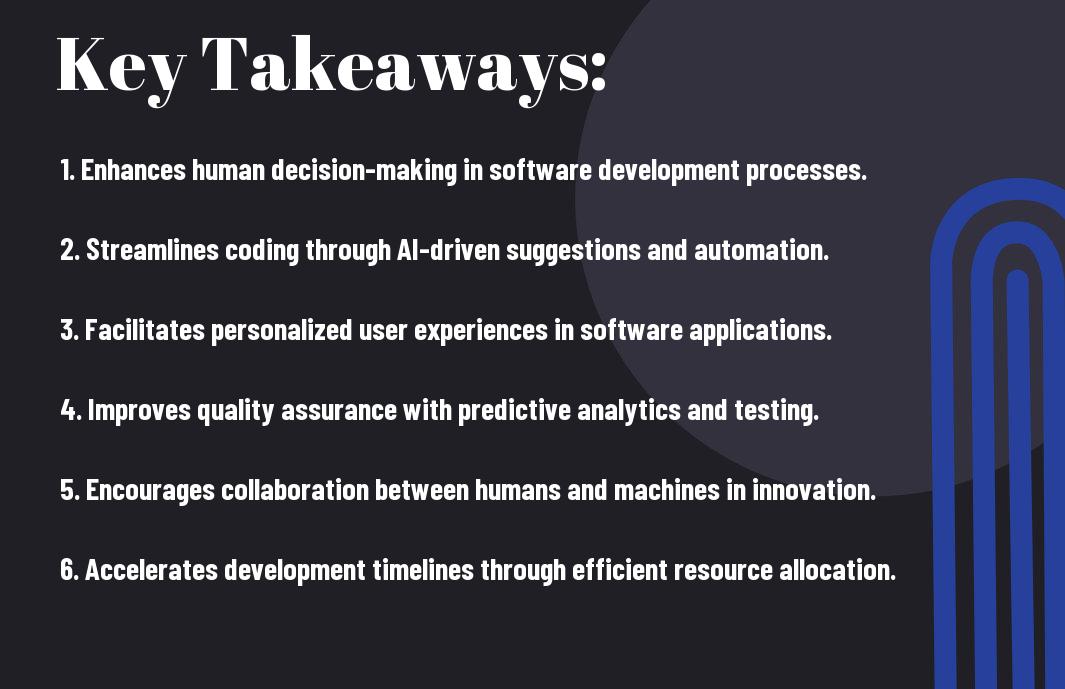
Key Takeaways:
- Enhanced Decision-Making: Augmented intelligence will empower developers by providing real-time data analysis, leading to more informed and efficient decision-making processes.
- Improved Collaboration: By integrating augmented intelligence tools, teams can enhance collaboration, enabling better communication and project management across various platforms.
- Streamlined Development Processes: Automation and AI-driven suggestions will significantly streamline coding, testing, and deployment, thus accelerating software development cycles.
- User-Centric Design: Augmented intelligence can assist in understanding user needs and preferences, facilitating the creation of software that is more tailored and engaging.
- Continuous Learning: The adoption of augmented intelligence encourages a culture of continuous learning among software developers, keeping them abreast of evolving technologies and methodologies.

Defining Augmented Intelligence
For the purposes of this discussion, augmented intelligence refers to a symbiotic relationship between humans and technology, where technology enhances human capabilities rather than replacing them. This approach distinguishes itself from artificial intelligence by focusing on collaboration and assistance, rather than full automation. Underlying technologies include machine learning, natural language processing, and data analytics, which all contribute to this innovative paradigm that aims to empower users in their decision-making processes.
Understanding Augmented Intelligence
After recognizing the core definition, it’s important to understand that augmented intelligence is not about creating autonomous systems. Instead, it emphasizes enhancing the cognitive processes of individuals. While artificial intelligence often seeks to replicate human intelligence, augmented intelligence prioritizes collaboration between humans and machines. Technologies like machine learning and adaptive algorithms play a significant role in facilitating this synergy, enabling you to access insights and make better-informed decisions.
The Evolution of Augmented Intelligence
At its core, the evolution of augmented intelligence is rooted in a rich historical context of technological innovation. Over the years, you’ve witnessed significant milestones, from early computing advancements to sophisticated algorithms and machine learning models. As software development has progressed, augmented intelligence has emerged as a transformative approach, emphasizing human-computer collaboration. Early interfaces and tools have paved the way for more intuitive and intelligent systems, enabling you to harness the true potential of technology to enhance your decision-making processes.
With this historical evolution, you can appreciate how various technological advancements have shaped the landscape of augmented intelligence. From the introduction of basic computing systems to the development of advanced machine learning algorithms, each milestone has contributed to a more efficient collaboration between humans and technology. These advancements have not only created opportunities for improved productivity but have also posed challenges, such as the need for ethical considerations and the importance of maintaining human oversight in critical decision-making scenarios. Understanding this evolution is key to navigating the future of software development.
The Impact of Augmented Intelligence on Software Development
It is clear that augmented intelligence is transforming software development, offering developers powerful tools to enhance various aspects of their workflow. These technologies integrate seamlessly into coding practices, debugging efforts, and project management, enabling you to achieve better accuracy and faster turnaround times. By leveraging machine learning and AI-driven analysis, you can streamline complex tasks, allowing your team to focus on innovation rather than routine coding challenges.
Enhancing Developer Productivity
Against the backdrop of an ever-evolving tech landscape, augmented intelligence tools significantly enhance developer productivity. By automating repetitive coding tasks, you can save valuable time that can be redirected toward more strategic initiatives. Additionally, integrated debugging features allow for quicker identification and resolution of issues, while advanced project management tools help you stay organized and aligned with your team’s goals, ultimately leading to higher output and streamlined collaboration.
Improving Software Quality
Improving software quality is achieved through the integration of augmented intelligence in quality assurance and testing automation. As you adopt AI-driven testing methodologies, you can reduce human error and enhance the reliability of your software products. Automated testing processes enable faster feedback loops, ensuring that your software meets the highest standards. Furthermore, augmented intelligence analyzes vast datasets, identifying potential vulnerabilities and improving your overall product quality, which strengthens user satisfaction and trust.
Developer-focused tools that utilize augmented intelligence can profoundly affect your software quality. By employing these intelligent systems, you can detect bugs and vulnerabilities earlier in the development cycle, leading to a more robust product. The shift to automated testing and continuous integration promotes a culture of quality assurance, allowing for ongoing improvement. Ultimately, this results in more stable releases and increased user confidence in your applications, fostering long-term success in the competitive software market.
Case Studies: Successful Implementations of Augmented Intelligence
Not only has augmented intelligence reshaped software development, but it has also led to outstanding results in various sectors. Here’s a snapshot of successful implementations:
- IBM Watson: Improved diagnostics in healthcare, reducing diagnosis time by 30%.
- Microsoft Azure: Enhanced customer service automation, delivering 40% faster response times.
- Salesforce Einstein: Boosted sales forecasting accuracy by 20%.
- Google Cloud AI: Streamlined supply chain operations, cutting costs by 15%.
For a deeper examine how AI is impacting industries, check out How AI is Crafting the Agency of Tomorrow: A Top Ten ….
Prominent Industry Examples
By analyzing various sectors, you can see how companies like Netflix use augmented intelligence for content recommendations, increasing viewer engagement by 75%. Similarly, Spotify leverages AI to curate personalized playlists, enhancing user satisfaction and retention rates significantly. Each of these implementations showcases the efficiency of integrating augmented intelligence into processes, leading to meaningful results.
Lessons Learned from Implementations
For organizations adopting augmented intelligence, the journey has been filled with valuable insights. Addressing initial resistance to change and ensuring staff training were key to successful integration. Early projects faced data quality challenges, but organizations learned to prioritize robust data management practices, leading to a noticeable boost in overall performance.
Implementations have showcased that fostering a culture of collaboration between humans and AI can lead to enhanced innovation. You’ve learned that proactive approach in training and change management can mitigate resistance and pave the way for success. Most importantly, dealing with data quality issues from the outset will streamline processes and lead to significant improvements in software efficiency. Embracing these lessons enables you to harness the full potential of augmented intelligence in your future projects.

Future Trends in Augmented Intelligence and Software Development
Despite the rapid advancements in technology, the synergy between augmented intelligence and software development is just beginning to take shape. Developers will increasingly harness AI and Software Development: Crafting the Future Together, paving the way for smarter, more efficient coding practices. As teams adopt AI-enhanced tools, you can expect a shift in how software projects are managed and executed, focusing on collaboration and real-time problem-solving.
Predictions for the Next Decade
After analyzing emerging patterns, the next decade will likely see augmented intelligence deeply integrated into software engineering practices. Expect tools that not only reduce coding time but also enhance collaboration among developers, facilitating a more streamlined development lifecycle. You’ll find that predictive analytics will guide decision-making, while AI-driven features continuously refine usability and performance, transforming how software is conceived and implemented.
Preparing for Change
After the realization of these trends, you must ensure that both you and your organization are ready for the shifts in the development landscape. Investing in skills training will be imperative, helping you to become proficient with new tools and methodologies. Moreover, adopting a mindset that embraces adaptability and continuous learning will position you for success in this evolving environment.
In addition, staying informed about the latest developments in augmented intelligence will be vital. You should focus on enhancing your knowledge in machine learning and data analytics, as these areas will shape the future of software development. As the landscape changes, fostering a culture of collaboration and innovation within your team will help mitigate any challenges while maximizing the benefits that augmented intelligence will bring. This proactive approach will empower you to navigate the exciting shifts ahead successfully.
Ethical Considerations
Keep in mind that as augmented intelligence integrates into software development, ethical considerations become increasingly significant. You must address biases in algorithms that can perpetuate inequality and the potential impacts on employment within the industry. For further insights, check out Augmented Intelligence: How AI Elevates Human Software …. Ultimately, your approach to these ethical dilemmas will shape the future landscape of technology.
Challenges and Implications
By examining the challenges posed by augmented intelligence, you’ll find ethical dilemmas such as inherent biases in algorithms and their repercussions on job security in the software industry. The influence of these systems can lead to unintended consequences, such as reinforcing stereotypes or displacing human workers. Addressing these challenges is crucial for ensuring equitable outcomes moving forward (you must prioritize inclusivity in every development stage).
Building Responsible Augmented Intelligence Systems
Among the best practices for developing responsible augmented intelligence solutions is to emphasize transparency and accountability, ensuring that your systems reflect human values. Implement processes that actively involve diverse stakeholders in design and decision-making. This inclusivity will help mitigate biases and foster trust in your solutions (establishing a guideline for ethical development is vital to your success).
Indeed, ensuring that augmented intelligence systems are both reliable and ethically sound relies on your commitment to ongoing assessment and adaptation. You must conduct regular auditing of algorithms, establish feedback loops with users, and remain informed about emerging ethical standards. Addressing these considerations will not only enhance your software’s credibility but also positively impact society as a whole (your responsibility as a developer extends beyond technical excellence).
Conclusion
With this in mind, you can anticipate that augmented intelligence will significantly enhance your software development processes in the future. By enabling more efficient collaboration between humans and machines, it empowers you to make quicker, data-driven decisions and innovate more effectively. As you embrace these advancements, your ability to tailor solutions tailored to user needs will increase, ultimately transforming the technology landscape and enhancing user experiences. Adapting to these changes will be crucial in staying competitive in an increasingly automated world.
FAQ
Q: What is augmented intelligence, and how does it differ from artificial intelligence?
A: Augmented intelligence refers to the augmentation of human intelligence through technology, allowing for better decision-making and enhanced capabilities. Unlike artificial intelligence, which aims to replicate human intelligence and automate tasks, augmented intelligence focuses on enhancing human abilities, such as analysis, creativity, and problem-solving. This collaboration between humans and machines can lead to improved software development processes and outcomes.
Q: How do you envision augmented intelligence impacting software development processes?
A: Augmented intelligence can transform software development by streamlining workflows, providing advanced analytics, and enabling predictive modeling. Tools powered by augmented intelligence can help developers identify patterns in code, suggest improvements, and automate repetitive tasks. This allows developers to focus on high-level design and innovative features, ultimately resulting in faster development cycles and higher-quality software.
Q: What benefits can businesses expect from implementing augmented intelligence in their software development?
A: Businesses can expect a range of benefits from incorporating augmented intelligence into their software development practices. These may include reduced time to market, increased productivity, enhanced code quality, and improved collaboration among team members. Additionally, augmented intelligence can provide insights based on historical data, helping teams make more informed decisions, mitigate risks, and better align their projects with business goals.
Q: Are there any challenges associated with integrating augmented intelligence into software development?
A: Yes, while integrating augmented intelligence into software development offers numerous advantages, challenges do exist. These can include the need for skilled personnel to utilize the technology effectively, potential biases in the algorithms used, and concerns regarding data privacy and security. Organizations will need to foster a culture of collaboration and continuous learning to navigate these challenges successfully.
Q: What future trends can we expect in augmented intelligence and software development?
A: Future trends may include the expansion of smart development tools that leverage machine learning algorithms to become increasingly sophisticated in predicting developer needs and offering tailored solutions. We may also see more widespread adoption of natural language processing, enabling developers to communicate with software using conversational interfaces. As augmented intelligence continues to evolve, its integration into software development will likely drive innovation and further enhance collaboration between humans and machines.
Comments