

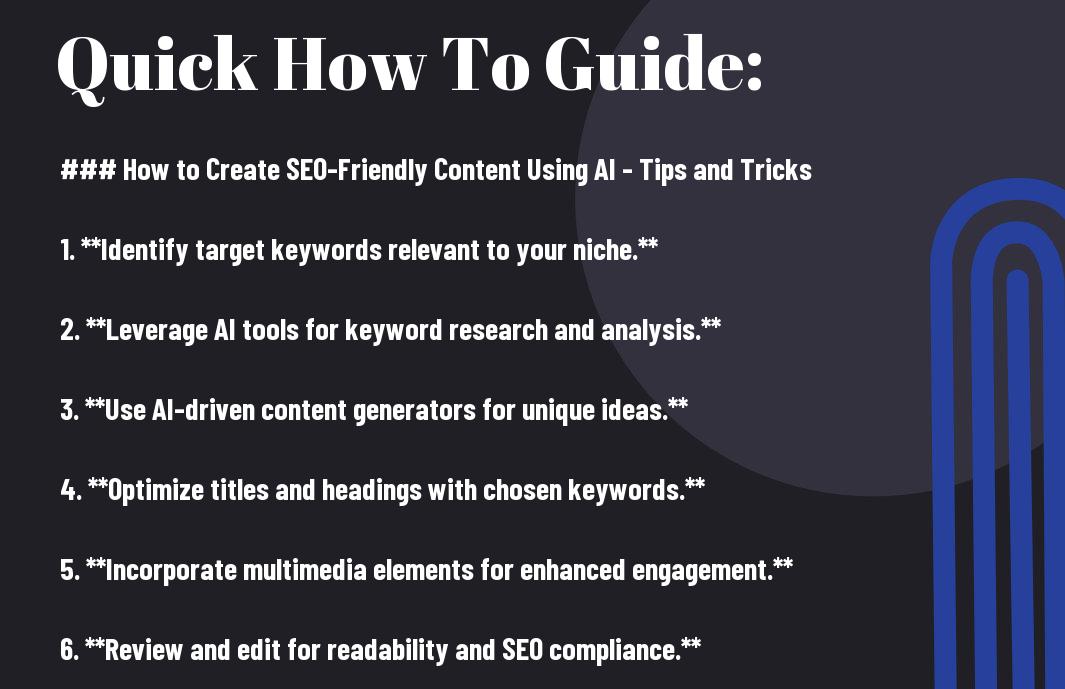
Many content creators struggle with the challenge of producing SEO-friendly content that stands out in a crowded digital landscape. Fortunately, leveraging AI technology can significantly enhance your writing process, making it easier to optimize your work for search engines while maintaining quality and engagement. In this guide, you’ll discover imperative tips and tricks to harness the power of AI tools, ensuring your content not only ranks higher but also resonates with your audience effectively. Ready to elevate your content game? Let’s dive in!

Key Takeaways:
- Utilize AI Tools: Leverage AI-driven content generation tools to streamline the writing process and optimize your content for SEO.
- Keyword Research: Conduct thorough keyword research using AI to identify high-traffic keywords and phrases that align with user intent.
- Content Structure: Organize your content with clear headings and subheadings, making it easy for both users and search engines to navigate.
- Optimize for Readability: Use AI to enhance readability by suggesting improvements in sentence structure and vocabulary, ensuring your content is accessible.
- Regular Updates: Employ AI to analyze content performance and update existing posts regularly to maintain relevancy and improve rankings.
Understanding SEO-Friendly Content
While creating content, it’s imperative to understand the role of SEO in enhancing your content’s visibility and engagement. By crafting SEO-friendly content, you can significantly increase your chances of appearing in search engine results, which can drive more organic traffic to your site. Essentially, SEO (Search Engine Optimization) helps you refine your content strategy by aligning it with the keywords and phrases that your audience is actively searching for. In turn, this leads to better user experience, as your audience finds exactly what they are looking for on your site.
Importance of SEO in Content Creation
Any content creator needs to grasp the significance of SEO as it lays the foundation for effective content marketing. Without optimized content, even the best-written articles may go unseen amidst the vast sea of information available on the web. By integrating targeted keywords related to your niche, you can not only appeal to search engines but also attract your target audience, leading to improved engagement and potential conversions.
Moreover, SEO facilitates the creation of well-structured and coherent content. This means you are not only providing value to your readers but also making it easier for search engines to crawl and index your content. When users find valuable content, they are more likely to share it, thereby expanding your reach even further. Your ultimate goal should be to create high-quality content that resonates with your audience while adhering to SEO best practices.
Key Factors Affecting SEO Performance
Now that you understand the importance of SEO, it’s crucial to investigate into the key factors impacting SEO performance. To optimize your content effectively, consider the following elements:
- Keyword Research: Identifying high-volume and relevant keywords is imperative for targeting your audience.
- Content Quality: Quality content that is rich, informative, and engaging can significantly enhance your SEO.
- Backlinks: Acquiring backlinks from authoritative sites boosts your credibility and ranking.
- User Experience: A seamless, user-friendly website layout can increase user retention and lower bounce rates.
- Mobile Optimization: Ensuring your content is mobile-friendly is critical, especially with the rise in mobile searches.
After identifying these key factors, you can start implementing strategies to improve your SEO performance, ensuring that your content not only reaches your audience but also engages them effectively.
A deeper understanding of these factors will empower you to create content that resonates with both search engines and users. You should pay special attention to:
- On-Page SEO: Tactics like title tags, meta descriptions, and header tags improve your site’s content structure.
- Page Load Speed: Quick load times reduce user frustration and improve your site’s ranking.
- Social Signals: Engaging with your audience on social media platforms can drive additional traffic to your site.
- Content Freshness: Regularly updating your content can signal to search engines that your site is active and relevant.
After gaining this knowledge, you will be better positioned to create not only SEO-friendly content but also content that converts.
The Role of AI in Content Creation
The integration of AI into content creation is transforming how you produce and optimize your writing. With the ability to analyze vast amounts of data and generate valuable insights, AI can significantly enhance your content strategy by making it more efficient and effective. From generating topic ideas to optimizing existing content, AI serves as a powerful ally in your quest for SEO-friendly material. This technology not only saves you time but also provides unprecedented accuracy in keyword selection, search intent analysis, and reader engagement metrics, allowing you to focus on delivering the best content possible.
How AI Enhances Content Quality
Content quality is paramount in the digital landscape, and AI plays a crucial role in elevating it. By utilizing AI-powered tools, you can receive real-time feedback on how your writing adheres to SEO best practices and audience preferences. These tools can analyze your content’s readability, tone, and structure, suggesting improvements that help engage your audience more effectively. When your content resonates better with readers, it increases the likelihood of sharing, linking, and higher search engine rankings.
Moreover, AI can assist you in identifying gaps in your content strategy by highlighting topics that are trending or underrepresented in your niche. This enables you to create more relevant and compelling content that meets the needs of your audience while also addressing SEO considerations. Ultimately, AI not only enhances your content quality but also positions your blog or website as a valuable resource for your readers.
AI Tools for SEO Optimization
Creation of SEO-optimized content requires a strategic approach, and AI tools can guide you through the entire process, offering features such as keyword analysis, competitor research, and content suggestions. These tools can help you seamlessly incorporate relevant keywords into your writing, ensuring that your content not only attracts search engines but also appeals to your target audience. Furthermore, many AI platforms offer analytics capabilities that allow you to track the performance of your content, making it easier to adjust your strategies as needed.
Optimization of your content can be significantly improved with the right AI tools, which can automate routine tasks and streamline your workflow. For instance, using AI-driven keyword planners might help you discover less competitive keywords that still drive traffic. Additionally, AI tools like readability checkers and plagiarism detectors can ensure that your work is unique and easy to read, making your content not only SEO-friendly but also high-quality and engaging. By leveraging these advanced technologies, you can stay ahead in the ever-evolving landscape of SEO and content marketing.

Steps to Create SEO-Friendly Content
Many content creators struggle with the intricacies of SEO, but following a structured approach can simplify the process significantly. By implementing AI-driven techniques, you can enhance your content’s visibility in search engines while maintaining high quality and engagement. Here are concrete steps to get you started!
Keyword Research Essentials
You need to begin by conducting effective keyword research. This is crucial because keywords are the bridge connecting your content to your target audience. Use tools like Google Keyword Planner or SEMrush to identify relevant keywords that not only have a decent search volume but also align with your content’s intent.
Once you gather a list of keywords, analyze their competitiveness and select a mix of short-tail and long-tail keywords. Long-tail keywords can be particularly beneficial as they often yield higher conversion rates and reflect more specific user queries, which can help position your content as the answer they are seeking.
Crafting Compelling Headlines
If you want your content to stand out, you must invest time into crafting compelling headlines. Your headline serves as the first impression and sets the stage for the entire piece. Aim for clarity and appeal, ensuring that your keyword appears naturally within the title. This not only informs the reader about the content but also helps search engines index your page effectively.
Understanding the nuances of headline writing can significantly boost your click-through rates. Utilize power words and numbers, and don’t shy away from using questions to provoke curiosity. An effective headline not only grabs attention but also communicates the value of the content to your readers, making them more likely to click and engage.
Structuring Your Content for Readability
Steps to enhance content readability include breaking your text into manageable sections, using headings and subheadings effectively, and incorporating bullet points or numbered lists. This structure helps your audience digest the information quickly, while also catering to the scanning behavior prevalent among online users. A well-structured piece can significantly reduce bounce rates and encourage readers to stay longer on your page.
Crafting your content in a way that promotes readability is crucial for SEO. Engaging paragraphs, clear transitions, and a logical flow help convey your message more effectively. Also, incorporating visuals and whitespace can make your content more appealing and less daunting to read, ultimately enhancing user experience.
Optimizing Content Length and Depth
Content length and depth play a key role in your search engine rankings. Aim for comprehensive content that covers your topic thoroughly while adhering to your audience’s needs. Longer posts tend to perform better in search rankings, but ensure they are full of quality information rather than fluff—this makes the depth of your content just as important as its length.
It is crucial to consider your audience and the questions they may have. Providing in-depth articles that answer these queries while maintaining high-quality writing can position your content as an authoritative source within your niche. Bear in mind, quality trumps quantity, so focus on delivering value through your content.
Tips for Engaging Your Audience
After developing SEO-friendly content, the next critical step is ensuring that it resonates with your audience. Engaging your readers not only helps maintain their interest but also encourages them to share your content. Here are a few effective tips to enhance engagement:
- Utilize compelling headlines to capture attention instantly.
- Add value-driven content that addresses your audience’s pain points.
- Incorporate interactive elements like quizzes or polls.
- Segment your audience to tailor content specifically for different groups.
- Prioritize readability through concise paragraphs and bullet points.
After implementing these strategies, you should see a notable impact on how users interact with your content.
Using Visuals and Multimedia
Engaging your audience with visual elements is crucial in today’s fast-paced digital landscape. Adding images, infographics, and videos can break up large blocks of text, making your content more digestible. Not only do visuals enhance the overall aesthetic, but they also aid in conveying complex information more effectively.
Moreover, consider using multimedia, such as podcasts or slideshows. This caters to different preferences among your audience, making your content versatile. By incorporating these elements, you encourage users to spend more time on your page, which is favorable for SEO and user satisfaction.
Incorporating Call-to-Actions (CTAs)
Incorporating call-to-actions (CTAs) is a vital aspect of engaging your audience effectively. You want to guide your readers towards the next steps—whether it’s subscribing to your newsletter, sharing your post, or exploring related content. A well-crafted CTA can significantly enhance user engagement and drive conversions.
For instance, placing a well-timed CTA at the end of your blog post can encourage users to take immediate action. Make sure your CTAs are clear, compelling, and resonate with the context of your content. This direct invitation can make your audience feel valued and motivated to interact more with your brand.
Encouraging User Interaction and Feedback
CalltoActions such as inviting readers to comment or share their thoughts can significantly enhance audience engagement. By encouraging open dialogue, you create a community around your content that fosters loyalty and conveys to your readers that their opinions matter. This two-way communication can lead to a more invested audience and richer conversations around your topics.
Feedback plays a crucial role in the iterative process of content creation. It allows you to refine your approach based on what resonates most with your audience. Actively seeking feedback through surveys or comment sections demonstrates that you value your reader’s input, thereby enhancing the connection between you and your audience.
Practicing Good SEO Habits
Unlike traditional content creation methods, utilizing AI for SEO-friendly content means embracing a set of best practices that ensure your work isn’t just appealing to readers but also to search engines. Integrating good SEO habits into your writing process empowers you to rank higher and draw more organic traffic. By focusing on elements like meta descriptions, internal and external links, and keeping your content up-to-date, you can significantly enhance your SEO strategy.
Effective Meta Descriptions and Tags
Descriptions are a critical component of your content because they directly influence how your website appears in search engine results. A well-crafted meta description provides a concise summary of your article, enticing users to click through to your site. Make sure to include target keywords, and keep the length within 150–160 characters to ensure that the full description displays. Also, remember to use unique tags for each piece of content, which helps search engines better understand your material.
Utilizing relevant tags can further categorize your content and improve its discoverability. Be specific in your tagging and aim for a mix of both broad and niche tags to maximize your reach. When your meta descriptions and tags accurately reflect your content and include targeted keywords, you’ll not only boost your clicks but also lower your bounce rate.
Importance of Internal and External Links
External links are a vital aspect of content creation, enriching your articles with additional resources. By linking to credible, high-authority sites, you not only provide your readers with valuable information but also improve your own content’s credibility in the eyes of search engines. This practice positively impacts your SEO rankings and increases your chances of being featured in more relevant searches.
Moreover, linking back to your own content through internal links helps to create a web of information that keeps users engaged on your site longer. This is crucial for reducing bounce rates, which can negatively impact your SEO. Establishing a well-structured internal linking system can guide users through your site and encourage them to explore more of what you offer.
Meta tags serve to communicate to search engines the key topics and focus of your content. When choosing your meta tags, use relevant keywords that accurately describe your content’s main themes. Proper use of meta tags can increase your authority and relevance in search engine results pages.
Keeping Content Updated and Relevant
Descriptions are often overlooked, but regularly updating your content ensures that it remains fresh and relevant to both your audience and search engines. Search engines favor websites that consistently offer new insights and information, so revising older posts with fresh data, updated statistics, or new examples can significantly boost your rankings. Set a schedule to review and refresh your content at least every few months to maintain its value.
Additionally, continuously optimizing your content according to current trends and user interests can help you stay ahead in the crowded digital landscape. As your industry evolves, so do the needs of your audience—don’t let outdated content undermine your efforts. Regular updates not only improve your SEO but also reinforce your authority in your niche.
Internal links also play a significant role in keeping your content interconnected and relevant. They guide users to explore additional content on your site, creating a more engaging experience. When you maintain an updated internal linking structure, it helps to connect the dots between older and newer posts, paving the way for increased traffic and higher engagement rates.
Measuring the Success of Your SEO Content
Now that you’ve created your SEO-friendly content using AI, it’s crucial to evaluate its effectiveness. Measuring the success of your SEO content involves various strategies to ensure that you are hitting your target audience and achieving desired results. By consistently analyzing your data, you can optimize your content strategy moving forward, which can contribute to better rankings in search engines and increased visibility.
Tools for Tracking SEO Performance
An effective SEO strategy isn’t complete without the right tools for tracking your performance. Tools like Google Analytics, SEMrush, and Ahrefs allow you to gain deep insights into your site’s traffic, user engagement, and ranking keywords. By leveraging these tools, you can discover which pieces of content are performing well and which areas need improvement. For example, Google Search Console can help you track your search engine visibility and identify any issues that may be affecting your site’s performance.
Moreover, utilizing heatmap tools such as Hotjar can further decipher where your users are clicking and how they navigate your site. These insights are crucial for enhancing user experience and content engagement, ultimately leading to better SEO performance. By marrying traffic data with user behavior data, you can create a comprehensive view of how your SEO content is performing.
Key Metrics to Monitor
There’s a range of key metrics that you should monitor regularly to gauge the success of your SEO content. These metrics include organic traffic, bounce rate, average session duration, and conversion rates. Tracking organic traffic shows you how well your content is attracting visitors from search engines. Meanwhile, a low bounce rate combined with a high average session duration typically indicates that your content is engaging and relevant to your audience. Lastly, understanding your conversion rates helps you measure how effectively your content drives desired actions.
Metrics also include keyword ranking positions, which give you insights into how well your content ranks compared to competitors. Monitoring these metrics will allow you to assess whether your SEO strategies are yielding results or if they require adjustments. Bear in mind, focusing solely on one metric can be misleading; it is vital to analyze multiple metrics collectively for a comprehensive view.
Making Data-Driven Adjustments
There’s no point in gathering all this data if you’re not willing to act on it. Making data-driven adjustments involves using the insights from your tracking tools to enhance your content and overall SEO strategy. Whether it’s updating existing content to include more relevant keywords, revising meta descriptions, or improving internal linking structures, informed decisions can help you improve your content’s performance significantly. Additionally, running A/B tests can reveal what changes will yield the best results.
With steady monitoring and adjustments based on the metrics you collect, it becomes much easier to stay ahead of trends and maintain your content’s effectiveness. Implementing changes based on actual performance data is key to achieving long-term SEO success. As you continue to gather data and refine your approach, you’ll find that your site moves up the rankings and engages your audience more effectively.
Final Words
With this in mind, creating SEO-friendly content using AI is not only about harnessing technological advancements but also about understanding the underlying principles of effective content creation. By utilizing AI tools, you can streamline your research processes, generate optimized content quickly, and enhance your overall writing efficiency. Remember to focus on keyword research, maintain a natural flow in your writing, and ensure your content aligns with the search intent of your audience. This approach will help improve your content’s visibility and ultimately drive more traffic to your website.
Furthermore, it’s important to continuously analyze and adjust your strategies based on performance metrics. AI can provide valuable insights into how your content is performing and where improvements can be made. By staying informed about SEO trends and utilizing AI effectively, you can position yourself as an authority in your niche while consistently delivering high-quality, engaging content to your readers. Embrace these tips and tricks to make your content strategy more robust and aligned with what both your audience and search engines value.
Comments