

Many SEO professionals find themselves overwhelmed by repetitive tasks and the ever-evolving digital landscape. By leveraging AI technology, you can effectively automate mundane SEO tasks, allowing you to focus on more strategic initiatives. This blog post will guide you through important AI tools and techniques that will help optimize your workflow, improve your productivity, and ultimately enhance your website’s performance. Let’s probe how you can harness AI to transform your SEO efforts!
Key Takeaways:
- AI Tools can significantly enhance your SEO efforts by automating keyword research, content optimization, and backlink analysis.
- Efficiency increases when using AI to handle repetitive tasks, allowing you to focus on strategy and creative aspects of SEO.
- Data Analysis is more streamlined with AI, providing insights and patterns that can improve decision-making regarding SEO tactics.
- Scalability in your SEO efforts is achievable through automation, making it easier to manage multiple projects or larger datasets seamlessly.
- Continuous Learning from AI models helps refine techniques over time, adapting to algorithm updates and changes in user behavior.
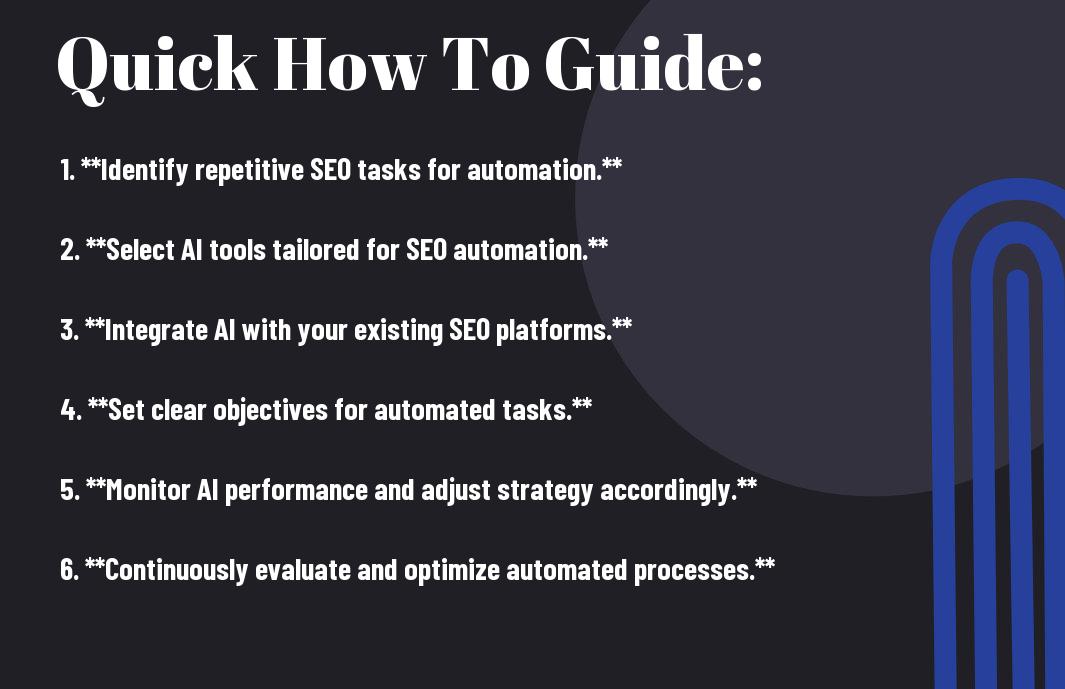
Understanding SEO Automation
Before exploring into the specific tools and strategies for automating your SEO tasks, it is crucial to grasp the fundamental concept of SEO automation and why it matters for your overall digital marketing efforts.
What is SEO Automation?
You may wonder what SEO automation is and how it can benefit your workflow. In simple terms, SEO automation refers to the use of technology, especially artificial intelligence, to streamline and enhance various search engine optimization tasks. This includes everything from keyword research and on-page optimization to backlink analysis and performance tracking. By automating these repetitive yet crucial tasks, you can free up your time to focus on more strategic initiatives that require a human touch, such as content creation and relationship building.
Moreover, with SEO automation, you are equipped to make data-driven decisions in real-time. Automation tools can analyze vast amounts of data at a speed and accuracy that far surpasses human capabilities, providing you with insights to optimize your campaigns more effectively. This means you can stay ahead of algorithm changes and market trends, keeping your strategies relevant and effective.
Importance of Workflow Streamlining
Importance of workflow streamlining cannot be overstated in today’s fast-paced digital landscape. By automating your SEO tasks, you significantly increase your efficiency, enabling you to allocate your resources more wisely. When your workflow is streamlined, you can enhance productivity by reducing the time spent on mundane tasks, allowing you to concentrate on higher-level projects that drive growth.
The various automation tools available can help not only in saving time but also in ensuring precision. These tools can minimize the occurrence of human errors often associated with manual data entry or analysis. As a result, you can achieve a greater level of accuracy in your SEO strategies, leading to improved search engine rankings and enhanced online visibility.
Key AI Technologies for SEO Tasks
One of the leading AI technologies that contribute to effective SEO automation is natural language processing (NLP). Tools using NLP can analyze content to determine its contextual relevance, making it easier for you to optimize with a focus on user intent. They can also help generate insights from user queries, allowing you to fine-tune your keyword strategy and capture more organic traffic.
In addition to NLP, machine learning plays a critical role in SEO automation. Machine learning algorithms can continuously learn from data patterns, enabling them to predict SEO trends and adjust strategies accordingly. This adaptive capability ensures that you are not only reacting to current trends but also anticipating future changes in search behaviors.
A more focused approach to utilizing these technologies can empower your SEO efforts. Integrating AI technologies into your SEO strategy not only automates various tasks but also improves their effectiveness, ensuring that your efforts yield optimal results.
How-to Identify Repetitive SEO Tasks
While pursuing effective SEO strategies, you may find yourself overwhelmed by a barrage of routine tasks that consume your valuable time. The key to increasing productivity lies in identifying these repetitive SEO tasks that can be streamlined through automation. By doing so, you can focus your efforts on more strategic initiatives that require your unique expertise, ultimately leading to improved site performance and higher search engine rankings.
Common SEO Tasks Suitable for Automation
Clearly, certain SEO tasks lend themselves well to automation, allowing you to work more efficiently. These tasks include keyword research, where automated tools can analyze search volume and competition data, freeing you from manual effort. Similarly, you can automate site audits to quickly identify technical issues affecting your website’s SEO health, such as broken links or missing meta tags, making sure you stay on top of your site’s performance.
Analyzing Your Current Workflow
Any effective strategy begins with a thorough understanding of your existing processes. Take the time to document your current SEO workflow, identifying the specific tasks you regularly perform. You might be surprised to discover how many of these tasks are performed repeatedly, such as content updates or backlink tracking. By analyzing your timeline, you can pinpoint where the most time is spent and what could potentially be automated.
Howto assess your workflow further, consider employing tools like flowcharts or project management software. These resources can help you visualize your processes and highlight redundancies or areas that could benefit from automation. The ultimate goal is to create a streamlined process that maximizes your efforts while minimizing manual inputs.
Prioritizing Tasks for Automation
One of the most critical steps in your automation journey is to prioritize which tasks should be automated first. Identify tasks that not only consume a significant amount of your time but also produce little value relative to the effort expended. For example, tasks such as routine reporting or social media posting, which can be automated easily, may free up hours for more meaningful work.
Understanding the impact of each task on your overall SEO performance will help you decide which ones to tackle first. By prioritizing tasks based on their importance and the time they take, you can implement automation in a way that brings the greatest benefits to your workflow. This methodical approach ensures that you are investing your time in enhancing your SEO strategies rather than getting bogged down in repetitive tasks.
How-to Implement AI Tools for SEO Automation
After you have understood the potential of AI in SEO automation, it’s time to focus on how to implement these tools effectively. This process involves selecting the right AI solutions, integrating them into your existing workflow, and setting up automated reporting systems that provide you with valuable insights. Doing this will not only streamline your SEO efforts but also enhance your overall productivity.
Choosing the Right AI Tools
Now that you are aware of the different types of AI tools available for SEO, the next step is choosing the right ones. Consider what specific challenges you face—whether it’s content creation, keyword optimization, or backlink analysis. Research tools that align with your goals. For example, if you’re looking for content suggestions, AI writing assistants like Jarvis or Copy.ai might be the best fit, while tools like SEMrush or Ahrefs are great for comprehensive SEO analysis.
An aspect to keep in mind is the user interface and integration capabilities of these tools. You want to choose AI tools that not only fit your needs but that you can easily incorporate into your daily tasks. Checking user reviews and seeking recommendations from colleagues can also help you make a more informed decision.
Integrating AI Tools into Your Workflow
One of the crucial steps in implementing AI for SEO automation is integrating these tools into your current workflow. Start by identifying where AI can replace manual processes or enhance your existing strategies. For instance, if you’re currently spending hours on keyword research, integrating an AI-powered tool can significantly cut down your time and increase efficiency.
Additionally, consider training your team on how to use these tools effectively. Ensuring that everyone is on the same page will not only foster a smoother transition but also maximize the benefits of automation. Create a structured approach for how your team will utilize these tools in harmony with your SEO objectives.
With proper integration, AI tools can become a seamless part of your workflow. This means having a clear understanding of the role each tool plays and how they can be used collaboratively to enhance your SEO outcomes. Regularly evaluate the effectiveness of each tool, and adjust your strategies as necessary to ensure you are getting the most value out of your AI investments.
Setting Up Automated Reporting
An important aspect of automating your SEO tasks is setting up automated reporting. This allows you to track your progress without having to manually compile data every time. Automated reports can provide insights on website performance, keyword rankings, and overall SEO health, all in a timely manner. Using tools like Google Data Studio or SEMrush can facilitate this process, providing you with visual representations of data that are easy to interpret.
Beyond just watching your metrics, automated reporting can save you significant time and help you stay focused on more strategic aspects of your SEO work. It also keeps you informed about how your efforts are translating into results, which can guide future decisions.
Tools such as Google Analytics or Ahrefs can be configured to send you scheduled email reports, ensuring you receive crucial updates without having to look into the software regularly. This ongoing visibility allows you to react swiftly to changes in performance and maintain an agile SEO strategy.

Tips for Optimizing AI Tools in SEO
Now that you’ve decided to leverage AI tools for your SEO strategy, it’s crucial to optimize these technologies to ensure maximum efficiency and effectiveness. Here are some imperative tips to keep in mind:
- Choose the right AI tools that align with your specific SEO goals.
- Customize AI settings according to your target audience and niche.
- Regularly update AI models to keep pace with search engine algorithm changes.
- Monitor performance and analytics to assess the impact of AI on your SEO efforts.
Recognizing the ever-evolving landscape of SEO is imperative in maintaining a competitive edge.
Customizing AI Settings for Your Needs
Tools harnessed for your SEO tasks can significantly boost your productivity if tailored properly. When customizing AI settings, take the time to input specific parameters that reflect your business objectives and audience demographics. This means fine-tuning models to probe into keywords that resonate with your target market, allowing for more relevant content generation and insightful analysis.
By adjusting parameters such as location, industry, and even the consumer behavior patterns, you can ensure that the outputs you receive from AI tools are not just generic but are strategically aligned with your SEO strategy. The more refined your settings, the better the chances of leveraging AI effectively to enhance your website traffic and engagement.
Regularly Updating AI Models
You must remain vigilant and consistent in updating your AI models to align with the latest trends and fluctuations in search engine algorithms. The AI landscape is dynamic, and what works today might not yield the same results tomorrow. By regularly refreshing your tools, you maximize their effectiveness in providing accurate analytics and recommendations tailored to current scenarios.
Updating your AI models not only prevents obsolescence but also introduces new functions and capabilities that enhance your overall SEO performance. The digital environment is ever-changing, and keeping your tools updated ensures you’re at the forefront of optimization.
This practice is vital for maintaining relevance in a landscape where search engine updates can significantly impact website rankings. You want your AI tools to remain as responsive and insightful as possible, ensuring you can adapt your strategies promptly.
Monitoring Performance and Analytics
Monitoring your AI’s performance and analytics is a crucial part of your SEO optimization process. As you integrate AI into your SEO workflow, keeping a close eye on how these tools affect your key performance indicators (KPIs) can provide invaluable insights. Regular audits on the results generated by AI can help you identify strengths and areas needing improvement in your SEO strategy.
Monitoring isn’t just a one-time task; it’s a continuous process that allows you to adapt to changing conditions and refine your approach. By assessing analytics regularly, you can pinpoint what content performs best, what strategies yield the most traffic, and where potential opportunities lie.
Updating your monitoring strategy and metrics based on real-time performance ensures you utilize your AI tools to their fullest. The data you gather will help form a well-rounded picture of your SEO efforts, enabling you to make informed decisions and adjustments for greater success in your campaigns.

Factors to Consider for Successful Automation
Once again, automating your SEO tasks with AI can significantly improve your workflow. However, it’s important to consider several factors that can affect the success of your automation efforts. These include:
- Budget constraints
- Team skill levels
- Data privacy and compliance issues
Perceiving these factors as critical elements will guide you in making informed decisions regarding your automation strategy.
Budget Constraints
Assuming you are initiateing on the journey of SEO automation, it is crucial to evaluate your budget constraints. You might be tempted by high-end AI tools that promise instant results, but investing in these solutions without aligning them with your budget could lead to difficult financial decisions down the road. Assess **how much you can afford** to allocate to software solutions, potential integrations, and ongoing maintenance. This reflection will ensure that you remain within your financial limits while maximizing your ROI.
Furthermore, it’s important to remember that more expensive doesn’t always mean better. There are many **affordable alternatives** available that can effectively automate your SEO tasks without breaking the bank. Carefully compare your options and consider free or open-source tools when you are on a tight budget. Doing thorough market research can often reveal tools that offer sufficient features for a fraction of the cost.
Team Skill Levels
The success of automation greatly depends on your team’s skill levels. If your team lacks experience with SEO tools or AI technologies, implementing automation might yield subpar results. It’s vital to evaluate your team’s competence in utilizing software for data analysis, content generation, or performance tracking. Training and on-boarding initiatives can be costly and time-consuming, but investing in your team’s education can significantly elevate your automation effectiveness.
Factors such as **technical proficiency**, familiarity with SEO concepts, and the ability to adapt to new technologies will ultimately dictate how efficiently your team can manage automated processes. Providing your team with the necessary resources, such as training programs or tutorials, ensures they harness the full potential of automation tools.
Data Privacy and Compliance Issues
There’s a growing emphasis on data privacy and compliance issues that must be considered before automating your SEO tasks. As you implement AI tools, you’ll be handling sensitive information that must adhere to regulations like GDPR and CCPA. Ensure that the tools you choose comply with data protection laws to avoid potential **legal consequences**. Understanding the implications of handling user data is important for building trust with your audience.
Another crucial point is to implement strong **data management** practices. Regular audits, data encryption, and user consent policies are vital in maintaining compliance. Not only do these measures protect sensitive information, but they also enhance your brand reputation. Understanding the compliance landscape ensures that you are not only automating efficiently but also legally and ethically.
Future Trends in SEO Automation with AI
All signs suggest that the future of SEO automation is heavily intertwined with advancements in artificial intelligence. As AI technology continues to evolve, you can expect to see even more sophisticated tools that streamline your SEO tasks and drive more effective strategies. These advancements empower you to optimize your website at a level previously thought impossible, making it vital to stay updated on the latest trends to fully capitalize on these innovations.
Emerging Technologies to Watch
Assuming that you are keen to enhance your SEO efforts, emerging technologies like machine learning and natural language processing are crucial to watch. These technologies are becoming increasingly adept at understanding user intent and context, allowing you to create tailored content that resonates with your audience. Companies are developing AI-driven platforms that analyze vast amounts of data to deliver actionable insights about keyword opportunities, competitor strategies, and user behavior, giving you a competitive edge.
Predictions for AI Developments in SEO
Even as AI continues to change the landscape of SEO, it is crucial to make well-informed predictions about what it will bring. Experts forecast a surge in the implementation of AI-powered analytics tools that can assess website performance and suggest optimizations in real-time. This would significantly reduce the time and effort you spend on manual analysis, allowing you to focus on creative strategies that make your content more appealing to users.
Understanding the implications of these advancements means recognizing that AI technologies will likely reshape the role of SEO professionals. As automation takes over repetitive tasks, you may find yourself shifting towards more strategic responsibilities, such as crafting compelling narratives and ensuring a holistic user experience across platforms.
Preparing for Changes in the SEO Landscape
Preparing for the inevitable changes in the SEO landscape involves staying ahead of technological advancements and adapting your strategies accordingly. You should be open to learning how to leverage AI tools that can automate mundane tasks, analyze data, and provide insights for improvement. By incorporating these tools into your workflow, you can not only save time but also achieve better results and drive more organic traffic to your website.
Plus, it’s vital to maintain a mindset of continuous learning and adaptability. The digital marketing world is ever-evolving, and those who are quick to embrace new technologies will thrive. Keeping your skills updated and being proactive about integrating AI into your SEO practices will ultimately set you apart in a crowded marketplace.
Conclusion
Drawing together the various strategies outlined in this article, automating SEO tasks with AI can significantly enhance your workflow, allowing you to focus on more strategic aspects of your online presence. You’ll find that leveraging AI tools to automate keyword research, content optimization, and performance tracking not only saves you time but also increases the accuracy of your efforts. This streamlined approach enables you to harness the power of data-driven insights, optimizing your SEO strategy to maximize visibility and engagement effectively.
As you integrate these AI-driven solutions into your routine, remember that the ultimate objective is not just to implement technology but to refine your overall SEO strategy. By automating repetitive and time-consuming tasks, you empower yourself to dedicate more resources to creative and analytical endeavors that require your unique expertise. Embrace these innovative tools, and you’ll position yourself to achieve outstanding results and stay competitive in the ever-evolving digital landscape.
Comments