

AI has revolutionized the way we approach innovation, especially with the rise of generative AI. In this informative guide, we’ll research into expert tips on how to harness the power of generative AI to drive innovation in your organization. From enhancing creativity to streamlining processes, discover how you can leverage this cutting-edge technology to stay ahead in today’s rapidly evolving business landscape.

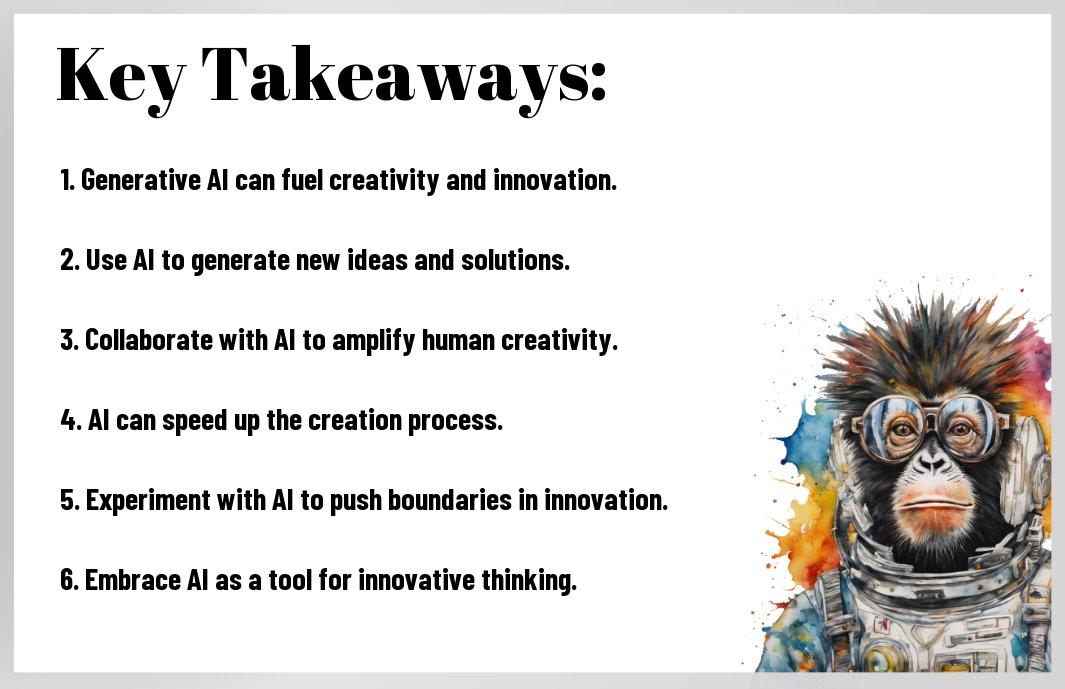
Key Takeaways:
- Understanding Generative AI: Generative AI is a powerful tool that can create original content based on patterns it has learned. Understanding how generative AI works is crucial to leveraging it effectively for innovation.
- Identifying Innovation Opportunities: By exploring the capabilities of generative AI, businesses can identify new opportunities for innovation and creativity in various industries, from marketing and design to healthcare and finance.
- Collaborating with AI: Incorporating generative AI into your innovation process can lead to groundbreaking ideas and solutions. By collaborating with AI, businesses can push boundaries and stay ahead of the curve in a rapidly evolving technological landscape.
Demystifying Generative AI
What is Generative AI?
For those unfamiliar with the term, Generative AI refers to a type of artificial intelligence technology that is capable of creating new content without direct human input. This includes generating images, text, audio, and even videos that mimic human-created content. Unlike traditional AI systems that rely on pre-programmed rules and data sets, Generative AI uses machine learning models to produce original and innovative outputs.
How Does it Work?
Generative AI functions by learning patterns and styles from vast amounts of input data, allowing it to generate new content based on these learned characteristics. This technology can be trained on specific datasets to create content that aligns with desired styles or themes. By leveraging deep learning algorithms, Generative AI can produce realistic and high-quality outputs that can sometimes be indistinguishable from human-created content.
Demystifying the process of Generative AI, it’s crucial to understand that while this technology offers exciting possibilities for innovation, it also raises concerns about ethics and misuse. Companies and individuals must approach the development and deployment of Generative AI systems with careful consideration to security and accountability to harness its full potential for positive impact.
Identifying Opportunities for Innovation
Some How to Leverage Generative AI for Your Business experts emphasize the importance of identifying opportunities for innovation within your organization. This involves exploring how generative AI can be applied to different aspects of your business to drive growth and efficiency.
Industry-Specific Applications
Applications of generative AI vary across industries, from creating hyper-personalized marketing content in retail to optimizing supply chain processes in manufacturing. By leveraging generative AI technologies, companies can revolutionize their operations and gain a competitive edge in the market.
Unconventional Use Cases
The potential of generative AI goes beyond traditional applications, leading to unconventional use cases that have the power to disrupt industries. These could include generating entirely new product concepts, transforming customer experiences, or even predicting future trends based on data analysis. Exploring these innovative possibilities can open up new avenues for growth and progress.
Building a Strong Foundation
Now, before plunging into the world of generative AI for innovation, it is crucial to lay down a strong foundation. This foundation consists of two key components: Data Preparation and Quality, as well as Choosing the Right AI Model.
Data Preparation and Quality
Quality data is the bedrock of any successful AI endeavor. To leverage generative AI for innovation effectively, ensure that your data is clean, relevant, and of high quality. This involves data cleaning, normalization, and ensuring that the data is representative of the problem you are trying to solve. By investing time and resources into data preparation and quality, you set yourself up for more accurate and impactful results from your generative AI models.
Choosing the Right AI Model
One of the critical decisions in leveraging generative AI for innovation is selecting the right AI model for your specific use case. Different AI models excel in different tasks, so it is crucial to understand the strengths and weaknesses of various models before making a choice. Whether you opt for a GAN (Generative Adversarial Network), VAE (Variational Autoencoder), or another model, aligning the model’s capabilities with your innovation goals is key to success.
Building a strong foundation for your generative AI innovation journey is paramount to achieve meaningful results. By focusing on data preparation and quality, as well as choosing the right AI model for your use case, you set the stage for groundbreaking innovations that can propel your organization forward in this age of AI-driven transformation.

Strategies for Effective Collaboration
Once again, effective collaboration between humans and AI is crucial for leveraging generative AI for innovation. By following specific strategies, organizations can maximize the potential of their teams and AI technology.
Human-AI Interaction Design
An important aspect of effective collaboration is human-AI interaction design. Understanding how humans and AI systems can work together seamlessly is crucial for generating innovative solutions. It is crucial to design interfaces and systems that facilitate clear communication and mutual understanding between team members and AI algorithms.
Fostering a Culture of Experimentation
The key to fostering successful collaboration is creating a culture of experimentation within the organization. Encouraging teams to explore new ideas, test hypotheses, and learn from failures can lead to groundbreaking innovations. Leaders must support a risk-taking mindset and provide resources for experimentation to thrive.
Having a culture that embraces experimentation allows teams to push boundaries and discover new ways of leveraging generative AI for innovation. By encouraging a spirit of curiosity and a willingness to try new approaches, organizations can stay ahead of the curve in a rapidly evolving technological landscape.
Overcoming Common Challenges
Addressing Bias and Fairness Concerns
Your innovative use of generative AI may encounter challenges related to bias and fairness concerns. On one hand, these algorithms learn from human-generated data, which may contain biases. It’s crucial to carefully curate datasets and regularly audit the AI models to identify and mitigate any biases. Additionally, ensuring diverse teams are involved in the development process can help uncover blind spots and promote a more inclusive outcome.
Managing Expectations and ROI
Challenges may arise when managing expectations and determining the return on investment (ROI) of implementing generative AI for innovation. It’s vital to set realistic goals and communicate them clearly to stakeholders. While generative AI technology shows promise, it’s important to understand that innovation takes time, and the ROI may not be immediate. Measuring success through various metrics and adjusting strategies accordingly can help in managing expectations.
Plus, collaborating with experts in the field and seeking continuous feedback can enhance the effectiveness of generative AI applications for innovation. By staying informed about the latest developments and best practices, you can navigate common challenges and maximize the potential of generative AI in driving innovation.
Real-World Examples of Generative AI in Action
All organizations are looking for ways to How to Leverage the Power of AI for innovation. Generative AI has shown remarkable results in various fields, revolutionizing traditional methods and enhancing efficiency.
Revolutionizing Healthcare
With Generative AI, healthcare providers can analyze vast amounts of medical data to predict disease outcomes, personalize treatment plans, and discover new drug compounds. This technology helps in early disease detection, improving patient outcomes, and reducing healthcare costs.
Transforming Creative Industries
For creative industries like marketing and advertising, Generative AI is a game-changer. This technology can generate creative content, design elements, and personalized recommendations based on user preferences.
Transforming the creative process, Generative AI enables artists, designers, and content creators to push boundaries, experiment with new ideas, and deliver unique experiences to their audiences.
Enhancing Customer Experience
Customer experience management is taking a new turn with the implementation of Generative AI. By analyzing customer data and behavior patterns, organizations can tailor products and services to meet individual needs and preferences, leading to higher customer satisfaction.
It also allows businesses to automate customer interactions, provide real-time support, and anticipate future demands.
Summing up
Generative AI has the potential to revolutionize innovation across industries. By leveraging this technology, organizations can unlock new ideas, streamline processes, and drive creativity and productivity to new levels. The expert tips provided in this guide offer valuable insights on how to effectively harness the power of generative AI to stay ahead in the competitive landscape of today’s business world.
FAQ
Q: What is generative AI and how can it be leveraged for innovation?
A: Generative AI is a type of artificial intelligence that can create new content, such as images, text, and music, by learning patterns from existing data. To leverage generative AI for innovation, businesses can use it to generate new product ideas, improve creative processes, and enhance customer experiences.
Q: How can businesses integrate generative AI into their existing workflows?
A: Businesses can integrate generative AI into their existing workflows by working with data scientists and AI experts to develop custom models that meet their specific needs. They can also use pre-trained generative AI models available through platforms like OpenAI to kickstart their innovation efforts.
What are some best practices for using generative AI for innovation?
A: Some best practices for using generative AI for innovation include setting clear goals for what you want to achieve with the technology, ensuring ethical and responsible use of AI-generated content, and continuously iterating and improving your AI models based on feedback and results.
Comments