

It’s undeniable that artificial intelligence (AI) is revolutionizing the way we live, work, and interact with the world around us. However, as AI advancements continue to accelerate at a rapid pace, the importance of ethical considerations becomes increasingly critical. The decisions we make today regarding AI ethics will profoundly impact the future of technology and society as a whole. From privacy concerns to algorithmic biases and autonomous decision-making, navigating the ethical implications of AI will be crucial in ensuring a future that is both innovative and ethical.

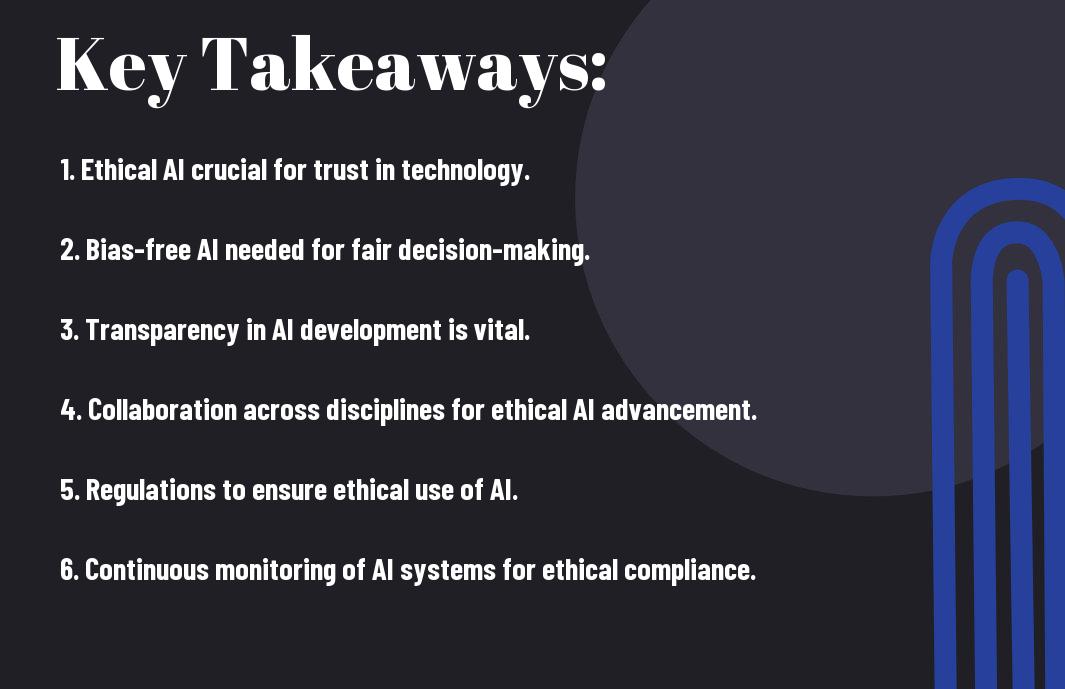
Key Takeaways:
- Ethical considerations are crucial: As AI technology advances, it is imperative to prioritize the ethical implications and consequences of its use.
- Transparency is key: Companies and developers must be transparent about how AI systems work and the data they collect to build trust with users.
- Regulations will play a significant role: Governments and regulatory bodies worldwide will need to establish guidelines and laws to ensure AI technology is used responsibly and ethically.
- Diversity and inclusivity: Ensuring diverse representation in AI development teams is important to prevent bias and promote fairness in AI applications.
- Educating the public: Increasing awareness and understanding of AI ethics among the general public is crucial to shape a future where technology serves everyone ethically and equitably.

The Foundations of AI Ethics
Defining AI Ethics
Clearly, defining AI ethics is crucial in understanding the moral implications of artificial intelligence. An increasingly complex field, AI ethics refers to the principles that govern the behavior of AI systems and the impact of their actions on individuals and society.
Key Principles and Frameworks
Foundations of AI ethics are built on key principles and frameworks that guide the development and deployment of AI technologies. These include principles such as transparency, accountability, fairness, and privacy, which are vital for ensuring that AI systems are designed and used in ethical ways.
To ensure that AI technologies are developed and used responsibly, it is vital to have a solid understanding of the key principles and frameworks that underpin AI ethics. Transparency in AI algorithms is crucial to allowing users to understand how decisions are made, while accountability mechanisms ensure that developers are held responsible for the outcomes of their technology. Fairness and privacy principles help prevent biases and protect sensitive data, ultimately shaping a more ethical future for AI technology.
AI Ethics in Practice
Incorporating Ethics into AI Development
Some of the most critical discussions in artificial intelligence (AI) revolve around the integration of ethics into the development process. As AI technology becomes more sophisticated and pervasive in our lives, the need to prioritize ethical considerations becomes increasingly urgent.
Ethical Decision-Making Algorithms
The development of ethical decision-making algorithms is crucial in ensuring that AI systems operate in a manner that aligns with ethical principles. These algorithms are designed to guide AI systems in making decisions that are morally sound and socially responsible. It is imperative that these algorithms are robust and capable of addressing complex ethical dilemmas that may arise in various contexts.
Algorithms that prioritize ethical considerations can help prevent AI systems from inadvertently perpetuating biases or engaging in harmful behaviors. By incorporating ethical decision-making algorithms into AI development, we can foster a future where AI technologies enhance human well-being while upholding ethical standards.
Policy and Governance
Unlike other areas of technological advancement, the development and implementation of AI technology come with a unique set of ethical considerations. As highlighted in Why AI Ethics is the Next Big Thing: A Look into Future …, the need for robust policy and governance frameworks has never been greater to ensure the responsible use of AI.
The Role of Governments and Institutions
Role of governments and institutions is pivotal in establishing guidelines and regulations that govern the development and deployment of AI technologies. By setting ethical standards and enforcing compliance with these regulations, governments can mitigate the risks associated with AI while fostering innovation and progress in this field.
Global Collaboration and Standardization
Any discussion surrounding AI ethics must involve global collaboration and standardization efforts to ensure consistency and accountability across borders. Collaboration among nations, tech companies, and regulatory bodies is crucial in establishing universal ethical standards for the development and deployment of AI technologies. Standardization can help prevent misuse of AI, promote transparency and accountability, and ensure fairness and equity in its applications.
The Future Implications of AI Ethics
Now, in the ever-evolving landscape of technology, AI ethics plays a crucial role in shaping the future. As discussed in Ethical AI in Practice: Shaping a Better Future, the ethical considerations surrounding AI technologies are becoming increasingly significant.
Predicting the Technological Landscape
Future technological advancements will heavily rely on the integration of ethical AI practices. As AI continues to permeate various aspects of our lives, ensuring ethical standards in its development and deployment will be critical for building a sustainable and inclusive technological landscape.
Challenges and Opportunities Ahead
The challenges and opportunities in the intersection of AI and ethics are vast and complex. The implementation of AI ethics poses challenges such as bias in algorithms, privacy concerns, and job displacement. However, embracing these challenges presents opportunities to create more transparent, accountable, and beneficial AI systems for society.
Landscape
Navigating the landscape of AI ethics requires a delicate balance between innovation and responsibility. Striking this balance is crucial to harnessing the full potential of AI while mitigating the risks it poses. As we look to the future, addressing these challenges head-on and seizing the opportunities presented by ethical AI will be paramount in shaping a more equitable and sustainable technological future.
To wrap up
Now, as we have seen, AI ethics will play a crucial role in shaping the future of technology. In order to ensure that AI continues to benefit society while minimizing potential harm, it is necessary for organizations and policymakers to prioritize ethical considerations. By establishing clear ethical guidelines, promoting transparency, and fostering collaboration between various stakeholders, we can pave the way for the responsible development and deployment of AI technologies. Ultimately, it is through upholding ethics in AI that we can harness its full potential to enhance our lives and drive positive change in the world.
FAQ
Q: What is AI ethics?
A: AI ethics refers to the moral principles and guidelines that govern the development and use of artificial intelligence technologies.
Q: Why is AI ethics important in technology?
A: AI ethics is important in technology to ensure that AI systems are developed and utilized in a responsible and fair manner, protecting individual rights and preventing harm to society.
Q: How can AI ethics shape the future of technology?
A: AI ethics can shape the future of technology by influencing the design, implementation, and regulation of AI systems to prioritize ethical considerations such as transparency, accountability, fairness, and privacy.
Q: What are the key challenges in AI ethics?
A: Key challenges in AI ethics include bias in datasets and algorithms, potential job displacement due to automation, lack of transparency in AI decision-making processes, and ensuring AI systems comply with existing laws and regulations.
Q: How can individuals and organizations promote AI ethics?
A: Individuals and organizations can promote AI ethics by educating themselves on ethical considerations in AI, advocating for ethical AI policies and practices, collaborating with stakeholders to develop ethical guidelines, and integrating ethical principles into the design and deployment of AI technologies.
Comments