

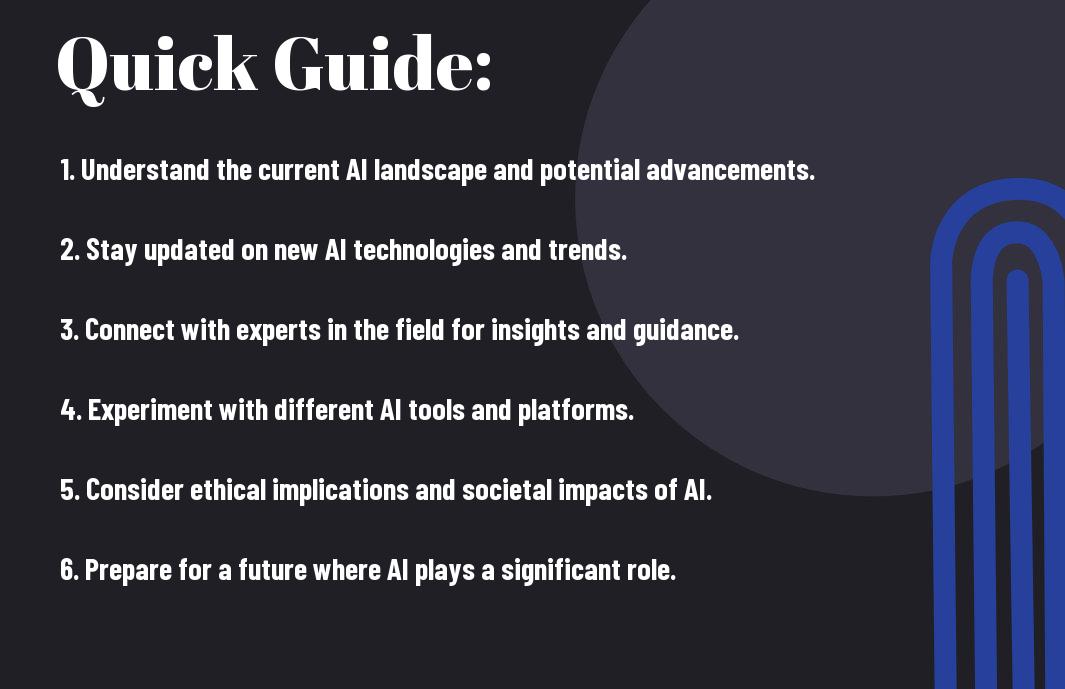
This comprehensive guide is designed to offer insightful and authoritative information on the future of AI. As artificial intelligence continues to rapidly advance and shape various industries, it is crucial to understand the implications and opportunities that come with it. From potential ethical dilemmas to revolutionary technological advancements, this guide will provide a roadmap for navigating the complex landscape of AI, helping you stay informed and prepared for what lies ahead.

Key Takeaways:
- Continued Expansion: The future of AI is expected to see continued expansion and integration into various industries and aspects of daily life.
- Ethical Considerations: With the advancement of AI comes the need for addressing ethical considerations such as privacy, bias, and fairness in algorithms and decision-making processes.
- Human-AI Collaboration: The future will likely see more emphasis on human-AI collaboration, where AI complements human skills and enhances productivity rather than replacing human workers.
- Regulation and Governance: There will be a growing need for regulations and governance frameworks to ensure the responsible development and deployment of AI technologies.
- Continuous Learning: To stay relevant in the changing landscape of AI, individuals and organizations will need to prioritize continuous learning and upskilling to adapt to new technologies and roles.
Understanding the Types of AI
Little by little, AI is revolutionizing the way we interact with technology, but understanding the different types of AI is crucial. To navigate through this landscape, it’s imperative to grasp the distinctions between Narrow AI, General AI, and Superintelligent AI. For a more in-depth exploration of these types of AI, check out The Artificial Intelligence Landscape: Navigating the Future …
| Narrow AI | General AI |
| Weak AI that is specialized | Strong AI that can understand and learn any intellectual task that a human being can |
| Used in current applications like virtual assistants and recommendation systems | Has the potential to outperform human abilities |
| Limited in scope and functionality | Still theoretical and under development |
Narrow AI: Current Applications and Limitations
Narrow AI focuses on specific tasks and is prevalent in applications such as virtual assistants and recommendation systems. While it excels in performing defined tasks, its limitations lie in its narrow scope and inability to adapt to new situations seamlessly.
General AI: Assessing the Future Potential
Types of AI like General AI have the ability to learn and understand any intellectual task a human can, presenting a vast future potential. As research progresses in this area, the possibility of AI surpassing human capabilities looms on the horizon, raising important ethical questions and considerations.
Superintelligent AI: Ethical and Existential Considerations
Little is known about Superintelligent AI, yet its potential influence on society poses ethical and existential concerns. It’s crucial to carefully consider the impact of AI that exceeds human intelligence, as the consequences, both positive and negative, could be profound.
Preparing for an AI-Powered Future
Keep Navigating the AI landscape at the forefront when preparing for the future of AI. As businesses increasingly integrate artificial intelligence into their operations, it is crucial to understand the steps needed to navigate this evolving landscape effectively.
Step-by-Step Approach to Implementing AI in Business
| Assess Current Capabilities | Define AI Strategy |
| Understand your organization’s existing strengths and weaknesses in relation to AI implementation. | Establish clear objectives and roadmap for integrating AI into your business processes. |
Tips for Developing AI-Ready Skills in the Workforce
One of the vital aspects of preparing for an AI-powered future is to equip the workforce with AI-ready skills. This includes fostering a culture of continuous learning and development to adapt to the changing demands brought about by AI technologies.
- Provide Training Opportunities: Invest in AI training programs to upskill employees.
- Promote Collaboration: Encourage cross-functional teams to work on AI projects together.
- Cultivate Data Literacy: Develop an understanding of data and its relevance in AI applications.
This proactive approach will ensure that your workforce remains relevant and competitive in an AI-driven environment.

Factors Influencing AI Evolution
Not only is AI rapidly evolving, but it is also influenced by a myriad of factors that shape its future trajectory. Understanding these influences is crucial for navigating the complex landscape of artificial intelligence.
Technological Advancements and Limitations
One of the key factors driving the evolution of AI is the constant stream of technological advancements. Breakthroughs in machine learning, neural networks, and natural language processing have propelled AI to new heights. However, limitations in data quality, computing power, and algorithm bias can hinder its progress. Striking a balance between innovation and overcoming these obstacles is crucial for the continued advancement of AI.
Regulatory Framework and Ethical Considerations
If regulatory frameworks and ethical considerations are not properly addressed, they could pose significant challenges to the widespread adoption of AI. Ensuring transparency, accountability, and fairness in AI systems is crucial to earning public trust and mitigating potential risks. The development of ethical guidelines and policies must keep pace with the rapid advancement of AI technology to promote its responsible use.
Technological advancements have the potential to revolutionize industries and improve efficiency, but without appropriate regulatory oversight, the misuse of AI could have harmful consequences. Robust regulations and ethical guidelines are crucial to harnessing the full potential of AI while safeguarding against unethical practices and misuse.
Weighing the Impact of AI
The Pros of AI: Efficiency, Innovation, and Growth
Unlike any other technological advancement in recent years, Artificial Intelligence (AI) has the potential to revolutionize how we live and work. One of the primary advantages of AI is its ability to enhance efficiency, drive innovation, and fuel economic growth. By automating repetitive tasks and optimizing processes, AI can significantly increase productivity and enable businesses to explore new opportunities for growth.
The Cons of AI: Job Displacement, Privacy Concerns, and Control Issues
Efficiency gains come at a cost, and AI is no exception. Job displacement is a significant concern as AI and automation could potentially replace numerous human jobs, leading to unemployment and economic instability. Privacy concerns also arise as AI systems collect and analyze vast amounts of data, raising questions about data protection and ethical use. Additionally, control issues emerge as AI becomes more autonomous and decisions are made without human intervention, raising questions about accountability and transparency.
Impact: While the efficiency, innovation, and growth potential of AI are undeniable, the potential job displacement, privacy concerns, and control issues highlight the complex challenges that come with the widespread adoption of AI. It is crucial for policymakers, businesses, and individuals to carefully navigate these issues to ensure that the benefits of AI are harnessed while mitigating potential risks.
Navigational Strategies for Adopting AI
Industry-Specific Guidelines and Best Practices
One of the key factors in successfully adopting AI is understanding industry-specific guidelines and best practices. Each sector has its own unique challenges, opportunities, and regulatory requirements when it comes to AI implementation. It’s imperative to conduct thorough research and consult with experts in your industry to tailor AI solutions to your specific needs.
Creating a Sustainable and Ethical AI Policy
Any organization looking to integrate AI into their operations must prioritize creating a sustainable and ethical AI policy. This policy should encompass guidelines on data privacy, transparency, accountability, and fairness in AI decision-making processes. Organizations need to ensure that their AI systems are designed to uphold ethical standards and sustainable practices to mitigate risks and build trust with stakeholders.
Policy: Developing a comprehensive AI policy is crucial to not only comply with regulations but also to uphold ethical principles. Organizations should establish clear guidelines on how AI technology will be used, monitored, and updated within the organization. It is imperative to emphasize transparency, accountability, and responsibility in the utilization of AI to ensure its ethical and sustainable deployment.
Summing up
As a reminder, “Navigating The Landscape – A Guide On The Future Of AI” researchs into the intricate world of artificial intelligence and its impact on various fields. From ethical considerations to practical applications, this guide has provided a comprehensive overview of the future of AI. By understanding the potential benefits and pitfalls of AI technology, individuals and organizations can navigate the rapidly evolving landscape with confidence and foresight. As AI continues to shape our world, staying informed and proactive will be key in harnessing its full potential while mitigating risks. By embracing the opportunities that AI presents and approaching it with a critical lens, we can pave the way for a future where artificial intelligence enhances human capabilities and drives innovation across industries.
FAQ
Q: What is the importance of understanding the future of AI?
A: Understanding the future of AI is crucial as it will shape how we interact with technology, businesses, and society as a whole. Being informed about AI trends can help individuals and organizations stay ahead in this rapidly evolving landscape.
Q: How can AI impact different industries?
A: AI has the potential to revolutionize various industries such as healthcare, finance, transportation, and agriculture. It can streamline processes, improve efficiency, and drive innovation in ways previously unimaginable.
Q: What are the ethical considerations associated with AI development?
A: Ethical considerations in AI development include issues related to privacy, bias in algorithms, job displacement, and the potential for misuse of AI technology. It is imperative to address these concerns to ensure AI is developed and deployed responsibly.
Q: What skills are crucial for navigating the future AI landscape?
A: Skills such as data analysis, machine learning, programming, critical thinking, and creativity are imperative for individuals looking to navigate the future AI landscape. Continuous learning and adaptability are also key in staying relevant in this field.
Q: How can businesses leverage AI for growth and innovation?
A: Businesses can leverage AI for growth and innovation by incorporating AI tools for data analysis, customer personalization, process automation, and predictive modeling. Embracing AI technologies can provide a competitive edge and drive business success in the digital age.
Comments