
AI #Neurocomputing is revolutionizing the field of artificial intelligence by mimicking the human brain’s architecture and functioning. Neuromorphic computing, a specialized form of computing that uses neural networks to process information, shows immense potential in advancing AI capabilities. By leveraging emulating the brain’s parallel processing and low energy consumption, neuromorphic systems offer unparalleled efficiency and speed in handling complex tasks. This groundbreaking technology has the power to accelerate machine learning algorithms, making AI more versatile and powerful than ever before. As researchers explore deeper into neuromorphic computing, the future of AI looks promising, with potential applications in medical diagnostics, autonomous vehicles, and robotics.
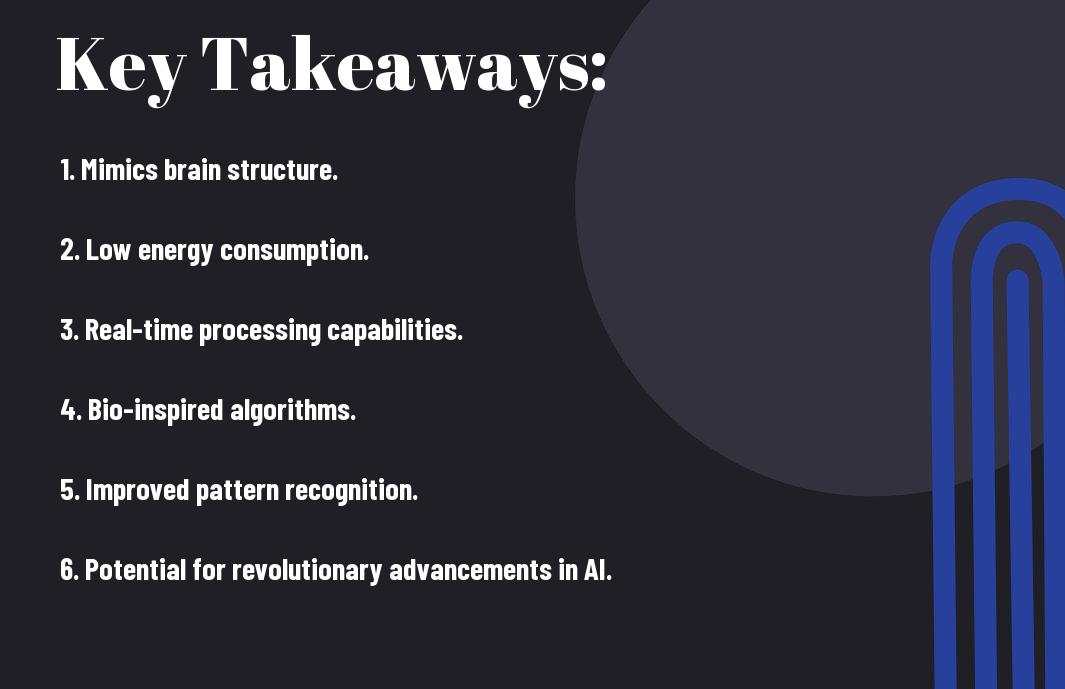
Key Takeaways:
- Neuromorphic computing involves mimicking the human brain’s architecture to enhance AI capabilities.
- Advantages of neuromorphic computing include lower power consumption and faster processing speeds compared to conventional computing systems.
- Neuromorphic chips have the potential to revolutionize AI applications by enabling real-time processing and edge computing.
- Challenges such as scalability and programming complexity need to be addressed for widespread adoption of neuromorphic computing in AI.
- The future of AI development could be significantly shaped by the advancements in neuromorphic computing technology.
Foundations of Neuromorphic Computing
Some Advancing Artificial Intelligence with Neuromorphic Computing argue that neuromorphic computing is the key to advancing AI due to its biological inspiration and core principles.
Biological Inspiration Behind Neuromorphic Systems
On a fundamental level, neuromorphic systems are inspired by the way the human brain functions. These systems aim to mimic the structure and behavior of biological neural networks, enabling them to process information in a more natural and efficient manner.
Core Principles of Neuromorphic Engineering
Engineering neuromorphic systems involves adhering to core principles such as parallel processing, low power consumption, and adaptability. These principles are vital for creating efficient and scalable neuromorphic systems that can perform complex cognitive tasks.
This approach to computing is revolutionary as it not only enhances the performance of AI algorithms but also opens up possibilities for creating more intelligent and energy-efficient systems in various applications.
Neuromorphic Computing and AI Advancement
Enhancing Machine Learning Capabilities
Capabilities Assuming neuromorphic computing is the key to advancing AI, one of the most significant ways it does so is by enhancing machine learning capabilities. Neuromorphic systems mimic the human brain’s neural structure, enabling them to process and understand data in a more efficient and human-like manner. This results in improved pattern recognition, decision-making, and adaptation to new information, ultimately advancing AI to new heights.
Energy Efficiency and Real-time Processing
Efficiency Assuming neuromorphic computing is the key to advancing AI, another crucial aspect it brings to the table is energy efficiency and real-time processing. These systems are designed to operate with significantly lower power consumption compared to traditional computing architectures. With neuromorphic computing, AI models can be deployed on edge devices, enabling real-time processing of data without relying on cloud infrastructure. This not only improves efficiency but also opens up possibilities for applications requiring low latency and high-speed processing.
Challenges and Considerations
All AI enthusiasts and tech aficionados have their eyes on the emerging field of neuromorphic computing. According to The Next Frontier in AI: Computers That Think Like Humans, neuromorphic computing holds the potential to revolutionize artificial intelligence by mimicking the brain’s neural architecture. However, before we reach the full potential of this technology, there are several challenges and considerations that must be addressed.
Technical and Material Limitations
An inherent challenge with neuromorphic computing lies in the technical and material limitations. Developing hardware that can accurately replicate the complex neural networks of the human brain is no small feat. Current technologies struggle to match the brain’s efficiency in processing vast amounts of data simultaneously while consuming minimal energy.
Ethical and Societal Implications
Societal acceptance and ethical considerations are crucial aspects to address in the advancement of neuromorphic computing. As machines become more human-like in their thinking abilities, questions surrounding job displacement, privacy invasion, and even the potential for autonomous decision-making and control arise. It is imperative to have regulations and ethical frameworks in place to ensure the safe and responsible development and deployment of this technology.
Ethical considerations also extend to the domain of AI security, as the potential for these systems to be manipulated or hacked raises concerns. The integration of neuromorphic computing in various sectors, from healthcare to finance, requires thorough monitoring and safeguards to protect against misuse or exploitation.
Future Perspectives
Integration with Existing AI Frameworks
Once again, as neuromorphic computing continues to progress, the integration with existing AI frameworks becomes a crucial aspect to explore. With the potential to revolutionize AI capabilities, merging neuromorphic computing with traditional AI methodologies can lead to enhanced performance and efficiency in various applications.
Potential Breakthroughs and Applications
Any discussion about the future of neuromorphic computing would be incomplete without exploring the potential breakthroughs and applications it could bring. Future advancements in this field could pave the way for groundbreaking innovations in areas such as robotics, autonomous vehicles, and healthcare. The ability of neuromorphic chips to mimic the brain’s neural processes holds strong promise for creating more intelligent and adaptive systems.
Conclusion
With this in mind, Neuromorphic Computing holds significant promise in advancing AI by mimicking the structure and function of the human brain. By combining the power of neuroscience and computer science, researchers aim to develop more efficient and powerful artificial intelligence systems. The ability of neuromorphic chips to handle complex, real-time data processing tasks while consuming less power than traditional computing methods makes it a key technology in shaping the future of AI. As advancements continue in this field, we can expect to see significant improvements in AI capabilities, leading to more advanced decision-making systems and intelligent technologies that can revolutionize various industries.
FAQ
Q: What is neuromorphic computing?
A: Neuromorphic computing is a type of computing that mimics the way the human brain works by using networks of artificial neurons to process information.
Q: How does neuromorphic computing differ from traditional computing?
A: Neuromorphic computing differs from traditional computing by focusing on parallel processing, low power consumption, and the ability to learn and adapt, similar to the human brain.
Q: What role does neuromorphic computing play in advancing AI?
A: Neuromorphic computing plays a crucial role in advancing AI by enabling the development of more efficient and intelligent algorithms that can learn from data in real-time.
Q: What are the advantages of using neuromorphic computing in AI applications?
A: The advantages of using neuromorphic computing in AI applications include faster processing speeds, lower energy consumption, and the ability to handle complex and unstructured data more effectively.
Q: What are some examples of how neuromorphic computing is being used in AI research?
A: Neuromorphic computing is being used in AI research for tasks such as image and speech recognition, autonomous vehicles, and robotics, to develop more sophisticated and human-like intelligent systems.
Comments