
Evolution #Quantum of technology has brought us to an exciting crossroads where the convergence of quantum computing and artificial intelligence holds immense potential. Quantum computing offers the ability to process vast amounts of data in parallel, exceeding the capabilities of traditional computers. This has the potential to revolutionize AI by tackling complex problems exponentially faster, leading to breakthroughs in areas such as machine learning, natural language processing, and computer vision. However, with this power comes the risk of security threats posed by quantum computers potentially breaking current encryption methods. Understanding the implications of this fusion is crucial as we step into the future of technology.
Key Takeaways:
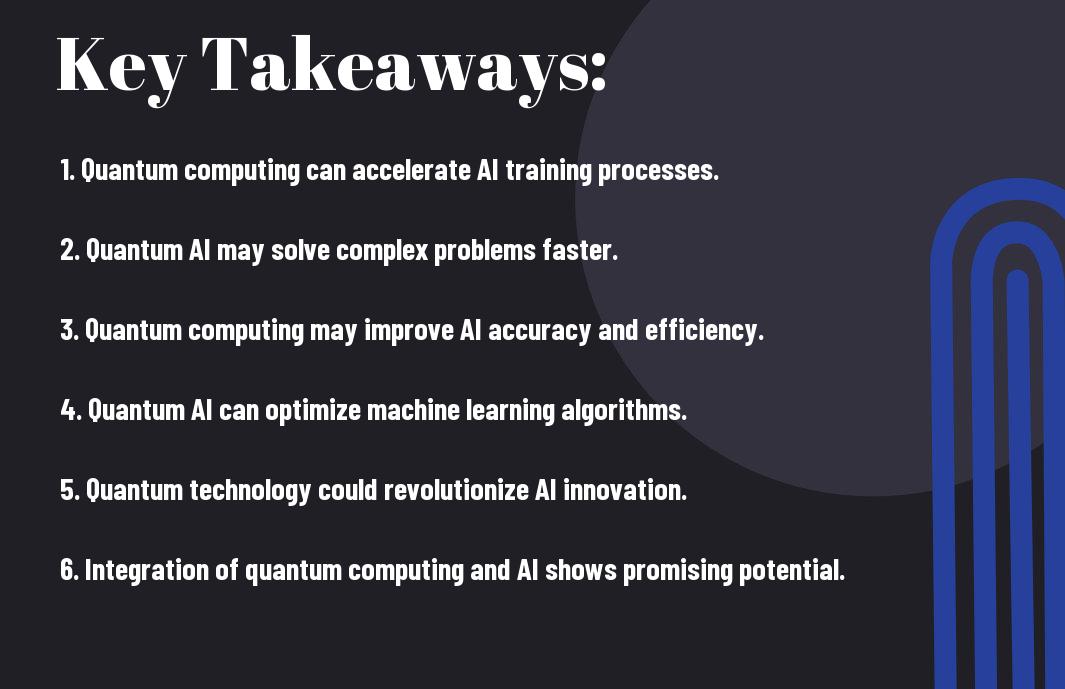
- Quantum computing holds the potential to significantly boost the evolution of AI by enabling it to process vast amounts of data at an unprecedented speed.
- Quantum computers can solve complex problems that are currently infeasible for classical computers due to their quantum properties of superposition and entanglement.
- The marriage of quantum computing and AI could lead to breakthroughs in areas such as machine learning, optimization, and algorithm development.
- One of the challenges is to develop quantum machine learning algorithms that can leverage the capabilities of quantum computers effectively.
- While the integration of quantum computing and AI presents exciting possibilities, there are still technical hurdles to overcome before widespread adoption can occur.
Fundamentals of Quantum Computing
Principles of Quantum Mechanics in Computing
There’s a fundamental shift happening in the world of computing with the advent of quantum mechanics. Quantum computing utilizes the principles of superposition and entanglement to process information in ways that traditional computers cannot. This means that quantum computers have the potential to perform certain tasks exponentially faster than classical computers.
Quantum Computing Technologies and Milestones
On the frontier of technological innovation, quantum computing continues to push boundaries and achieve remarkable milestones. Quantum supremacy is a significant milestone that demonstrates a quantum computer can outperform the most powerful supercomputers. The development of quantum error correction codes is also a critical advancement, addressing one of the biggest challenges in quantum computing.
Computing
Quantum computing technologies are advancing rapidly, with companies like IBM, Google, and Microsoft investing heavily in research and development. Quantum computers have the potential to revolutionize fields such as cryptography, drug discovery, and optimization problems. However, the technology is still in its early stages, facing challenges such as error rates and scalability. Ensuring the security and stability of quantum systems will be crucial for their widespread adoption in the future.
Advancements in Artificial Intelligence
Some After Artificial Intelligence, Quantum Computing Could Be…
Current State of AI Development
Advancements in artificial intelligence have been rapidly evolving, with breakthroughs in machine learning algorithms and neural network architectures. AI applications are now integrated into various industries, from healthcare to finance, driving efficiency and innovation.
Machine Learning and Neural Networks
An increasing focus on machine learning and neural networks has propelled AI capabilities to new heights. With machine learning, systems can learn from data, identify patterns, and make decisions with minimal human intervention. Neural networks mimic the human brain’s structure and function, enabling AI to recognize complex patterns and solve intricate problems.
Integration of Quantum Computing into AI
All Will quantum computers pave the way for Artificial Intelligence signs indicate that the integration of quantum computing into AI could revolutionize the capabilities of artificial intelligence systems. Quantum computing has the potential to significantly enhance the speed and efficiency of AI algorithms, opening up new possibilities for solving complex problems and advancing machine learning processes.
Quantum Algorithms for Machine Learning
To accelerate the evolution of AI, researchers are exploring the potential of quantum algorithms tailored for machine learning tasks. These algorithms leverage quantum principles such as superposition and entanglement to process vast amounts of data simultaneously, offering the promise of exponential speedups over classical machine learning algorithms.
Improving AI with Quantum Processing Power
Powerful quantum computing hardware can provide AI systems with enhanced processing capabilities that could significantly improve performance across various applications. This integration could enable AI to tackle complex problems in areas such as optimization, pattern recognition, and natural language processing with unprecedented efficiency and accuracy.
Challenges and Considerations
Technical and Theoretical Obstacles
Considerations in the integration of quantum computing with AI include the technical and theoretical obstacles that come with this revolutionary merger. The complex nature of quantum systems introduces challenges in scaling quantum computers to the level required for training sophisticated AI models efficiently. Additionally, ensuring the stability and reliability of quantum processors poses a significant challenge in leveraging the full potential of quantum computing in AI applications.
Ethical and Practical Implications
Ethical considerations play a crucial role in the evolution of AI powered by quantum computing. The intersection of these advanced technologies raises concerns regarding data privacy, security, and the potential misuse of AI capabilities. Ethical frameworks and regulations must be established to govern the responsible deployment of AI systems enhanced by quantum computing, addressing issues like bias, transparency, and accountability.
This requires a collective effort from researchers, policymakers, and industry leaders to establish ethical guidelines and standards that prioritize the safety and well-being of society while harnessing the immense potential of quantum computing to advance AI technologies.
Future Outlook
Predictions for Quantum AI
Not only is the integration of quantum computing and AI technologies expected to revolutionize the way we approach complex problems, but it also has the potential to unlock unprecedented advancements in various fields such as drug discovery, optimization, and machine learning.
Preparing for the Quantum AI Revolution
Preparing for the Quantum AI Revolution is important for organizations and researchers to stay ahead in the rapidly evolving technological landscape. The convergence of quantum computing and AI will require a deep understanding of both fields, along with investments in infrastructure, talent, and research.
Outlook: As we look towards the future, the fusion of quantum computing and AI presents immense opportunities for innovation and breakthroughs in scientific research, financial modeling, and cybersecurity. However, it is crucial for stakeholders to also be mindful of the challenges and ethical implications that may arise, such as data privacy concerns and algorithmic biases. By fostering collaboration and investment in this burgeoning field, we can harness the power of quantum AI for the betterment of society.
Summing up
From above discussion, it is evident that the advancement of quantum computing has the potential to greatly accelerate the evolution of AI. The ability of quantum computers to perform complex calculations at a much faster rate than classical computers can revolutionize machine learning algorithms, optimization problems, and data analysis. By harnessing the power of quantum mechanics, researchers are poised to unlock new capabilities and possibilities for AI applications. While there are still challenges to overcome, the synergy between quantum computing and AI holds promise for paving the way towards more efficient and powerful artificial intelligence systems in the near future.
FAQ
Q: What is Quantum Computing?
A: Quantum computing is a new paradigm of computing that uses quantum-mechanical phenomena, such as superposition and entanglement, to perform operations on data. It has the potential to solve complex problems much faster than classical computers.
Q: How can Quantum Computing boost the evolution of AI?
A: Quantum computing can significantly enhance AI capabilities by speeding up machine learning algorithms and optimizing complex calculations. It can handle large datasets more efficiently and enable the development of more powerful AI models.
Q: What are the current challenges in integrating Quantum Computing and AI?
A: Some of the challenges include the development of quantum algorithms that are compatible with AI tasks, the need for scalable quantum hardware, and the expertise required to work with both quantum computing and AI technologies.
Q: What are some potential applications of combining Quantum Computing and AI?
A: The combination of quantum computing and AI can revolutionize industries such as healthcare, finance, and cybersecurity. It can lead to advancements in drug discovery, financial modeling, and data security, among other areas.
Q: What does the future hold for Quantum Computing and AI integration?
A: The future looks promising for the integration of quantum computing and AI, with ongoing research and development efforts aimed at overcoming current challenges. As both technologies continue to advance, we can expect to see groundbreaking innovations that will shape the future of computing and AI.
Comments