
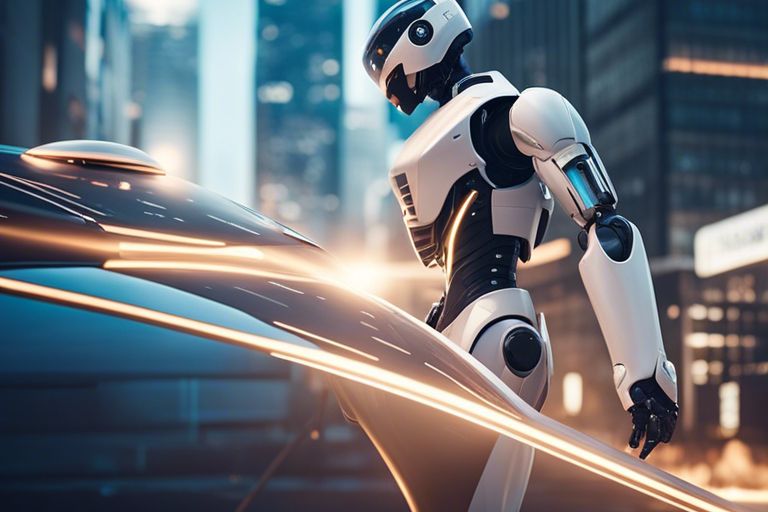
It has been a concept lingering in the realms of science fiction for decades, but now, Artificial Intelligence (AI) is no longer a futuristic dream – it has arrived in the present. With its potential to revolutionize industries, improve efficiencies, and enhance human capabilities, AI is shaping the world we live in today. From autonomous vehicles to smart assistants in our homes, the impact of AI is undeniable and can be seen in various aspects of our daily lives. However, as we navigate this new era of technology, it’s crucial to understand both the benefits and the risks that come with the integration of AI into our society.
Key Takeaways:
- AI applications: AI has transitioned from sci-fi to reality, permeating various industries such as healthcare, finance, transportation, and more.
- Impact on society: The integration of AI technology in daily life has raised concerns about job displacement, ethical considerations, privacy issues, and the need for regulation.
- Ongoing advancements: Continuous developments in AI, including machine learning, natural language processing, and robotics, are shaping the future of technology and its applications.
The Building Blocks of Contemporary AI
Machine Learning and Neural Networks
Even as recent as a decade ago, the concept of machines learning from data and improving their performance without being explicitly programmed seemed like a distant dream. However, with the exponential growth of data and advances in computing power, machine learning has become the cornerstone of contemporary artificial intelligence.
Natural Language Processing and Computer Vision
On the other hand, the fields of natural language processing (NLP) and computer vision have revolutionized the way machines comprehend and interact with human language and visual data. These technologies enable machines to understand, interpret, and generate human language, as well as analyze and make sense of visual information.
For example, in NLP, machines can now not only understand the context and nuances of human language but also generate human-like text. Similarly, in computer vision, machines can accurately identify objects, people, and activities in images and videos, revolutionizing fields such as surveillance, healthcare, and autonomous vehicles. These advancements have paved the way for powerful applications in various industries.
This unprecedented progress in NLP and computer vision has opened up new possibilities for AI-driven solutions that can revolutionize industries, streamline processes, and enhance human capabilities. However, it also raises concerns about data privacy, security, and the ethical implications of AI technologies in society. As we explore deeper into contemporary AI, it is crucial to strike a balance between innovation and responsibility, ensuring that AI continues to enrich and empower humanity.
AI Integration in Everyday Life
Smart Home Devices and Personal Assistants
Clearly, the integration of AI in everyday life can be seen through the widespread adoption of smart home devices and personal assistants. With voice-operated assistants like Amazon’s Alexa and Google Home, individuals can control their home environment, play music, get weather updates, and even shop online using just their voice.
Autonomous Vehicles and Drone Technology
For autonomous vehicles and drone technology, AI plays a crucial role in revolutionizing transportation and delivery services. Companies like Tesla and Waymo are leading the way in developing self-driving cars that rely on AI algorithms to navigate roads safely and efficiently. Drones equipped with AI technology are being used for various purposes, including package delivery and search and rescue missions.
To sum up, the advancement of AI integration in everyday life brings both convenience and challenges. While smart home devices and personal assistants offer personalized experiences, autonomous vehicles and drones have the potential to transform various industries. It is important to embrace these developments while also addressing concerns related to privacy and safety.
Ethical Considerations and Social Impact
Once again, as artificial intelligence (AI) continues to evolve and integrate into various aspects of our lives, ethical considerations and social impact become significant areas of concern. It is imperative to address these aspects to ensure that the advancements in AI benefit society as a whole.
Privacy and Security Concerns with AI
Impact: The integration of AI technologies raises valid concerns regarding privacy and security. With the vast amount of data being collected and analyzed by AI systems, there is a risk of unauthorized access and misuse of sensitive information. It is crucial to establish robust data protection measures and ensure transparency in how data is utilized to mitigate these risks.
The Future of Employment and AI
With the increasing automation of tasks and roles traditionally performed by humans, the future of employment is a topic of intense debate. For instance, while AI can enhance productivity and efficiency in many industries, it also has the potential to disrupt job markets by replacing certain roles. It is crucial for policymakers, businesses, and educators to collaborate in preparing the workforce for the changing landscape and creating opportunities for reskilling and upskilling.

Pushing the Boundaries: Cutting-Edge AI Innovations
AI in Healthcare and Diagnostics
Boundaries in the healthcare sector are being pushed with the integration of AI technologies. From disease diagnosis to personalized treatment plans, AI is revolutionizing how we approach healthcare and diagnostics. AI algorithms can analyze vast amounts of medical data in a fraction of the time it would take a human, leading to quicker and more accurate diagnoses.
AI’s Role in Space Exploration and Climate Change
Role of AI extends to space exploration and climate change mitigation efforts. In space exploration, AI is aiding in autonomous spacecraft navigation, data analysis, and even the search for extraterrestrial life. Regarding climate change, AI is being harnessed to analyze complex environmental data, predict natural disasters, and develop sustainable solutions. Organizations like NASA and NOAA are leveraging AI to make groundbreaking discoveries and address pressing environmental challenges.
This technology has the potential to revolutionize our understanding of the universe and protect our planet from irreversible climate damage. AI-driven insights are enabling scientists to make more informed decisions and develop innovative strategies for a sustainable future.
To wrap up
As a reminder, the journey from science fiction to reality is a testament to the advancements in artificial intelligence that have brought us to the present day. From autonomous vehicles to virtual assistants, AI has seamlessly integrated into our daily lives, transforming industries and shaping the future. With ongoing developments and innovations, the potential applications of AI are limitless. It is imperative that we continue to monitor and regulate its implementation to ensure ethical use and safeguard against any potential risks. By understanding and embracing the opportunities and challenges posed by AI, we can harness its power to drive positive change and further enhance our world.
FAQ
Q: What is the significance of artificial intelligence in the present day?
A: Artificial intelligence (AI) plays a crucial role in various industries and sectors by enabling automation, data analysis, and decision-making processes. Its presence is reshaping how businesses operate and how individuals interact with technology.
Q: How does AI impact our daily lives?
A: AI affects our daily lives in numerous ways, from personalized recommendations on streaming services to autonomous vehicles on the roads. It also powers virtual assistants, smart home devices, and healthcare technologies, enhancing convenience and efficiency.
Q: What are some ethical considerations related to AI’s integration into society?
A: Ethical considerations surrounding AI include issues such as data privacy, algorithmic bias, job displacement due to automation, and the potential misuse of AI for surveillance purposes. It is crucial for policymakers, businesses, and individuals to address these concerns to ensure responsible AI development and deployment.
Comments