

Unravel the fascinating journey from Turing’s ideas to modern AI developments in this captivating historical exploration of artificial intelligence.

Table of Contents
Welcome to our blog series on artificial intelligence (AI). In this series, we will provide a comprehensive overview of AI, covering its historical context, current applications, benefits, challenges, and ethical concerns. We will also delve into the future direction of AI and address the popular fear of a “Skynet” scenario. So, join us on this journey as we unravel the fascinating world of artificial intelligence.
Historical Context of AI
Artificial intelligence, or AI, has a rich history that dates back to the mid-20th century. The term “artificial intelligence” was coined in 1956 by computer scientist John McCarthy. However, the idea of creating machines that can mimic human intelligence can be traced back even further to the work of pioneering mathematician Alan Turing.
Turing proposed the concept of a universal machine in the 1930s, which laid the foundation for modern computing. His famous Turing Test, developed in 1950, set a benchmark for determining whether a machine exhibits human-like intelligence. This test continues to be a benchmark in the field of AI.
Throughout the decades, AI has gone through periods of significant progress and setbacks. In the 1980s, AI experienced a boom with advancements in expert systems and natural language processing. However, the field faced challenges and skepticism in the following years, known as the “AI winter.”
Current Applications of AI
Today, AI has become an integral part of various industries and sectors. From healthcare to finance, entertainment to transportation, AI is transforming the way we live and work. In healthcare, AI is being used to improve diagnostics, personalize treatment plans, and enhance patient care.
In finance, AI algorithms are enabling faster and more accurate trading decisions, fraud detection, and risk assessment. In the entertainment industry, AI is revolutionizing content creation, recommendation systems, and personalized user experiences.
The adoption of AI in transportation is leading to advancements in autonomous vehicles, traffic management systems, and route optimization. These are just a few examples of how AI is reshaping our world and driving innovation across industries.
Benefits of AI
The benefits of AI are vast and diverse. One of the key advantages of AI is its ability to enhance productivity and efficiency. AI-powered systems can automate repetitive tasks, analyze vast amounts of data, and provide valuable insights in real-time.

Image courtesy of www.linkedin.com via Google Images
AI also has the potential to solve complex problems that may be beyond human capabilities. From predicting climate patterns to optimizing supply chains, AI is enabling breakthroughs that were once unimaginable.
Furthermore, AI has the power to improve decision-making processes. By analyzing large datasets and identifying patterns, AI algorithms can help businesses make data-driven decisions that lead to better outcomes.
Challenges of AI
Despite its numerous benefits, AI also presents challenges that must be addressed. One of the primary challenges is bias in AI algorithms. If not properly managed, AI systems can perpetuate and amplify existing biases, leading to unfair outcomes.
Privacy concerns are another challenge in the world of AI. As AI systems gather and analyze personal data, there is a risk of privacy breaches and unauthorized use of sensitive information. Ensuring data security and protecting user privacy are critical considerations in the development of AI.
Job displacement is also a concern associated with AI. As automation technologies advance, there is a fear that AI will replace human workers, leading to unemployment and economic disruptions. Finding ways to reskill and upskill the workforce is essential to mitigate this challenge.
Ethical Concerns of AI
AI raises profound ethical concerns that require careful consideration. One of the key ethical issues in AI is transparency. As AI systems become more complex and autonomous, it can be challenging to understand how decisions are made and hold accountable for their actions.

Image courtesy of digitalwellbeing.org via Google Images
Accountability is another ethical concern in AI. When AI systems make decisions that impact individuals or society, it is crucial to establish clear lines of responsibility and accountability. Ensuring that AI technologies are developed and used in ethically responsible ways is paramount.
Fairness is also a significant ethical consideration in AI. Ensuring that AI systems are fair and unbiased in their decision-making processes is essential to prevent discrimination and promote equal opportunities for all individuals.
Future Direction of AI
The future of AI holds immense potential for innovation and transformation. Emerging trends in AI technology, such as deep learning, reinforcement learning, and natural language processing, are opening up new possibilities for applications in various domains.
As AI continues to advance, we can expect to see greater integration of AI with other technologies, such as robotics, IoT, and blockchain. This integration will lead to the development of more sophisticated and intelligent systems that can enhance our daily lives and drive societal progress.
The future of AI also presents opportunities for addressing pressing global challenges, such as climate change, healthcare disparities, and economic inequality. AI technologies have the potential to revolutionize industries, improve decision-making processes, and create more sustainable and inclusive solutions for a better future.
Can Skynet Happen? Exploring the “AI Apocalypse”
The idea of a “Skynet” scenario, where AI becomes self-aware and poses a threat to humanity, has been a popular theme in science fiction. While this concept may seem far-fetched, it raises important questions about the risks and safeguards of AI technology.
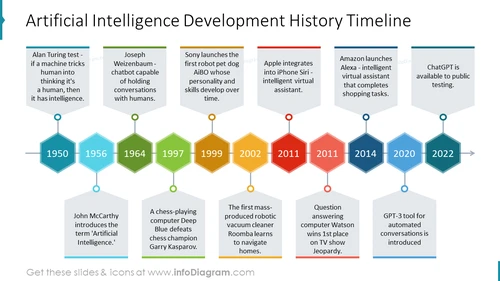
Image courtesy of www.infodiagram.com via Google Images
It is crucial to distinguish between Hollywood portrayals of AI and the reality of current AI technologies. While AI systems have made significant advancements in recent years, they are still fundamentally different from human intelligence and consciousness.
However, the fear of AI taking over the world is not entirely unfounded. As AI systems become more autonomous and capable of learning independently, there is a need to implement robust safeguards and ethical guidelines to prevent unintended consequences.
Addressing the Fear of AI
Addressing the fear of AI requires proactive measures to promote transparency, accountability, and ethical governance. By establishing clear guidelines and regulations for the development and deployment of AI technologies, we can mitigate potential risks and ensure that AI is used responsibly.
Educating the public about AI and its capabilities is also essential in dispelling myths and misconceptions. By fostering a better understanding of AI and its potential impact on society, we can build trust and confidence in the responsible use of AI technologies.
Engaging in dialogues and debates about AI ethics and governance is critical for shaping the future of AI in a way that benefits humanity. By promoting collaboration and cooperation among stakeholders, we can work towards a future where AI is harnessed for the greater good of society.
The Future of AI: A Call to Action
In conclusion, artificial intelligence is a transformative technology that holds great promise for the future. By harnessing the power of AI responsibly and ethically, we can create a world that is more innovative, efficient, and equitable for all.
As we continue to explore the possibilities of AI, it is essential for individuals, organizations, and policymakers to work together to address the challenges and opportunities that AI presents. By staying informed, engaging in discussions, and advocating for ethical AI practices, we can shape a future where AI benefits us all.
Thank you for joining us on this journey through the world of artificial intelligence. We hope that this blog series has sparked your curiosity and inspired you to learn more about the exciting field of AI. Together, let’s embrace the potential of AI and build a future that is intelligent, ethical, and empowering for all.
Generated by Texta.ai Blog Automation
Comments