
Delve into the fascinating journey of AI from its inception to current advancements and exciting possibilities for the future.

Image courtesy of Arnesh Yadram via Pexels
Table of Contents
Artificial Intelligence, or AI, has become one of the most transformative technologies of our time. From virtual assistants to self-driving cars, AI is shaping the way we live, work, and interact with the world around us. In this blog post, we will explore the past, present, and future of AI, discussing its historical context, current applications, benefits, challenges, ethical concerns, and the possibility of a scenario like Skynet from the movie “Terminator” becoming a reality. Let’s dive in and unravel the fascinating world of AI.
Introduction to AI
AI refers to the simulation of human intelligence in machines that are programmed to think and act like humans. This includes tasks such as learning, reasoning, problem-solving, perception, and understanding natural language. Key concepts in AI include machine learning, neural networks, and deep learning. These technologies allow AI systems to analyze large amounts of data, recognize patterns, and make decisions without human intervention.
Historical Context of AI
The concept of AI dates back to the 1950s when researchers began exploring the idea of creating machines that could imitate human intelligence. Over the years, AI has evolved significantly, with key milestones such as the creation of the first AI program, the development of expert systems, and the emergence of neural networks and deep learning algorithms.
Current Applications of AI
Today, AI is being used in a wide range of industries and applications, including healthcare, finance, transportation, and entertainment. AI-powered technologies such as virtual assistants, chatbots, recommendation systems, and autonomous vehicles are becoming increasingly common. These applications are revolutionizing the way we work, communicate, and access information.

Image courtesy of www.analyticsinsight.net via Google Images
Benefits of AI
AI offers a host of benefits, including increased efficiency, improved decision-making, and enhanced productivity. AI systems can analyze vast amounts of data in a fraction of the time it would take a human to do so, leading to faster and more accurate insights. AI also has the potential to solve complex problems and drive innovation in various industries.
Challenges and Ethical Concerns
Despite its many benefits, AI also poses significant challenges and ethical concerns. Issues such as bias in AI algorithms, data privacy, and job displacement are major considerations in the development and deployment of AI technology. Ensuring that AI systems are safe, reliable, and unbiased is crucial to their successful implementation.
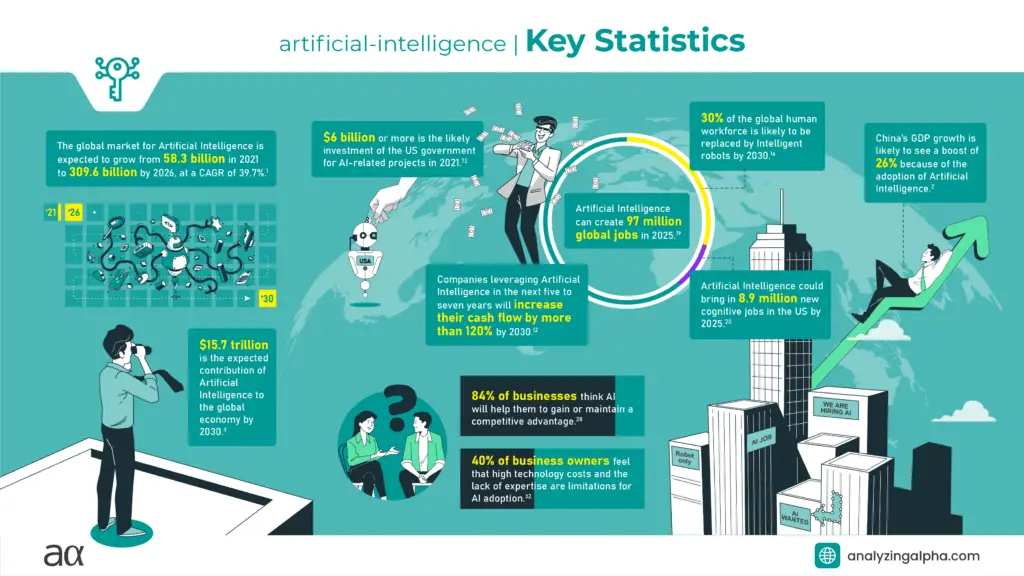
Image courtesy of analyzingalpha.com via Google Images
Future Direction of AI
The future of AI holds many exciting possibilities, from advancements in healthcare and climate change to changes in the way we live and work. Predictions suggest that AI will continue to play a crucial role in shaping our future, driving innovation, and revolutionizing various industries. However, it is essential to consider the ethical implications of AI as it becomes more integrated into our daily lives.
Can Skynet Happen?
One of the most famous depictions of AI in popular culture is Skynet from the movie “Terminator,” a fictional AI system that becomes self-aware and unleashes a nuclear war against humanity. While the scenario depicted in the movie is highly improbable, the risks associated with autonomous AI systems and the potential for unintended consequences are real. It is crucial to develop AI technology responsibly and ethically to prevent such scenarios from becoming a reality.
Image courtesy of www.linkedin.com via Google Images
The Role of Regulation in AI
Regulations and guidelines are essential to address the ethical and societal implications of AI technology. Governments and organizations must collaborate to ensure that AI systems are developed and deployed in a responsible and transparent manner. This includes establishing standards for data privacy, algorithm transparency, and accountability in AI development.
Ethical AI Development
Ethical AI development practices are crucial in ensuring that AI technology benefits society without causing harm. Transparency, accountability, and fairness should be prioritized in the design and implementation of AI systems. Researchers, developers, and policymakers play a critical role in promoting ethical AI practices and ensuring that AI technology serves the greater good.
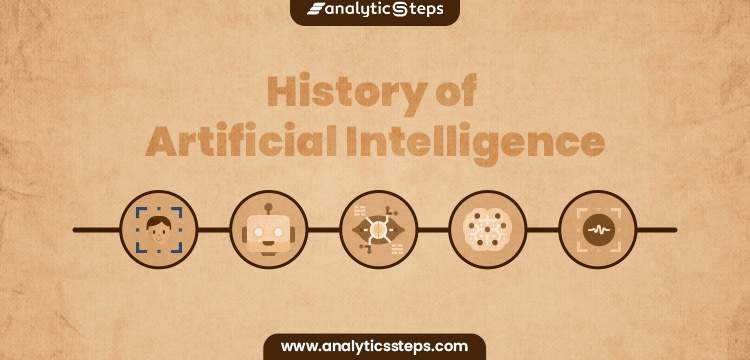
Image courtesy of www.analyticssteps.com via Google Images
Conclusion
Artificial Intelligence is a powerful and transformative technology that has the potential to revolutionize the way we live and work. By understanding the historical context of AI, exploring its current applications, benefits, challenges, and ethical concerns, and envisioning its future direction, we can harness the full potential of AI technology while mitigating its risks. As we navigate the ever-evolving landscape of AI, it is essential to approach its development and deployment with caution, responsibility, and ethics at the forefront of our minds.
Generated by Texta.ai Blog Automation
Comments