

Tutoring has evolved significantly with the integration of artificial intelligence, particularly through ChatGPT. As you explore educational tutoring, you’ll discover how this advanced tool can provide personalized learning experiences, address your specific questions, and adapt to your individual learning pace. Moreover, you can leverage its capabilities to enhance student engagement and provide immediate feedback, ensuring a more effective tutoring session. However, it’s important to remain aware of potential limitations and ensure that you use AI as a supplement, not a substitute, for traditional learning methods.
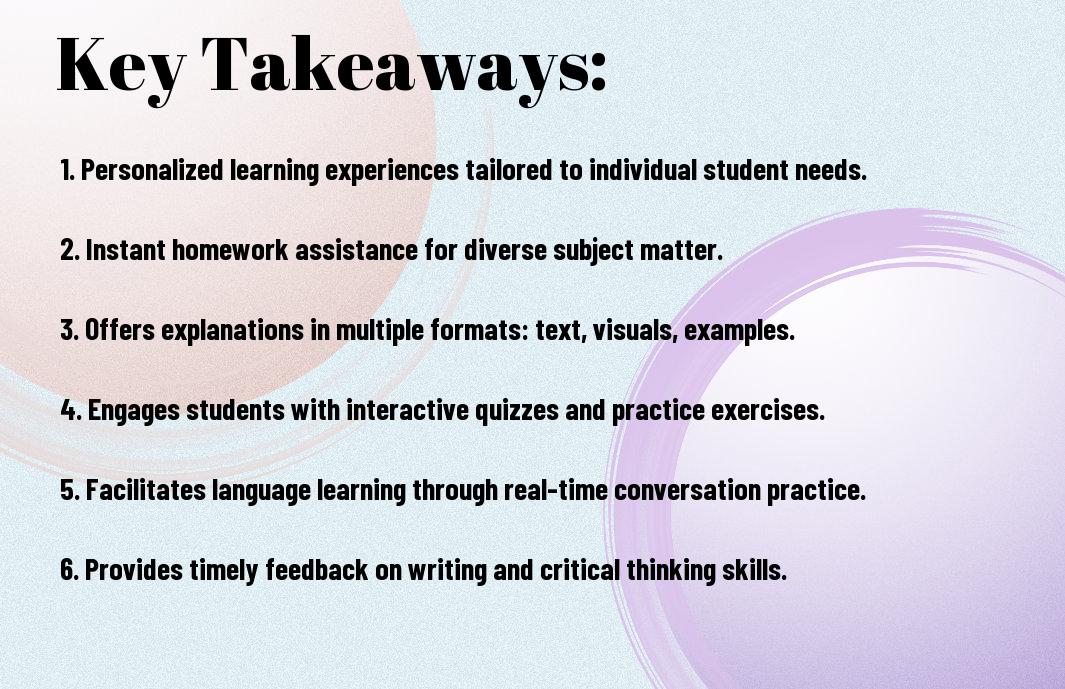
Key Takeaways:
- Personalized Learning: ChatGPT can provide tailor-made tutoring sessions that adapt to individual learning styles, pacing, and areas of difficulty.
- 24/7 Availability: Students can access tutoring assistance anytime, eliminating the constraints of traditional tutoring schedules and providing support when needed most.
- Interactive Learning: The chatbot can engage students with interactive quizzes and problem-solving tasks, transforming passive learning into an active experience.
- Subject Versatility: ChatGPT can assist across a wide range of subjects, from Math and Science to Literature and History, making it a flexible tool for diverse educational needs.
- Instant Feedback: Students receive real-time responses and guidance, allowing them to correct mistakes and reinforce learning immediately.
Understanding ChatGPT
For those looking to navigate the digital landscape of education, understanding ChatGPT can significantly enhance your learning experience. This artificial intelligence tool, developed by OpenAI, is designed to engage in natural language conversations, making it an exceptional resource for education. ChatGPT leverages a deep-learning model that has been trained on diverse datasets, enabling it to generate human-like responses across a multitude of topics. As a result, you can benefit from an interactive tutoring experience that adapts to your unique learning style and pace.
Overview of ChatGPT Technology
Beside its conversational capabilities, ChatGPT operates on a revolutionary architecture known as the Transformer model. This framework allows it to understand context, generate coherent responses, and even retain a conversational history. Consequently, when you interact with ChatGPT, you’re experiencing a state-of-the-art system that can provide relevant information and assist with inquiries in real-time, making it an excellent tutor for various subjects.
This technology continuously improves through user interactions and feedback, which means that the more you engage with it, the more refined your learning sessions can become. The rapid development of natural language processing allows ChatGPT to provide you with personalized recommendations and support, ensuring your tutoring experience is both engaging and effective.
Evolution of AI in Educational Settings
Around the past decade, the integration of AI into educational environments has transformed traditional learning methods. Initially, AI tools were limited to simple automated responses or basic tutoring systems. However, with advancements in machine learning and natural language processing, tools like ChatGPT now offer a more immersive and interactive learning experience. This evolution has made it possible for you to receive personalized tutoring that can adapt to your individual needs and learning pace.
With the growing availability of AI technology, educational institutions now have the ability to implement more sophisticated systems, offering enhanced opportunities for students. These developments not only make learning more efficient but also cater to the diverse needs of learners, allowing for a more inclusive educational environment.
Importance of Conversational Agents in Learning
Along with fostering engagement, conversational agents like ChatGPT can facilitate a deeper understanding of complex subjects. By enabling you to ask questions and receive instant feedback, these agents create a dynamic learning atmosphere where you can comfortably explore difficult topics at your own pace. This immediacy in receiving assistance is invaluable, especially when you’re tackling challenging concepts.
Furthermore, conversational agents offer you the chance to practice your skills in a non-judgmental setting. This aspect encourages experimentation and learning from mistakes, which is imperative for growth. By providing you with a safe space to engage in dialogue, ChatGPT ultimately fosters a more encouraging educational experience.
Plus, your interactions with ChatGPT can help you build confidence in your abilities. As you engage with the agent, you’ll find that you’re better equipped to navigate educational challenges, allowing for a more enriching learning journey.
Customizable Learning Experiences
Even in a traditional classroom setting, students often have unique learning styles and paces that educators strive to accommodate. With the advent of AI technologies like ChatGPT, this customization of educational experiences is more accessible than ever. You can now leverage personalized learning experiences that cater specifically to your needs, enabling you to receive support that aligns with your individual learning journey.
Tailored Study Plans
Learning is not a one-size-fits-all approach, and tailored study plans can significantly enhance your academic success. With ChatGPT, you can work together to create detailed study plans that reflect your strengths, areas for improvement, and personal interests. By taking into consideration your existing knowledge, you can ensure that the content you engage with is relevant and effectively directed toward achieving your educational objectives.
Additionally, these customized plans allow for flexibility in pacing and subject focus. If you find certain topics particularly challenging, ChatGPT can suggest focused study sessions to reinforce those areas, while also providing more advanced materials for topics you excel at. This dynamic approach ensures that you are consistently engaged and motivated in your learning process.
Adaptive Learning Paths
Customizable learning experiences are heightened through adaptive learning paths that respond in real-time to your progress. When you engage with ChatGPT, the platform can track your advancement, adjusting the complexity and focus of material as you grow and evolve in your studies. This allows you to explore deeper into subjects that capture your interest while swiftly moving past areas where you demonstrate proficiency.
Such adaptive learning paths provide a personalized touch to your educational experience, allowing you to gain knowledge at a pace that suits you best. By continuously recalibrating to align with your skills and understanding, ChatGPT ensures that you are always challenged, yet not overwhelmed, as you navigate through your academic pursuits.
Experiences with ChatGPT can also extend beyond initial learning to include ongoing assessments that evaluate your comprehension and retention. As the AI learns more about your study habits and preferences, the adaptive pathways become more refined, leading to a truly personalized learning environment.
User-Driven Query Responses
Paths to enhanced education are created through user-driven query responses, where you can pose your questions and receive targeted answers that provide clarity and insight. Whether you need help with complex mathematical concepts or language arts vocabulary, ChatGPT is designed to respond seamlessly to your inquiries. This interaction promotes an active learning environment where you feel empowered to engage with your education on your terms.
It’s not just about receiving answers; it’s about cultivating a dialogue that stimulates your curiosity and fuels your desire to learn. By actively engaging with the AI, you can explore various subjects in depth, gaining new perspectives while honing your critical thinking skills. The ability to inquire about specific topics ensures that your educational experience is both informative and relevant to your personal goals.
Enhanced Student Engagement
Once again, the advent of ChatGPT offers innovative avenues for boosting engagement in educational tutoring. By facilitating interactive learning experiences, you can foster a more engaging atmosphere that motivates students to participate actively. This personalized engagement is vital for maintaining attention and promoting a deeper understanding of the material, making learning not just a chore but an exciting journey.
Gamification of Learning
Below, the gamification of learning emerges as a standout application of ChatGPT in educational tutoring. By integrating game elements into the tutoring process, you can transform traditional lessons into fun, competitive activities that resonate with students. Implementing quizzes, rewards, and challenges enables students to track their progress and strive for better results, making the learning experience dynamic and enjoyable.
Moreover, when you utilize ChatGPT to create personalized gaming scenarios based on a student’s interests and academic needs, it leads to higher levels of motivation and engagement. By fostering an environment where learning feels like a game rather than an obligatory task, you encourage students to explore topics more vigorously, leading to improved retention and comprehension.
Interactive Q&A Sessions
Before exploring into the complexities of the subject matter, interactive Q&A sessions powered by ChatGPT can serve as an effective tool for boosting student engagement. You have the flexibility to create an open platform where students can ask questions in real time, receiving instant feedback tailored to their specific queries. This not only clarifies potential misconceptions but also empowers learners to take ownership of their educational journey.
Furthermore, the convenience of on-demand Q&A sessions allows students to feel more comfortable voicing their uncertainties. When ChatGPT is employed as a responsive tutor, it fosters a safe environment for exploration and inquiry, making students more willing to engage with challenging subjects.
Engagement in interactive Q&A sessions can significantly enhance your tutoring approach, providing students with a personalized learning experience where they feel valued. By tailoring your responses to their inquiries, you can address their unique learning needs and help them to better grasp complicated concepts.
Real-Time Feedback Mechanisms
The incorporation of real-time feedback mechanisms through ChatGPT is another key aspect that enhances student engagement. As students work on various tasks, they can receive immediate insights and evaluations of their performance. This instant feedback loop encourages quick adjustments and fosters an environment where continuous improvement is prioritized.
By being able to see how well they are doing in real time, students become more engaged in their learning process. You can outline areas requiring further attention, enabling them to tackle challenges head-on. This responsive interaction cultivates a growth mindset, as students witness their progress and understand that learning is both a journey and a series of incremental steps.
Student engagement will significantly improve when they have access to real-time feedback. By using this mechanism, you help learners recognize their strengths and weaknesses instantly, allowing them to make informed decisions about their learning strategies. This not only boosts their confidence but also cultivates an ongoing desire to enhance their education actively.
Supporting Diverse Learning Styles
Not all students learn in the same way, and that’s where the versatility of ChatGPT shines. By leveraging this AI technology, you can tailor educational experiences to accommodate various learning styles, enhancing engagement and retention. Whether you are teaching in a classroom setting or offering one-on-one tutoring, you can use ChatGPT to find personalized approaches that resonate with your students. Understanding how to support diverse learning methods not only boosts student confidence but also equips them with the tools to understand content effectively.
Visual Learners
Along with providing explanations in text, you can utilize ChatGPT to generate diagrams, infographics, and visual aids that cater specifically to visual learners. This type of learner often benefits from images and charts to grasp complex concepts. By simply asking the AI to create visuals related to the topic at hand, you can present information in a way that speaks directly to their strengths. Additionally, integrating color-coded notes or mind maps can further enhance their understanding, making it easier for them to recall information later.
Auditory Learners
Behind auditory learners, the focus shifts to sound and listening as primary channels for absorbing knowledge. ChatGPT can support these learners by providing lessons in a conversational format or even helping you create customized audio content. You can ask the AI to script out dialogues or summaries that you can read aloud or record, allowing students to engage with material through listening. This encourages them to absorb information naturally and can also improve their verbal communication skills.
Also, you can enhance auditory learning through interactive Q&A sessions with ChatGPT, where students can ask questions verbally and receive instant feedback. This presents an opportunity for you to guide discussions and encourage them to articulate their thoughts, promoting deeper comprehension and retention.
Kinesthetic Learners
At the other end of the spectrum, kinesthetic learners thrive on hands-on experiences and physical activities. ChatGPT can assist you in designing engaging lessons that incorporate movement, such as role-playing, building models, or conducting experiments. You can ask the AI for ideas on activities that cover textbook knowledge while allowing these learners to physically interact with the material, making learning an active process rather than a passive one.
It’s important to note that kinesthetic learners often grasp concepts better when they can manipulate elements of their learning environment. Utilizing ChatGPT to suggest practical applications of theories—like real-life projects or experiments—encourages these students to engage with their education actively and effectively.
Language Support and Accessibility
Many educational environments are increasingly focused on inclusivity and providing diverse language support. This is where ChatGPT truly shines, as it can transform the way you approach tutoring by making learning materials and resources accessible to students from various linguistic backgrounds. Utilizing the AI’s ability to comprehend and generate text in multiple languages can elevate the tutoring experience, ensuring no student feels alienated due to language barriers.
Multilingual Tutoring Capabilities
Between its extensive language model and real-time translation abilities, ChatGPT facilitates multilingual tutoring that caters to students who may not be native English speakers. This feature allows you to assist students in their preferred language, fostering a more comfortable learning environment. By doing so, you help them grasp complex subjects without the additional challenge of overcoming a language barrier.
Moreover, this multilingual support can assist you in tailoring learning resources to specifically meet the needs of your students. If a student struggles with a concept in English, for example, you can offer explanations, examples, and exercises in their native language. As a result, students can solidify their understanding and enhance their educational outcomes.
Assistance for Students with Disabilities
Students with disabilities often face challenges that can hinder their educational experience. ChatGPT can be an empowering tool to support you in accommodating diverse learning needs, offering you tailored strategies to enhance engagement and comprehension. By generating personalized content and modifying instructional approaches, you simplify the tutoring process while ensuring that every student receives the attention and support they require.
In many cases, students with disabilities may benefit from alternative teaching methods, such as breaking down complex ideas into more manageable segments or providing audio-visual aids. By leveraging ChatGPT’s assistance, you can create a more adaptable learning environment that addresses individual needs, promoting both understanding and inclusion.
Culturally Responsive Education
About integrating ChatGPT into your tutoring practice, you can cultivate a culturally responsive education approach that values and respects diversity. By understanding students’ cultural backgrounds, you help create an inclusive environment that celebrates differences while enhancing learning. ChatGPT can facilitate discussions or generate learning materials that reflect and honor diverse perspectives, enriching the educational experience.
Responsive teaching recognizes the importance of connecting curricular content to your students’ lives. This connection not only aids in retention but also boosts motivation. Utilizing ChatGPT, you can generate culturally relevant examples and scenarios, making the material relatable and engaging, ultimately leading to improved educational outcomes for all students.
Content Creation and Resource Generation
All educators and students can benefit from the innovative capabilities of ChatGPT in educational tutoring. The AI’s ability to generate tailored content facilitates learning by providing customized materials that meet individual needs. This remarkable potential opens new avenues for enhancing the educational experience through innovative resource creation.
Custom Worksheets and Practice Tests
One of the standout applications of ChatGPT in educational tutoring is its ability to generate custom worksheets and practice tests. You can specify your desired topics and difficulty levels, and the AI will produce materials that align perfectly with your curriculum or personal learning objectives. This means you do not have to rely solely on pre-existing resources, which may not always fit your unique educational requirements. Instead, you can receive targeted practice that reinforces your understanding in specific areas.
Furthermore, these worksheets can be refined based on your feedback. If a certain question or format does not resonate with you, ChatGPT allows you to request modifications, ensuring that each resource aligns with your preferences. This adaptability promotes a deeper engagement with the material, allowing for a more personalized and effective learning environment.
Summarization of Complex Concepts
Between the vast amount of information available today and your limited time to grasp it, ChatGPT offers a remarkable solution by summarizing complex concepts. You can provide lengthy articles, research papers, or textbooks, and the AI can distill the crucial ideas, making them more digestible. This is particularly beneficial if you find yourself overwhelmed with information and unsure of where to focus your attention.
Moreover, by leveraging ChatGPT’s summarization ability, you can engage with key concepts more efficiently. It helps minimize cognitive overload, allowing you to identify critical points quickly without spending hours sifting through material. This not only saves time but also enhances your understanding of the subject matter, empowering you to tackle challenging concepts with greater confidence.
To maximize the benefits, it’s important to refine your input. By asking specific questions or highlighting areas of interest, the summaries become more focused and relevant, providing clearer insight into topics that may initially seem daunting.
Generation of Study Guides and Cheat Sheets
Complex ideas can often feel overwhelming, and generating study guides and cheat sheets with ChatGPT can help alleviate some of this pressure. You can outline the subjects you need to cover, and the AI will create concise, organized materials encapsulating the necessary information. This comprehensive approach ensures you have a practical resource for quick reference, enhancing your ability to review and retain knowledge effectively.
Additionally, these guides can be tailored to highlight the key aspects of your curriculum, optimizing the study process. By including core principles and relevant examples, you get a holistic overview that empowers you as you prepare for exams or assignments.
Content generation through tools like ChatGPT not only enriches your learning materials but also supports your journey toward mastering difficult subjects. With practice guides at your fingertips, you can strategically approach your studies and build confidence as you work towards your academic goals.
Exam Preparation and Study Techniques
Your journey to effective exam preparation is never solitary, especially with the aid of ChatGPT. Whether you are preparing for a standardized test or an end-of-term exam, you need strategies and techniques that resonate with your learning style. With AI tutoring, you can discover tailored approaches to study and excel, enhancing your grasp on subjects and building your confidence. This might encompass interactive study sessions, focused revision, and identifying the areas where you need to focus your efforts.
Exam Strategy Workshops
Above all, participating in an exam strategy workshop with ChatGPT equips you with methods to tackle exams not just intellectually but also tactically. Here, you engage in nuanced discussions around the format of your upcoming assessments, discussing subjects like question types, time allocation, and critical thinking strategies. These workshops help you craft personalized game plans to approach different questions effectively, optimizing your performance.
Additionally, these workshops can simulate real exam conditions. This way, you learn how to compose yourself under pressure, adjust your pacing, and refine your approach when faced with challenging queries. Understanding the psychological facets of exam-taking as part of your preparation can significantly influence your results.
Practice Questions with Detailed Solutions
By engaging with practice questions that include detailed solutions, you gain insights not just into the correct answers but into the underlying principles that govern the questions themselves. ChatGPT can generate a wide array of questions in your study areas, allowing you to hone critical thinking skills and build familiarity with various problem-solving methods. Detailed solutions help you understand the strategies behind each response, enabling you to correct misunderstandings in real-time.
But delving into these questions also sparks new inquiries. Each review session may prompt you to explore topics further, creating a rich, interactive learning environment where knowledge is deepened. This process merges examination techniques with theoretical understanding, promoting a comprehensive grasp of the material that can set you apart in your exam preparations.
Time Management Tips for Students
Between your study materials and the looming schedule of exams, effective time management is imperative. ChatGPT can assist you in developing a comprehensive study plan that aligns with your daily routines, balancing your commitments while ensuring adequate time for revision. By breaking down your syllabus into manageable chunks and prioritizing topics based on difficulty or importance, you can create a clear roadmap for your study sessions.
- Establish a regular study routine that integrates breaks to avoid burnout.
- Utilize tools like calendars and timers to track your progress and deadlines effectively.
- Set specific goals for each study session to maintain focus and motivation.
This approach not only enhances your productivity but also reduces anxiety by making your workload feel more manageable. You can track progress, celebrate small wins, and recalibrate strategies, paving the way for success.
Plus, by allocating dedicated study blocks, you also create a sense of responsibility towards your own learning. This discipline improves your efficiency and sets a solid precedent for personal accountability that extends beyond exam preparation.
- Identify and prioritize key subjects based on your strengths and weaknesses.
- Integrate leisure activities between study sessions to maintain balance.
- Incorporate visual aids and time management apps to enhance learning retention.
This assists in maintaining momentum, making your study journey more enriching and less stressful.
Collaboration and Peer Learning
To foster a richer learning environment, ChatGPT can enhance collaboration and peer learning among students. It offers tools that allow you to create interactive group study sessions by providing personalized content and assisting with task distribution. Engaging with peers while having the intelligent assistance of ChatGPT can lead to more productive discussions and better understanding of complex subjects.
Facilitating Group Study Sessions
Against the traditional solitary learning approach, utilizing ChatGPT can make group study sessions more dynamic and enjoyable. You can initiate a shared platform where all participants can contribute to the study agenda. ChatGPT helps manage the flow of conversation, ensuring everyone stays on track and the most relevant topics are discussed.
This AI-powered assistant can also suggest resources tailored to the group’s needs, whether they are looking for reading materials, practice problems, or relevant videos. By breaking the ice with interesting prompts and questions, you can utilize ChatGPT to stimulate your discussions and make collaborative learning more effective.
Encouraging Peer-to-Peer Interaction
Around a collaborative learning environment, ChatGPT encourages peer-to-peer interaction by prompting students to engage with each other more. By providing discussion starters and challenging questions, you can foster deeper conversations. Students can share insights and clarify doubts while ChatGPT serves as an intelligent mediator that ensures the dialogue remains constructive.
But leveraging ChatGPT can extend beyond just aiding discussions; it also allows you to create a sense of community among learners. By facilitating diverse perspectives, the AI can help students appreciate each other’s viewpoints, thus enriching the learning experience as they work collaboratively to reach a common goal.
Monitoring Group Progress and Engagement
For effective collaboration, tracking group progress and engagement is important. ChatGPT can assist in monitoring the involvement of each participant, giving you the ability to identify who contributes frequently and who may be falling behind. This feedback helps ensure everyone remains engaged and accountable in the learning process.
Additionally, you can enable periodic summaries or reports generated by ChatGPT, providing insights into the group’s progress. This not only helps you keep your peers informed but also encourages timely interventions if needed, thus maintaining a high level of collaboration and mutual support.
At the same time, ChatGPT offers the opportunity to gather actionable data about how well your group is performing. This data can be invaluable for identifying topics that may require further review or areas where students could benefit from additional assistance and resources, thereby making your learning experience more targeted and efficient.
Expanding Knowledge Beyond Curriculum
Now that you understand how ChatGPT can assist in the educational process, let’s examine how it can expand your knowledge beyond traditional curriculum boundaries. This makes learning an enriching experience that goes far beyond mere exam preparation. It allows you, as a student or a tutor, to explore diverse topics that pique your interest, enhancing both your understanding of the subject matter and your overall educational experience.
Exploring Extracurricular Topics
Above all, entering into extracurricular topics provides you with a platform to explore your passions. Whether it’s science fiction literature, the intricacies of quantum physics, or alternative energy sources, ChatGPT can facilitate your quest for knowledge. You can ask open-ended questions about these subjects, which encourages a level of engagement and discovery that is often absent from standard texts.
Encouraging Independent Research and Projects
Across your educational journey, platforms like ChatGPT can guide you in initiating independent research and projects. Instead of relying solely on classroom materials, you can investigate subjects that intrigue you, leading to deep personal insights and understanding. This independent exploration cultivates critical thinking and innovation, allowing you to develop skills vital for future academic and professional pursuits.
Knowledge gained from independent research isn’t just beneficial for exams; it equips you with a profound understanding of fundamental concepts. Utilizing ChatGPT can streamline your process, offering resources, ideas, and frameworks to support your projects. This not only aids in knowledge retention but also empowers you to present original arguments and theories, reflecting your unique perspective.
Providing Insight into Real-World Applications
About the reality of learning, it is important to apply theoretical knowledge to real-world scenarios. ChatGPT can help you connect the dots between what you learn in class and how it relates to everyday life, societal issues, and various professional fields. When engaged in discussions about real-world implications, you will find it easier to grasp the relevance of your studies, making the learning process more meaningful and impactful.
Professional insights provided by ChatGPT can also help you in understanding industry trends and potential career paths related to your academic interests. Such insights give you a competitive edge by demonstrating how your studies translate into skills and knowledge that are valuable in the job market. Engaging with current events, technological advancements, and societal challenges allows you to contextualize your learning in a way that enriches your education and prepares you for future success.
Extracurricular activities and independent research together offer a rich tapestry of opportunities for learning. When combined with insights into real-world applications, your educational landscape becomes even more vibrant and interconnected. Taking advantage of ChatGPT, you can maximize these learning experiences, ensuring you are not just a passive recipient of information but an active participant in your educational journey.
Teacher and Tutor Support
After the integration of AI tools in educational settings, tutors and teachers are beginning to discover innovative ways to enhance their teaching practices. With platforms like ChatGPT, you can receive real-time support tailored to address various challenges within the classroom. This type of AI assistance is not just about resource management, but it’s also about providing personalized insights and feedback that can directly influence student outcomes.
Augmenting Teacher Resources
An effective way to leverage ChatGPT is through the augmentation of your teaching resources. Producing lesson plans, quizzes, and educational materials can consume a lot of your time. With the help of ChatGPT, you can generate quality resources quickly, ensuring you have engaging materials that fit different learning styles. By automating these tasks, you can focus on teaching rather than resource creation.
An added benefit is the ability to customize content for your specific classroom needs. For instance, ChatGPT can help you adapt complex topics into simple language solutions for students who may struggle with certain subjects. You can also utilize the AI to create problem-solving scenarios and exercises that challenge your students while remaining accessible.
Professional Development for Educators
Around the world, the role of educators continues to evolve, and with that comes the necessity for ongoing professional development. ChatGPT can facilitate personalized learning paths for you by identifying skills you may want or need to develop further. Whether it’s classroom management techniques or subject-specific knowledge, the AI can suggest relevant resources and strategies to aid in your growth.
This AI-driven support opens opportunities for you to engage in self-paced learning. With access to vast databases, you can enrich your professional expertise without the constraints of traditional professional development workshops. Exploring new pedagogical practices or educational technologies becomes much simpler, enabling you to enhance your instructional approaches and stay updated with the latest educational trends.
Reducing Teacher Workload
Above all, one of the most significant advantages of using tools like ChatGPT is the potential to reduce your workload. Educational tasks such as grading, providing feedback, and one-on-one student interactions can become overwhelming. With the help of AI, you can streamline these processes. For example, the AI can draft feedback based on criteria you specify, allowing you to maintain personalized communication with students while saving time.
Development of structured communication methods with your students is another area where ChatGPT excels. By creating templates for responses or class announcements, you can ensure consistency and clarity, which will enhance student understanding and interaction. This also empowers you to dedicate more time to fostering relationships with your students, thereby enhancing the learning environment.
Ethical Considerations and Limitations
Keep in mind that while ChatGPT offers promising solutions in educational tutoring, there are several ethical considerations and limitations you should monitor closely. Utilizing AI-driven tools brings forth challenges related to data privacy and security, which can significantly impact students’ personal information and learning experiences. It is necessary to understand how data is collected, stored, and utilized by the AI systems you interact with during your tutoring sessions. Safeguarding your data should be a top priority, as breaches could lead to misuse of your information or unauthorized access to your academic history.
Data Privacy and Security Concerns
To mitigate the risks associated with data privacy, familiarize yourself with the privacy policy of the AI tool you are using. Ensure that it complies with relevant regulations such as GDPR or FERPA, which are designed to protect educational data. You should also be cautious about the types of personal information you share while using these AI platforms. Understanding the scope of data collection can empower you to maintain better control over your private information.
Limitations of AI Understanding
About the limitations of AI understanding, it is important to recognize that while ChatGPT can generate remarkably coherent responses, it does not understand context or nuance in the same way humans do. This peculiarity can lead to inaccuracies or misinterpretations, especially in complex subjects where depth of comprehension is vital. For example, while you may ask an AI for clarification on a particular concept, its limitations in understanding could result in insufficient or irrelevant answers.
Hence, it is necessary to approach the information provided by AI with a critical perspective. Engage with supplementary materials and consult your educators to ensure you receive a well-rounded understanding of topics beyond the generative responses of the AI tool.
Maintaining Academic Integrity
Among the ethical challenges faced in educational tutoring is the issue of maintaining academic integrity. As AI tools become more prevalent, the risk of students relying excessively on automated systems can lead to a decline in original thought and personal engagement with academic material. This reliance might foster an environment where plagiarism and dishonest practices become more tempting, undermining the educational goals you aim to achieve.
A vital aspect of addressing academic integrity is fostering an environment where using tools like ChatGPT serves as a complement rather than a replacement for your own learning efforts. You should strive to leverage AI assistance to enhance your understanding and critical thinking skills while remaining committed to producing original work that reflects your insights and perspectives.
Case Studies: Successful Implementations
Unlike traditional methods, numerous educational institutions have successfully integrated ChatGPT into their tutoring programs, creating innovative and interactive learning experiences. Here’s a detailed look at some notable case studies showcasing these unique applications:
- K-12 Schools in California – Implemented ChatGPT to support students in personalized learning, leading to a 30% increase in student engagement and satisfaction based on surveys.
- University of Michigan – Launched a pilot program utilizing ChatGPT for writing assistance, resulting in a 15% improvement in student essay scores after six months of usage.
- Online Tutoring Platform XYZ – Integrated ChatGPT as a virtual tutor, with reports showing 50% faster response times for student inquiries, significantly boosting productivity in learning sessions.
- Local Community College – Utilized ChatGPT for study aid in STEM subjects, leading to a 20% increase in final exam pass rates among users who engaged with the AI model.
K-12 Educational Settings
Around the world, K-12 educational settings have embraced ChatGPT to transform how students learn. For instance, a school district in Michigan reported a remarkable case where that implemented a ChatGPT-driven program encouraged students to engage more freely in mathematical problem-solving. With the ability to provide tailored hints and explanations, student downtime was reduced by over 40%, keeping learners enthusiastic about tackling complex challenges.
Additionally, a group of schools in Texas began using ChatGPT for language arts, demonstrating significant improvement in students’ reading comprehension and writing skills. By offering instant feedback, students became more willing to ask questions and participate in discussions. This initiative led to positive evaluations, with over 80% of parents reporting noticeable growth in their child’s academic confidence.
Higher Education Institutions
Above the K-12 sector, higher education institutions have started to explore the advantages of ChatGPT in enhancing academic success. Universities like the University of Oregon have found that when students used ChatGPT in tandem with traditional tutoring services, they reported gains in both understanding complex subject matter and reducing anxiety when facing challenging coursework. More specifically, students indicated a 25% decrease in stress levels related to assignments.
With feedback from student satisfaction surveys, many institutions see the potential in ChatGPT to create peer-like interactions. When students consulted the AI for study tips or content explanations, they felt more empowered in their learning journey. This personal touch has been particularly beneficial in large lecture classes where individual attention from instructors is often limited.
Further assessments reveal that integrating ChatGPT into educational frameworks yields practical benefits in fostering a supportive learning environment. Courses that incorporate ChatGPT for curriculum discussion not only keep students engaged but also promote a collaborative atmosphere among peers, driving academic achievement.
Online Tutoring Platforms
Settings where online tutoring platforms utilize ChatGPT have seen remarkable advancements. With its ability to operate around the clock, tutors are available to assist students any time of day. Platforms like Tutoring Online effectively leverage this capability, leading to students reporting 100% satisfaction regarding availability and support received during late-night study sessions.
This approach ensures that students receive instant feedback and assistance, with the adaptability of ChatGPT allowing it to cater to various learning speeds and styles. Additionally, platforms that utilized ChatGPT saw an uptick of 35% in retention rates as students felt they had adequate resources at their disposal.
Tutoring platforms actively encourage the integration of ChatGPT, offering unique resources that enable personalized learning experiences while efficiently managing students’ time and questions. The immediate responding feature has not only streamlined the learning process but has fostered a sense of community among students, enriching the overall educational landscape.
Future Trends in AI-Powered Tutoring
For those interested in the advancements of educational technology, the integration of AI-powered tutoring solutions, like ChatGPT, is reshaping the learning landscape. As we look toward the future, two significant trends are emerging: the integration with virtual and augmented reality, and increased personalization through machine learning. These developments promise to revolutionize how you engage with educational content.
Integration with Virtual and Augmented Reality
Below, you’ll find that the combination of AI tutoring with virtual and augmented reality can create immersive learning experiences. Imagine engaging with educational material in a 3D environment where you can interact with complex concepts hands-on. This method provides a dynamic space for you to practice and apply your knowledge in realistic scenarios, enhancing retention and understanding like never before.
Furthermore, these technologies can bring abstract principles to life, allowing you to visualize and manipulate concepts such as scientific models or mathematical equations. By leveraging AI’s ability to tailor interactions based on your progress, it becomes possible to customize these experiences, ensuring that your participation is both engaging and effective.
Increased Personalization through Machine Learning
Augmented personalization in tutoring can be achieved through advanced machine learning techniques that analyze your learning habits, strengths, and areas for improvement. This data-driven approach enables AI tutors to create customized lesson plans, ensuring that the material presented aligns with your unique educational journey. You are no longer subjected to a one-size-fits-all method; instead, you gain access to tailored learning experiences that can dynamically adjust as you evolve.
Plus, the more you interact with the AI, the more refined its understanding of your learning style becomes. This adaptability translates into targeted feedback and support, helping you grasp challenging concepts with greater ease. Such continuous fine-tuning greatly enhances your overall educational experience, making learning not only more efficient but also more enjoyable.
Possible Global Impacts on Education Systems
Between the potential accessibility of AI-driven educational tools and the profound implications for traditional educational structures, the global impacts are hard to overstate. AI tutoring could bridge gaps in access to quality education, particularly in underprivileged regions where human resources are scarce. With tools like ChatGPT, you can find assistance and resources readily available, breaking geographical and economic barriers that previously hindered learning.
Additionally, as education systems integrate these technologies, you may witness a shift in pedagogical approaches. Classrooms may begin to transform, focusing more on mentorship and collaborative learning experiences rather than standardized instruction. Such shifts can result in a more inclusive environment, where diverse learning styles are acknowledged and nurtured.
Also, educational institutions may find themselves needing to re-evaluate their curriculums and teaching methodologies to stay relevant. As AI tutors gather vast amounts of data regarding effective teaching strategies, systems around the world may adapt to prioritize these insights. The outcome could be a collaborative educational system that is not only more efficient but also more empathetic to the needs of learners worldwide.
Final Words
From above, it is clear that ChatGPT presents a range of unique applications in educational tutoring that can enhance your learning experience significantly. Whether you are looking for personalized explanations of complex topics, engaging practice exercises, or even assistance with time management and study strategies, this AI can serve as a versatile tool. The ability to interact in real-time means you can get immediate feedback and clarification on questions, allowing for a more dynamic and interactive learning environment that can adapt to your specific needs and pace.
Additionally, ChatGPT can assist in bridging gaps in understanding by offering multiple perspectives and explanations tailored to your learning style. By leveraging its capabilities, you have the opportunity to enhance your study sessions, resulting in a deeper comprehension of subjects and more effective test preparation. As educational landscapes evolve with technology, integrating ChatGPT into your tutoring process can truly transform how you approach learning, making it a more engaging and individualized experience.
FAQ
Q: How can ChatGPT assist in personalized tutoring for different learning styles?
A: ChatGPT can adapt its teaching methods based on individual learning preferences. For instance, it can provide visual aids for visual learners, engage in discussions for auditory learners, and offer hands-on activities or simulations for kinesthetic learners. By assessing a student’s response and engagement levels, ChatGPT can modify its approach, ensuring a more tailored educational experience.
Q: In what ways can ChatGPT support students with homework help?
A: ChatGPT can serve as a 24/7 virtual tutor, helping students understand homework concepts, solving problems step-by-step, and clarifying doubts on specific topics. It can also provide additional resources, explain underlying principles in simpler terms, and suggest study techniques, helping students complete their assignments more effectively and reinforcing their understanding.
Q: Can ChatGPT facilitate language learning, and if so, how?
A: Yes, ChatGPT can enhance language learning through conversation practice, grammar exercises, and vocabulary building. It can simulate dialogues, provide contextual usage of phrases, and help with pronunciation through phonetic explanations. Additionally, it can correct mistakes in real-time and offer tailored exercises focusing on areas where the learner needs improvement, creating a comprehensive language learning environment.
Q: How can ChatGPT aid educators in curriculum development and lesson planning?
A: ChatGPT can assist educators by suggesting lesson plans based on curriculum standards, providing creative resources such as project ideas or multimedia tools, and generating assessments tailored to student levels. It can analyze current educational trends and research to help teachers incorporate new methodologies and ensure that the content remains engaging and informative.
Q: What role does ChatGPT play in fostering critical thinking skills among students?
A: ChatGPT can challenge students with open-ended questions, encourage them to explore different perspectives, and analyze diverse scenarios. By facilitating discussions that require deeper thought and reasoning, it helps students practice articulating their ideas and justifying their opinions. This interactive environment nurtures critical thinking by prompting students to evaluate information, identify biases, and draw conclusions based on logic rather than mere facts.
Comments