

This guide will help you understand the transformative impact of artificial intelligence in the real estate sector, equipping you to leverage technology for your success. You’ll discover practical strategies to enhance your operations, boost efficiency, and improve client experiences. By integrating AI tools, you can stay ahead of the competition and make data-driven decisions. For a deeper dive, check out this AI for Real Estate Agents: a Comprehensive Guide and Best … that outlines best practices and innovative techniques.
Understanding AI in Real Estate
For real estate professionals navigating a rapidly evolving marketplace, understanding how artificial intelligence (AI) can reshape operations and client interactions is imperative. By capitalizing on AI technologies, you can not only streamline your processes but also enhance decision-making capabilities. As properties become increasingly complex in terms of valuation and client expectations rise, leveraging AI proves to be not just a competitive advantage but a necessity for sustained success in the industry.
Overview of AI Technologies
While traditional methods of managing real estate information are effective to a degree, the introduction of AI technologies allows for improved accuracy and efficiency. Tools such as predictive analytics can forecast market trends, while virtual assistants streamline administrative tasks. AI-driven chatbots can enhance customer service by providing instant responses to inquiries, thereby freeing up your time to focus on client relationships and strategic planning.
Benefits of AI for Real Estate Professionals
Assuming you decide to implement AI in your business strategies, you will likely find that it can significantly enhance your performance. AI technologies help you gain deeper insights into customer preferences, enabling you to personalize your services effectively. The automation of routine tasks reduces operational costs and minimizes the likelihood of human error. Additionally, with AI predictive analytics, you can assess market trends and investment opportunities more effectively, allowing you to make informed decisions tailored to your business needs (adopting AI could be a game changer for your real estate business).
This alignment between AI capabilities and your business strategies offers a path towards more efficient operations and improved client satisfaction. By understanding customer behavior through advanced data analytics, you can better anticipate needs and tailor your services accordingly. Incorporating AI into your real estate practice not only enhances negotiation tactics but also improves overall client engagement, ensuring that you stand out in a highly competitive market (the decision to go AI is not just a tech upgrade—it’s about future-proofing your business).
How to Identify Key Areas for AI Integration
Now, to effectively integrate AI into your real estate operations, the first step is to identify key areas that will benefit the most from this technology. This begins with understanding the specific challenges and opportunities that exist in your business landscape. By assessing these elements, you can pinpoint areas where AI can lead to improved efficiency and enhanced customer experience. For further insights into this process, refer to How to Use AI in Real Estate and Gain a Competitive Edge. You’ll want to evaluate factors such as operational bottlenecks, customer feedback, and market trends that directly impact your bottom line. (Selecting the right areas for AI application can set the foundation for transformative change.)
Assessing Business Needs
The assessment of your business needs is important for a successful AI integration strategy. Start by conducting a thorough analysis of your organizational goals and performance metrics. This will help you identify pain points that AI technology can alleviate, allowing you to allocate resources to the areas that will yield the greatest impact. Engaging with your team members can also provide valuable insights into day-to-day challenges that may not be apparent from a managerial perspective. Addressing these needs will ensure that the AI solutions you implement are tailored to your specific objectives.
Prioritizing Processes for Automation
For effective AI integration, it’s important to prioritize processes that not only can be automated but also will significantly contribute to your operational efficiency. Focus on repetitive tasks that consume valuable time and resources, such as data entry, customer follow-ups, and property management tasks. Identifying these processes helps you streamline workflows and ensures that your team can devote more energy to high-value activities, thus improving overall productivity.
Processes that often benefit from automation include lead generation, client communications, and market analysis. When you automate these tasks, you free up your team to focus on building relationships with clients and finding innovative solutions for their needs. It’s not just about replacing human effort; it’s about enhancing your team’s ability to provide exceptional service and achieve your business goals more strategically. This approach will help you leverage AI’s capabilities to gain a distinct competitive edge in the real estate marketplace.

Tips for Selecting the Right AI Tools
Unlike many other sectors, the real estate industry presents unique challenges and opportunities when it comes to integrating AI. You need to consider several factors to select the most effective AI tools for your specific needs. Here are some tips to guide you in the decision-making process:
- Identify your specific needs and goals.
- Evaluate the scalability of the AI tool.
- Assess the user-friendliness of the technology.
- Look at user reviews and case studies for insights.
- Consider integration capabilities with existing systems.
Knowing your requirements and the potential of various solutions will enable you to make informed decisions that enhance your competitive edge in the market.
Evaluating Available Solutions
Any selection process should involve a thorough evaluation of the AI solutions in the market. You’ll want to investigate how each tool aligns with your operational objectives, budget, and technical expertise. Moreover, understanding the functionality and support associated with these solutions will heavily influence your choice. An important decision to make at this stage is whether the technology can be easily customized to suit your individual business practices.
Considerations for Implementation
Little can halt progress like poor implementation of AI tools. As you plan for integration, consider how the AI solution fits into your existing workflows and what training your team may require. You have to ensure that the chosen tool is not only effective but also compatible with your organization’s culture and processes.
The right implementation strategy will significantly impact the success of your AI integration. You should outline clear objectives and establish a timeline for both deployment and assessment. Engaging your team in the process can facilitate smoother transitions and foster a culture of innovation. Consistent monitoring and adjustments are also important to maximize the value derived from your chosen AI tool.
Factors Influencing Successful AI Integration
Despite the growing interest in leveraging artificial intelligence in real estate, several factors can significantly influence the success of your integration efforts. These factors range from understanding your specific business needs to ensuring you have the right team and technology in place. Here are some key considerations that can drive effective AI adoption:
- Organizational readiness for change
- Availability of quality data
- Alignment between AI initiatives and business objectives
- Staff capabilities and training
- Technological infrastructure and investment
Knowing these factors can enhance your strategy to harness AI for gaining a competitive edge in the real estate market.
Staff Training and Development
While integrating AI technology into your real estate operations, one of the most significant aspects to consider is the training and development of your staff. Effective training programs will equip your team with the necessary skills to utilize AI tools, mitigate challenges, and adapt to new workflows. (You may need to make an important decision about whether to conduct in-house training or hire external experts.) Investing in ongoing development will keep your team updated on the latest AI tools and techniques, ultimately resulting in higher productivity and enhanced service quality.
Change Management Strategies
Staff buy-in and adaptation are imperative in navigating the transition to AI-enhanced processes. Change management strategies will play a pivotal role in ensuring that your team supports and embraces the integration of AI technologies. This includes clear communication about the benefits of AI, addressing any concerns or resistance, and providing continuous support during the transition period.
To effectively implement change management strategies, it’s beneficial to create a detailed plan outlining the steps for integration and the anticipated impact on workflows and roles. Establishing feedback loops where team members can share their experiences and suggest improvements will also foster a culture of adaptability, ensuring that everyone remains engaged and informed throughout the process of change.

How to Measure the Impact of AI on Your Business
After integrating AI into your real estate operations, measuring its impact becomes important for understanding how it contributes to your overall success. You will need to evaluate various aspects such as operational efficiency, customer satisfaction, and revenue growth to ascertain the effectiveness of your AI strategies. This step not only provides insights into the return on investment but also sheds light on areas needing improvement or adjustment in your approach.
Setting Key Performance Indicators (KPIs)
For establishing a clear framework to evaluate AI’s contribution, setting specific Key Performance Indicators (KPIs) is paramount. These KPIs should align with your business goals and be tailored to the specific AI applications you are utilizing. Examples include tracking lead conversion rates, customer engagement scores, and the average time to close a deal, which will give you tangible metrics to monitor progress.
Analyzing Performance Data
On completing your initial period of AI implementation, the next step is to analyze performance data meticulously to gauge the effectiveness of your strategies. Look at the data collected against the KPIs you have established to identify trends, successes, and any potential shortfalls. Data-driven insights allow you to make informed decisions and pivot your approach when necessary. (A detailed analysis could reveal the need for further training on AI tools for your team.)
Understanding the nuances of your performance data can empower you to fine-tune your AI initiatives and enhance overall efficiency. Delve into specifics such as customer feedback and workflow metrics to ensure you are not only meeting your targets but exceeding them. This continuous cycle of analysis and adjustment fosters a culture of improvement and innovation within your real estate operations. (Regularly revisiting your analytics can be instrumental in sustaining competitive advantage over time.)
Best Practices for Continuous Improvement
Many real estate professionals understand that integrating AI is not a one-time task but a continuous journey. To maintain a competitive edge, you must regularly evaluate the performance of your AI tools and strategies. This involves analyzing the outcomes they produce, gaining feedback from your team, and adjusting your approach based on the changing landscape of the market. By doing so, you’re not only ensuring that your strategies remain effective but also that they evolve in tandem with emerging technologies, customer expectations, and industry demands.
Reassessing and Adapting AI Strategies
An effective way to enhance your AI integration is to set regular intervals for reassessment. Conduct reviews to measure the success of the AI tools in place, identifying areas that require adjustment or enhancement. This iterative process not only optimizes the performance of your AI systems but also aligns your real estate operations with your overall business objectives. As the market shifts, adapting your AI strategies ensures you are maximizing the technology’s potential to serve your specific needs.
Staying Updated with AI Trends
Some of the most successful real estate professionals dedicate time to stay informed about the latest AI trends and innovations. Following reputable industry publications, attending conferences, and participating in networking groups can provide you with valuable insights. Keeping a finger on the pulse of AI developments allows you to identify new opportunities and tools that can streamline your operations or enhance customer engagement. (Making educated decisions based on these insights can ultimately define the future success of your real estate strategies.)
To further bolster your knowledge of AI trends, consider seeking partnerships with technology experts or consulting firms who specialize in AI applications. Not only can they help you in understanding the latest tools available, but they can also provide personalized advice on how to seamlessly integrate these advancements into your current operations. (Investing in continuous education about AI will empower you to innovate and excel in your market.)
Conclusion
Considering all points, integrating AI in your real estate strategies can significantly enhance your competitive advantage. By leveraging AI tools for market analysis, property valuation, and customer engagement, you can create a more efficient workflow and provide superior service to your clients. Utilizing machine learning algorithms to analyze trends and behaviors enables you to make informed decisions that align closely with market demands. Moreover, automating routine tasks can free up your time, allowing you to focus on building relationships and closing deals.
As you adopt AI-driven solutions, you not only position yourself ahead of competitors but also place your business on the cutting edge of technological innovation within the real estate sector. Your ability to harness data effectively will surely resonate with potential clients, enhancing their trust in your expertise. By prioritizing AI integration today, you set yourself up for success in the evolving landscape of real estate tomorrow.
Q: What are the key benefits of integrating AI in the real estate industry?
A: Integrating AI in real estate offers several advantages, including enhanced decision-making capabilities through data analysis, improved customer service via chatbots and virtual assistants, and increased operational efficiency through automation of repetitive tasks. AI can also facilitate property valuation by analyzing market trends and property features, leading to more accurate pricing and investment decisions.
Q: How can AI tools be utilized for property marketing and lead generation?
A: AI tools can significantly boost property marketing and lead generation by leveraging data analytics and machine learning. For instance, predictive analytics can identify potential buyers based on past behaviors and preferences. Additionally, AI-powered platforms can optimize online advertising by targeting specific demographics with tailored messaging. Chatbots can engage visitors on real estate websites, collecting information and qualifying leads automatically.
Q: What steps should real estate professionals take to implement AI solutions effectively?
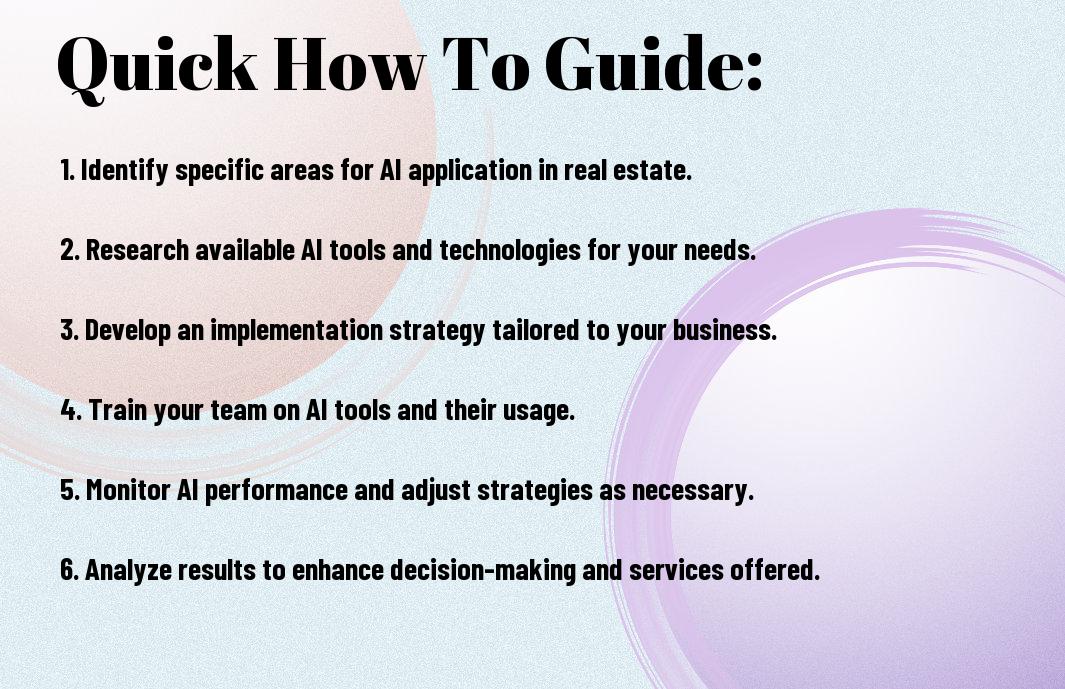
A: To implement AI solutions effectively, real estate professionals should start by assessing their current processes and identifying areas that could benefit from innovation. Next, they should research different AI tools and technologies tailored to their specific needs, such as CRM software with AI capabilities or property management solutions. Training staff on how to use these tools is necessary, as is continuously monitoring results to measure the impact of AI on their operations and customer satisfaction.
Comments