

You may think you know artificial intelligence, but have you heard of neuroevolution? This groundbreaking approach to AI combines the principles of neuroscience and evolutionary algorithms to create revolutionary systems that can learn and adapt in ways never seen before. Imagine AI that can truly think and problem-solve on its own, without the need for human intervention. In this blog post, we will explore how neuroevolution is redefining the field of artificial intelligence and the potential implications it holds for the future. Strap in as we explore the cutting-edge world of neuroevolution and its transformative impact on AI.

Key Takeaways:
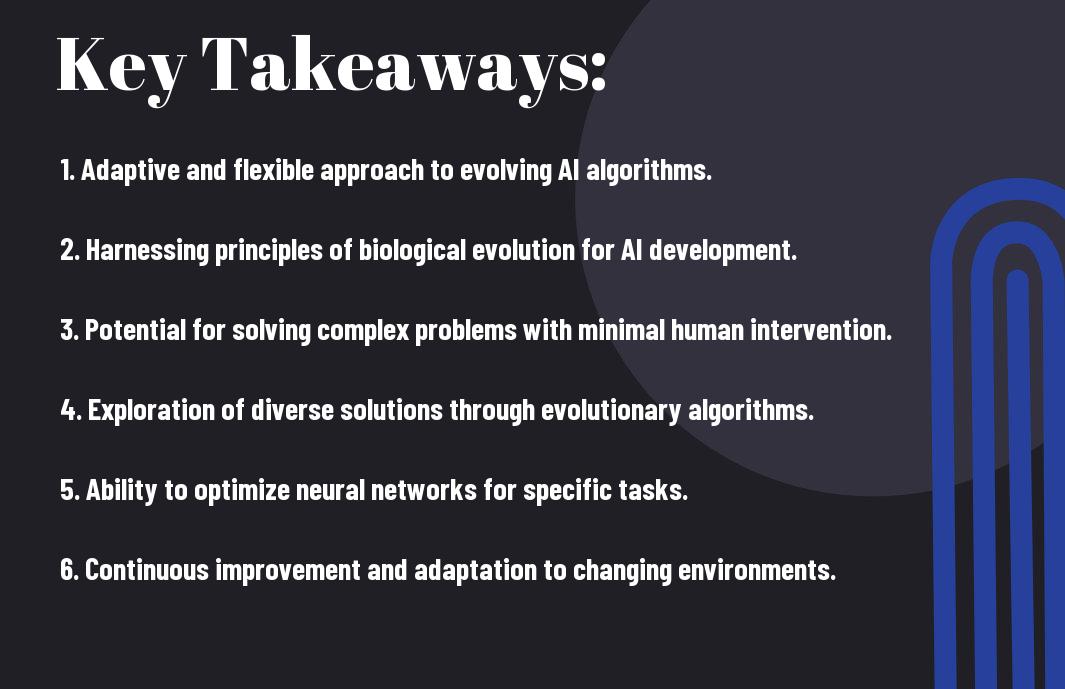
- Neuroevolution: Neuroevolution, a combination of neural networks and evolutionary algorithms, has the potential to revolutionize artificial intelligence.
- Adaptability: Neuroevolution allows AI systems to adapt and evolve over time, making them more flexible and capable of handling complex and dynamic environments.
- Autonomous Learning: By enabling AI to learn autonomously through evolution, neuroevolution reduces human intervention in training processes, making AI more self-sufficient.
- Optimization: Neuroevolution optimizes AI models by improving their performance through continuous learning and adaptation, leading to more efficient and effective AI solutions.
- Diverse Applications: The versatility of neuroevolution allows it to be applied in various fields, from robotics and gaming to finance and healthcare, expanding the possibilities of AI technology.
Neuroevolution Fundamentals
What is Neuroevolution?
One of the most groundbreaking advancements in artificial intelligence, neuroevolution combines the principles of neural networks and evolutionary algorithms to enhance machine learning processes. Through this approach, AI systems can adapt and evolve over time, mimicking the way biological organisms learn and improve.
Historical Development and Its Influence on AI
With roots dating back to the 1980s, neuroevolution has significantly influenced the field of artificial intelligence. The exploration of genetic algorithms and neural networks paved the way for the revolutionary concept of evolving AI systems. Over the years, neuroevolution has advanced and gained recognition for its ability to solve complex problems efficiently.
Fundamentals: Neuroevolution presents a paradigm shift in AI, leveraging the power of evolutionary algorithms to enhance machine learning capabilities. This approach allows AI systems to self-improve and adapt to dynamic environments, leading to more robust and efficient solutions. However, the complexity of neuroevolution algorithms requires careful design and optimization to achieve optimal performance.
Advancements in Neuroevolution
Algorithmic Breakthroughs
Assuming rapid developments in the field of artificial intelligence, neuroevolution has made significant algorithmic breakthroughs. These advancements have revolutionized the way we approach problem-solving by mimicking the process of natural selection to evolve neural networks. Neuroevolution algorithms such as NEAT (NeuroEvolution of Augmenting Topologies) have shown remarkable capabilities in optimizing neural network architectures and parameters, leading to improved performance in a variety of tasks.
Impact on Machine Learning and Deep Learning
Neuroevolution has had a profound impact on machine learning and deep learning paradigms. By harnessing evolutionary principles, neuroevolution has the potential to overcome limitations in traditional optimization methods and discover innovative solutions to complex problems. Neuroevolution is not only enhancing the capabilities of existing deep learning models but also paving the way for novel approaches that challenge conventional wisdom in the field.
Advancements in neuroevolution have the potential to revolutionize the way we approach AI research and development. By leveraging evolutionary algorithms, researchers can explore new avenues for optimization and innovation, pushing the boundaries of what is possible in artificial intelligence. With further advancements in neuroevolution, we can expect to see breakthroughs in AI applications ranging from healthcare to autonomous systems, reshaping the future of technology and society as a whole.
Applications of Neuroevolution in AI
Solving Complex Problems
Neuroevolution is a powerful tool in AI that uses evolutionary algorithms to train neural networks, allowing them to adapt and evolve to solve complex problems. This approach involves evolving neural network structures and weights over multiple generations, enabling AI systems to tackle challenges that are difficult for traditional algorithms to solve. By combining the principles of evolution with neural networks, neuroevolution creates intelligent systems capable of learning and improving their performance over time. For more on this topic, read Can evolutionary algorithms be used with neural nets ….
Enhancing Decision-Making and Adaptability
To enhance decision-making and adaptability in AI systems, neuroevolution offers a promising approach. By allowing neural networks to evolve through generations, AI models can adapt to changing environments and make better decisions based on new data. This flexibility enables AI systems to learn and evolve their strategies, providing significant advantages in dynamic and uncertain situations. Understanding how neuroevolution enhances decision-making and adaptability is crucial for unlocking the full potential of AI in various real-world applications.
Future Perspectives
Potentials and Limitations of Neuroevolution
One of the key advantages of neuroevolution lies in its ability to adapt and optimize neural networks without human intervention, potentially leading to the creation of more efficient AI models. However, this approach also faces limitations in scalability and complexity, as evolving complex neural networks can be computationally expensive and time-consuming. Balancing these potentials and limitations will be crucial for the widespread implementation of neuroevolution in the field of artificial intelligence.
The Road Ahead for Neuroevolution and AI Integration
One of the most critical aspects for the future of neuroevolution is its integration with other AI techniques to harness the combined power of different approaches. By merging neuroevolution with deep learning, reinforcement learning, and other AI paradigms, the possibilities for creating more advanced and intelligent systems are boundless. Perspectives on this integration will shape the future landscape of AI, with collaboration and innovation at the forefront of advancements in the field.
Conclusion
To wrap up, neuroevolution has the potential to redefine artificial intelligence by incorporating more biological theories and principles into the design of algorithms. By mimicking the process of natural selection and evolution, neuroevolution can create more adaptable and efficient AI systems that can learn and improve in complex and dynamic environments. With further advancements in neuroevolution research and implementation, we can expect to see significant breakthroughs in the field of artificial intelligence, leading to smarter and more autonomous systems that can tackle a wider range of real-world problems.
FAQ
Q: What is neuroevolution?
A: Neuroevolution is a technique in artificial intelligence that applies evolutionary algorithms to optimize neural networks for various tasks, such as classification, regression, or control.
Q: How does neuroevolution differ from traditional AI algorithms?
A: Neuroevolution differs from traditional AI algorithms by evolving the structure and parameters of neural networks through genetic algorithms or other evolutionary strategies, rather than using explicit programming or learning from labeled data.
Q: What are the advantages of using neuroevolution in AI?
A: Neuroevolution offers advantages such as the ability to automatically design complex neural network architectures, adapt to changing environments without retraining, and explore a wider range of solutions compared to manual design or optimization methods.
How Can Neuroevolution Redefine Artificial Intelligence?’, Use tags and structure as formated above. text tone should be informative while maintaining authority on the subject,.
Q: What are some applications of neuroevolution in AI?
A: Neuroevolution has been successfully applied to various AI tasks, including game playing, robotics, pattern recognition, and optimization problems. It has shown promise in creating adaptive and efficient AI systems for real-world applications.
Q: What are some challenges or limitations of neuroevolution in AI?
A: Some challenges of neuroevolution include high computational costs, difficult scalability to large-scale problems, and potential for suboptimal solutions due to genetic drift or premature convergence. Research is ongoing to address these challenges and improve the effectiveness of neuroevolution in AI.
Comments