

Discover the fascinating journey of artificial intelligence, from its origins in science fiction to its real-life applications today.

Table of Contents
Artificial Intelligence, or AI, is a term that has become increasingly prominent in our technological landscape. From science fiction movies to real-world applications, AI has evolved from a fantastical concept to a powerful tool that is shaping industries and transforming our daily lives.
In its simplest form, AI refers to the simulation of human intelligence processes by machines, specifically computer systems. These systems are designed to execute tasks that typically require human intelligence, such as visual perception, speech recognition, decision-making, and language translation. AI has the potential to revolutionize a wide range of industries, from healthcare to finance to transportation.
Historical Context
The roots of AI can be traced back to ancient Greece, where philosophers contemplated the concept of artificial beings. The modern history of AI, however, dates back to the 1950s, when the term was first coined by computer scientist John McCarthy. Since then, AI has gone through several phases of development, with key milestones including the creation of the first neural network in 1958 and the development of expert systems in the 1980s.
Current Applications
Today, AI is being utilized in a myriad of applications across various industries. In healthcare, AI is being used to analyze medical images, diagnose diseases, and personalize treatment plans for patients. In finance, AI algorithms are helping to detect fraud, optimize trading strategies, and improve customer service. In transportation, AI is powering autonomous vehicles, optimizing traffic flow, and enhancing safety on the roads.
Benefits of AI
The benefits of AI are vast and wide-ranging. AI technologies have the potential to automate repetitive tasks, increase the speed and accuracy of decision-making, and improve overall efficiency. By leveraging AI, organizations can unlock new opportunities for innovation, cost reduction, and competitive advantage.
Image courtesy of onpassive.com via Google Images
Challenges and Ethical Concerns
Despite its promising potential, AI also raises significant challenges and ethical concerns. Biased algorithms, job displacement due to automation, and privacy issues are just a few of the ethical dilemmas associated with AI technology. As AI continues to advance, it is essential for policymakers, industry leaders, and researchers to address these challenges proactively.
Future Direction
The future of AI is bright and promising. As technology continues to evolve, AI is likely to play an increasingly significant role in shaping our society and economy. Advancements in machine learning, natural language processing, and robotics are paving the way for new applications and innovations in the field of AI.
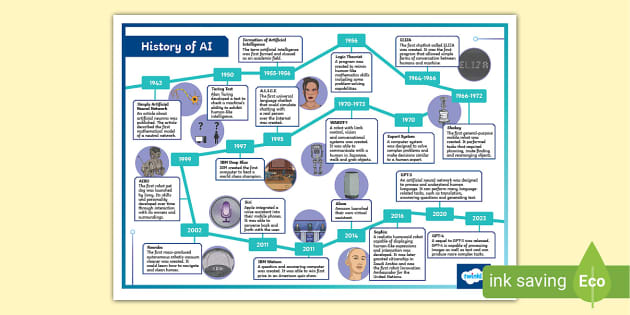
Image courtesy of www.twinkl.co.uk via Google Images
Can Skynet Happen?
The fictional concept of Skynet, a superintelligent AI that turns against humanity, has captured the imagination of many. While a scenario like Skynet is theoretically possible, the likelihood of it happening in reality is highly debatable. To prevent such a catastrophic event, researchers and policymakers are exploring ways to establish safeguards and ethical guidelines for the development and deployment of AI technologies.
Case Studies
There are countless examples of AI in action, demonstrating the transformative power of this technology. From virtual assistants like Siri and Alexa to recommendation systems on streaming platforms like Netflix, AI is already integrated into many aspects of our daily lives. Case studies highlight how AI is improving processes, enhancing user experiences, and driving business outcomes.

Image courtesy of www.scribd.com via Google Images
Expert Interviews
Industry experts, researchers, and practitioners in the field of AI offer valuable insights into the latest trends and innovations in the industry. By engaging with experts, we can gain a deeper understanding of the opportunities and challenges associated with AI technology. These interviews provide valuable perspectives on the future direction of AI and the impact it is likely to have on society.
Conclusion
Artificial Intelligence is a dynamic and rapidly evolving field that holds immense promise for the future. By exploring the history, applications, benefits, challenges, and ethical considerations of AI, we gain a comprehensive understanding of its impact on society. As we look ahead, it is essential to approach the development and deployment of AI technologies responsibly, with a focus on creating a future that is beneficial and sustainable for all.
Comments