

Uncover the evolution of AI from its inception to future possibilities in this insightful blog post on navigating AI’s trajectory.

Table of Contents
- Introduction to Artificial Intelligence
- Historical Context of AI
- Current Applications of AI
- Benefits of AI
- Challenges and Ethical Concerns in AI
- Future Directions of AI
- Can Skynet Happen? Exploring the Apocalyptic Scenario
- Understanding the Misconceptions of AI
- Human-AI Collaboration: The Future of Work
- Conclusion: Embracing the Potential of AI
Artificial Intelligence, or AI, often conjures images of futuristic technology and intelligent robots. But the reality is that AI has been a part of our lives for decades, shaping the way we live, work, and interact with the world around us. In this comprehensive overview, we will delve into the history, current applications, benefits, challenges, and ethical concerns surrounding AI, and explore the future direction of this ever-evolving field.
Introduction to Artificial Intelligence
At its core, AI refers to the simulation of human intelligence processes by machines, enabling them to perform tasks that typically require human intelligence, such as learning, reasoning, problem-solving, and decision-making. From voice assistants like Siri and Alexa to self-driving cars and recommendation systems, AI has become an integral part of our daily lives, revolutionizing the way we interact with technology.
Historical Context of AI
The roots of AI can be traced back to the 1950s, when the term “artificial intelligence” was first coined by computer scientist John McCarthy. Since then, AI has experienced rapid advancements and breakthroughs, from the development of expert systems and neural networks to the birth of machine learning and deep learning algorithms. Key milestones such as IBM’s Deep Blue defeating chess champion Garry Kasparov and AlphaGo’s triumph over Go champion Lee Sedol have showcased the immense potential of AI.
Current Applications of AI
Today, AI is being used across a wide range of industries, from healthcare and finance to marketing and entertainment. In healthcare, AI-powered diagnostics and predictive analytics are revolutionizing patient care and treatment outcomes. In finance, AI algorithms are driving investment decisions and fraud detection. In marketing, AI-powered chatbots and personalized recommendations are enhancing customer engagement and satisfaction.
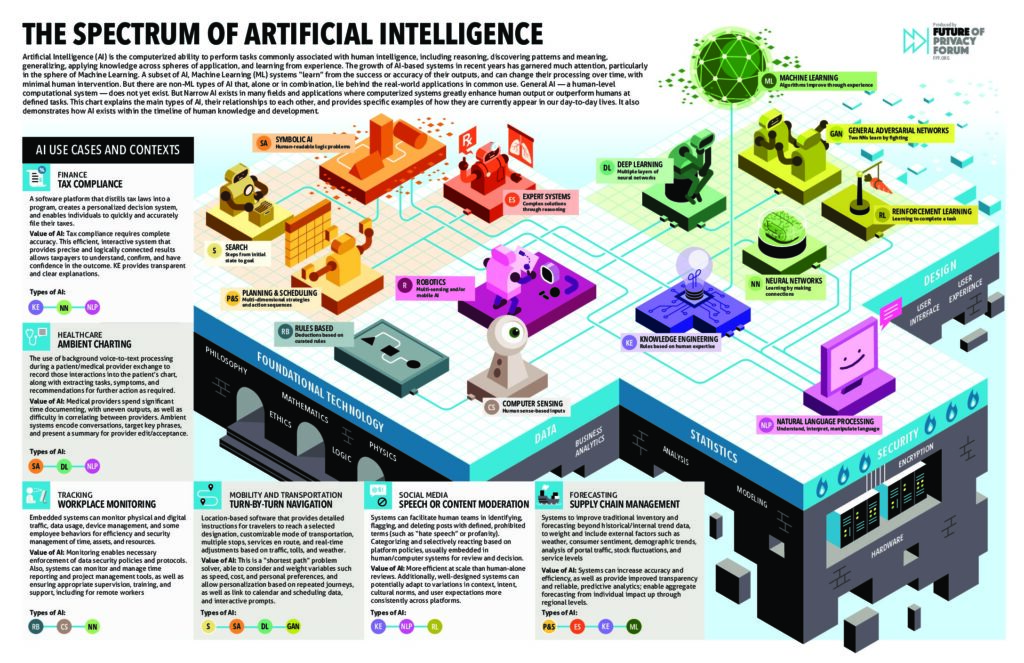
Image courtesy of fpf.org via Google Images
Benefits of AI
The adoption of AI has brought about numerous benefits, including increased productivity, efficiency, and innovation. AI technologies are helping businesses streamline operations, optimize processes, and drive growth. Through automation and predictive analytics, AI is enabling organizations to make data-driven decisions and gain a competitive edge in the market. Additionally, AI is augmenting human capabilities and empowering individuals to focus on higher-level tasks that require creativity and strategic thinking.
Challenges and Ethical Concerns in AI
While AI holds great promise, it also presents a range of challenges and ethical concerns that must be addressed. Issues such as algorithmic bias, privacy violations, and job displacement are areas of growing concern in the AI landscape. The lack of transparency in AI decision-making processes and the potential for autonomous systems to make morally questionable choices raise important ethical dilemmas that require careful consideration and regulation.

Image courtesy of digitail.com via Google Images
Future Directions of AI
Looking ahead, the future of AI promises to be filled with exciting possibilities and transformative innovations. Emerging technologies such as quantum computing, natural language processing, and reinforcement learning are poised to push the boundaries of AI capabilities even further. The convergence of AI with other cutting-edge technologies like blockchain, Internet of Things (IoT), and 5G networks is set to create new opportunities for intelligent automation, personalized experiences, and collaborative decision-making.
Can Skynet Happen? Exploring the Apocalyptic Scenario
The concept of a real-life Skynet, as depicted in the Terminator movies, raises important questions about the potential risks of superintelligent AI. While the scenario of a malevolent AI system taking over the world may seem like science fiction, experts caution that the development of artificial general intelligence (AGI) could pose significant risks if not properly controlled and regulated. Ensuring the responsible and ethical development of AI technologies is crucial in mitigating the potential threats associated with superintelligent AI.
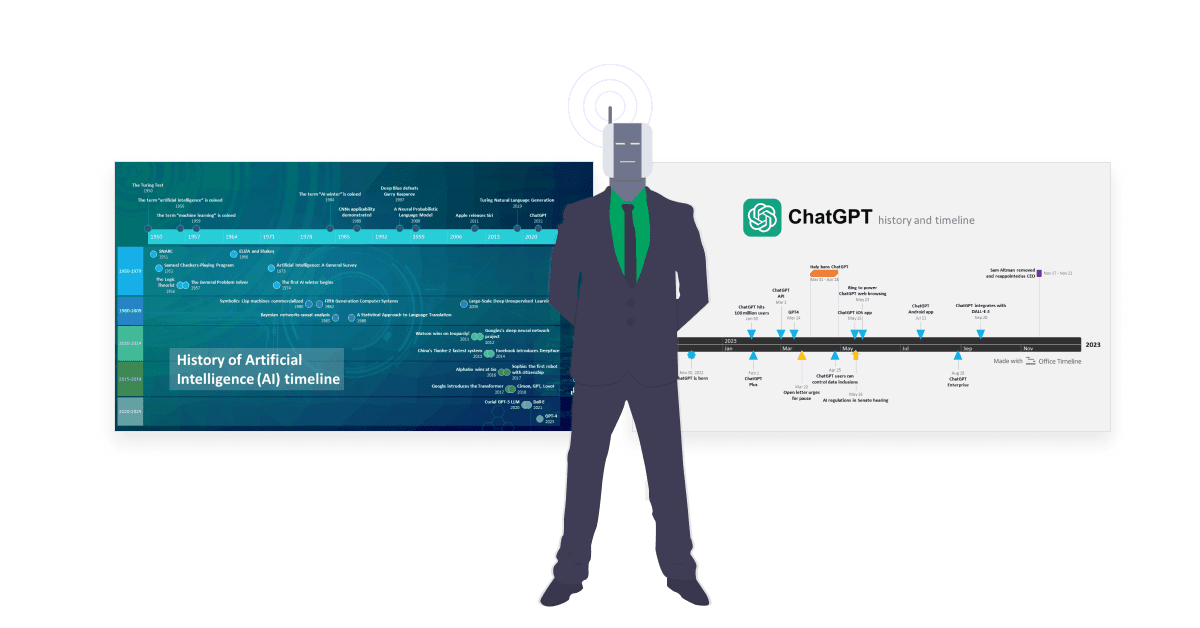
Image courtesy of www.officetimeline.com via Google Images
Understanding the Misconceptions of AI
Despite the advancements in AI technology, there are many misconceptions and myths that continue to permeate public discourse. From fears of job loss and human obsolescence to misconceptions about AI’s capabilities and limitations, separating fact from fiction is essential in fostering a more informed and balanced understanding of AI. By debunking common misconceptions and promoting accurate information about AI, we can better prepare ourselves for the opportunities and challenges that lie ahead.
Human-AI Collaboration: The Future of Work
As AI continues to evolve and permeate various aspects of society, the concept of human-AI collaboration is becoming increasingly important. Rather than viewing AI as a threat to human employment, we should embrace it as a tool for enhancing human creativity, productivity, and efficiency. By leveraging the strengths of AI technologies in areas such as data analysis, automation, and decision support, we can create a more harmonious and productive work environment that benefits both individuals and organizations.

Image courtesy of sitn.hms.harvard.edu via Google Images
Conclusion: Embracing the Potential of AI
In conclusion, AI represents a powerful and transformative force that is reshaping the way we live, work, and interact with the world. By understanding the history, current applications, benefits, challenges, and ethical implications of AI, we can navigate the complexities of this rapidly evolving field with greater awareness and insight. As we look to the future of AI, it is essential that we strive to harness its potential for positive impact while mitigating the risks and ethical concerns that may arise. By embracing the potential of AI and working towards responsible innovation, we can shape a future where intelligent machines and humans collaborate harmoniously to create a better world.
Generated by Texta.ai Blog Automation
Comments