

Many entrepreneurs and business professionals are exploring how ChatGPT can function as an innovative tool in their ventures. This AI-driven platform offers a range of features that can enhance productivity and streamline tasks, ultimately leading to better business outcomes. By integrating ChatGPT into your workflow, you can boost creativity, improve customer interactions, and make more informed decisions. In this blog post, we will probe into how you can leverage this technology to catalyze your entrepreneurial efforts and transform various aspects of your business operations.

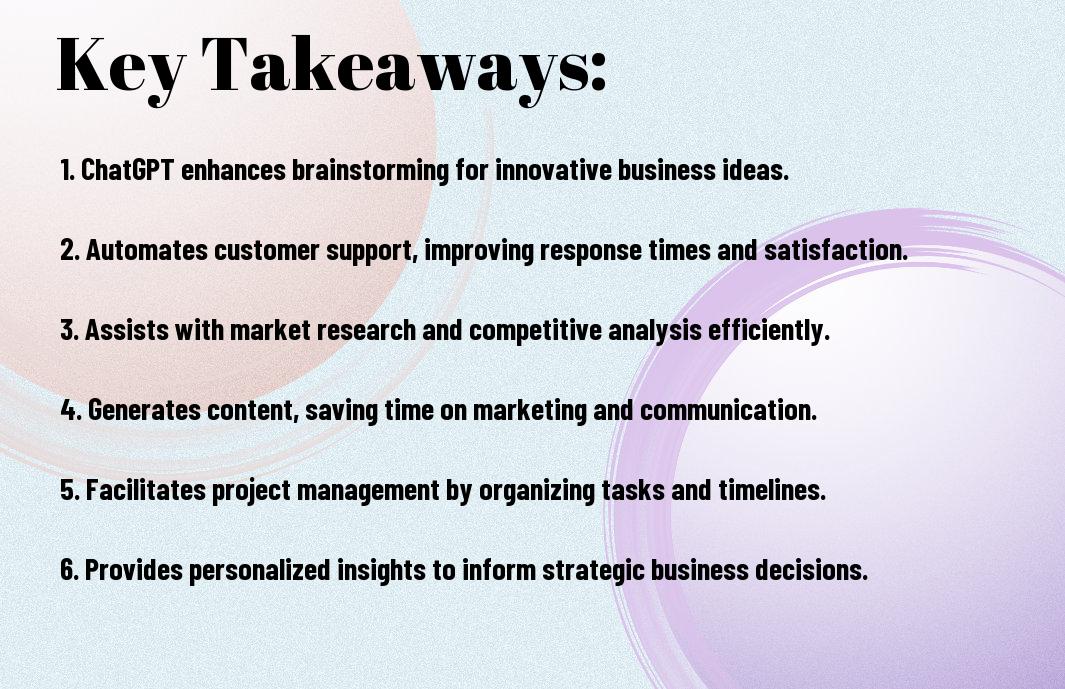
Key Takeaways:
- Idea Generation: ChatGPT can assist in brainstorming innovative business ideas and solutions, acting as a creative partner for entrepreneurs.
- Market Research: The AI tool offers quick insights and data analysis, helping businesses understand market trends and customer preferences.
- Content Creation: Entrepreneurs can leverage ChatGPT for drafting marketing materials, business plans, and social media posts, streamlining communication efforts.
- Customer Support: Integrating ChatGPT into customer service platforms can enhance responsiveness and efficiency in handling inquiries and issues.
- Learning Resource: ChatGPT serves as an accessible learning tool, providing entrepreneurs with knowledge about various aspects of business management and growth.
Understanding ChatGPT
The development of ChatGPT is rooted in the advances of artificial intelligence (AI) and natural language processing (NLP). The origins can be traced back to the early explorations in machine learning, particularly focusing on how computers could understand and generate human language. OpenAI, the organization behind ChatGPT, introduced the GPT (Generative Pre-trained Transformer) model, which laid the groundwork for your current experiences with the tool. Over several iterations, improvements have been made in terms of scale, data representation, and fine-tuning, leading to more sophisticated and nuanced communication capabilities.
History and Evolution of ChatGPT
The initial versions of GPT were fairly basic, but they quickly evolved, resulting in GPT-2 and, eventually, GPT-3 platforms. With each release, the model’s capability to generate coherent and contextually relevant text increased significantly, reflecting deeper patterns in the data it was trained on. By leveraging vast amounts of text from the internet, these models learn to predict what words or phrases are likely to come next, ultimately allowing you to ask questions and receive increasingly detailed and accurate responses.
How ChatGPT Works: A Technical Overview
Between the underlying principles of NLP and deep learning, ChatGPT operates through an architecture known as a Transformer. This model is designed to capture the relationships and contextual dependencies between words much more effectively than earlier AI models. When you interact with ChatGPT, it processes your input by transforming the text into numerical data, applying complex algorithms to understand meaning and generate responses based on learned patterns from its training corpus.
Further, its architecture allows it to weigh the significance of different parts of your input, effectively creating coherent and contextually appropriate responses. Each response you receive is generated in real-time based on a probabilistic approach, meaning that even slight variations in your questions can lead to different outputs. This adaptability is what makes ChatGPT an exciting tool for not only casual conversation but also for specific business and entrepreneurial tasks.
Limitations and Challenges of ChatGPT
Above the numerous benefits that ChatGPT offers, it does have limitations that you must consider. One of the significant challenges is its reliance on the data it was trained on. If the training corpus contains biases or misinformation, these flaws can be reflected in the responses. You may encounter instances where the information provided is inaccurate or inappropriate, emphasizing the necessity for critical thinking when using AI as part of your business strategy.
Additionally, ChatGPT lacks the ability to truly understand user intent at a human level. While it generates text based on patterns, it does not possess genuine comprehension of nuances such as emotions or relational dynamics. This limitation means it could misinterpret your inquiries or provide responses that, while coherent, may not fully address your specific needs.
Considering these limitations, it becomes necessary for you to verify the information generated by ChatGPT and to apply your judgments when utilizing its assistance in entrepreneurial endeavors. Acknowledging its potential while being aware of its shortcomings will enable you to harness the power of this tool more effectively in your business tasks.
The Role of AI in Entrepreneurship
Assuming you are exploring how AI can redefine your entrepreneurial journey, it’s vital to understand the complex landscape that artificial intelligence occupies in business contexts. Artificial Intelligence (AI) refers to the simulation of human intelligence processes by machines, particularly computer systems. In business, this involves using algorithms and data processing to automate tasks, analyze market trends, and enhance decision-making capabilities. By utilizing AI, you can optimize operations, create personalized customer experiences, and develop innovative products that directly address market needs.
Defining Artificial Intelligence in Business Contexts
Against the backdrop of your entrepreneurial ambitions, it’s crucial to consider how AI technologies can transform various processes within your organization. These technologies are designed to learn from data, adapting over time to improve their performance. They range from simple automated tasks to complex systems capable of independent reasoning and insightful analysis. For example, you may leverage AI-driven analytics to gain valuable insights into customer behavior, enabling you to refine your marketing strategies and enhance customer satisfaction.
Historical Impact of AI on Business Models
Above this key understanding of AI, it’s crucial to examine how it has historically impacted business models. Over the last few decades, AI has transitioned from a theoretical concept to a practical tool that underpins many industries. Businesses have integrated AI into their frameworks, leading to revolutionary changes in production processes, service delivery, and customer engagement. This shift has allowed many companies to gain a competitive edge, streamline their operations, and react more swiftly in the ever-evolving market landscape.
The integration of AI has not only improved efficiency and reduced costs but has also reshaped entire industries. Organizations like Amazon and Google have harnessed AI’s potential to create systems that anticipate customer needs and optimize logistics, enhancing demand forecasting and operational logistics. This transformation has highlighted the importance of agility and adaptability in your business, encouraging you to adopt new technologies to stay ahead.
Current Trends in AI Adoption Across Industries
Across various sectors, the pace of AI adoption has accelerated, demonstrating a clear trend toward innovation. Many businesses are now investing heavily in AI to drive growth, enhance productivity, and improve customer experiences. By implementing AI-powered tools, companies can perform predictive analytics, automate mundane tasks, and personalize user interactions, drastically reducing the time required to execute various business functions. This adaptability is crucial for you to navigate the complexities of your industry more effectively.
Also, the emergence of AI has led to the formation of new business models entirely, with startups leveraging AI to provide services that were previously unimaginable. For instance, fintech companies use machine learning algorithms for rapid credit scoring, enabling quicker loan approvals. Your ability to recognize and adapt these current trends can position your business not only to survive but to thrive in today’s competitive landscape.
ChatGPT as a Business Tool
Not only does ChatGPT hold the potential to revolutionize your work processes, but it can also serve as a pivotal tool in advancing your entrepreneurial ventures. By leveraging its capabilities, you can enhance many aspects of your business tasks, leading to effective outcomes and sustained growth.
Enhancing Productivity and Efficiency
After incorporating ChatGPT into your daily operations, you may discover a significant boost in productivity. The AI can help automate repetitive tasks, thereby allowing you and your team to focus on more strategic objectives. This not only accelerates the completion of tasks but also enhances the overall work quality by minimizing human error.
Additionally, the efficiency gains from using ChatGPT can lead to faster decision-making processes. With quick access to data, insights, and suggestions, you can cut down on the time spent on analysis and instead channel your energy towards innovative strategies that drive your business forward.
Streamlining Communication and Collaboration
Below the surface of effective business operations lies the fundamental need for seamless communication and collaboration. By using ChatGPT as an intermediary, you can facilitate smoother exchanges of information among teams, ensuring that everyone is on the same page and reducing misunderstandings. Whether you’re drafting emails, brainstorming ideas, or scheduling meetings, the AI can act as your assistant in organizing thoughts and actions.
Productivity often hinges on clear and direct communication. When you utilize ChatGPT to draft messages or generate summaries, it saves time and enhances the clarity of your interactions. This leads to improved collaboration across teams and reinforces a culture of transparency and efficiency that is vital for any successful business.
Offering Creative Solutions and Ideation
Any entrepreneur knows that coming up with innovative ideas is imperative for standing out in a competitive market. ChatGPT can be an invaluable ally in the ideation process, offering a plethora of perspectives that you might not have considered. This can lead to brainstorming sessions that yield potent solutions to your business challenges.
Indeed, the creative capabilities of ChatGPT extend beyond conventional ideas. By using its prompt-based system, you can explore various scenarios and potential outcomes, allowing you to refine your business strategies. This capability can inspire you to take calculated risks that could pay off handsomely in the long run.
Ideation and Market Research
Despite the ever-evolving landscape of entrepreneurship, finding innovative ideas and understanding market needs remain central to launching successful ventures. Engaging effectively in ideation and thorough market research can significantly enhance your chances of success. With tools like ChatGPT, you have a capable assistant by your side to not just brainstorm new concepts but to also analyze and interpret market dynamics.
Leveraging ChatGPT for Brainstorming Sessions
Research shows that leveraging AI platforms like ChatGPT can make brainstorming sessions more productive. You can stimulate your creativity by interacting with the AI, which can provide you with diverse suggestions based on existing trends and innovative ideas. Whether you’re exploring a niche market or devising a unique business model, you can utilize the AI’s extensive database to generate ideas that you might not have considered otherwise.
Additionally, involving ChatGPT in your brainstorming process allows for rapid iteration of ideas. You can outline initial concepts and seek instant feedback or further suggestions from the AI, enabling a dialogue that can help refine your ideas. This instant accessibility can transform your approach to ideation, making the process more engaging and less daunting.
Conducting Market Analysis with AI Assistance
Assistance in conducting market analysis becomes invaluable when you’re evaluating the viability of your business idea. Using ChatGPT, you can gather insights on consumer trends, competitors, and potential gaps in the market. The AI’s ability to process vast amounts of data can help you make sense of complex market landscapes quickly and efficiently, allowing you to make more informed decisions.
Even though AI tools like ChatGPT provide a wealth of information, it is necessary to interpret this data critically. The AI can highlight potential opportunities or risks, but the real value lies in your ability to integrate this knowledge into your strategies. Using these insights, you can craft a business plan that not only meets market demands but also sets you apart from competitors.
Using ChatGPT for Customer Feedback and Insights
With ChatGPT as a tool for gathering customer feedback, you can enhance your understanding of your target audience and their preferences. By analyzing data from customer interactions and sentiments, you can garner valuable insights that influence your product development and marketing strategies. This direct feedback loop enables you to refine your offerings in real-time, significantly improving your connection with customers.
The ability to interpret customer feedback through AI not only saves you time but also provides a structured approach to analyzing sentiments. You can filter the feedback according to categories or demographics, helping you tailor your business strategies more effectively. Harnessing this capability can lead to improved customer satisfaction and retention by ensuring your offerings align closely with consumer expectations.
Business Development and Strategy
Unlike traditional methods that can be both time-consuming and resource-intensive, utilizing ChatGPT in business development and strategic planning can significantly enhance your efficiency and decision-making. Its ability to analyze vast amounts of data and generate actionable insights empowers you to develop robust strategies that align with market needs and your unique business goals. By integrating AI into your business processes, you can expedite the planning stages and pinpoint opportunities that might otherwise go unnoticed.
Crafting Business Plans with AI Support
After outlining your vision, ChatGPT can assist in crafting comprehensive business plans that reflect your objectives and strategies. By providing relevant market data, financial forecasts, and competitive analysis, you will find that your business plan becomes a pragmatic roadmap rather than just a theoretical document. Having AI support means you can also easily iterate on your plan, accommodating changes in the market or your business landscape without starting from scratch.
Moreover, the potential of ChatGPT to generate specific sections of your business plan—such as executive summaries or marketing strategies—can save you a significant amount of time. You can focus more on refining your vision and implementing your strategies rather than getting bogged down in the writing process.
Scenario Planning and Forecasting with ChatGPT
Forecasting has always played a vital role in strategic planning, and by leveraging ChatGPT, you expand your ability to simulate various market scenarios effectively. The AI can rapidly generate multiple forecasts based on different variables, allowing you to assess the likelihood of success under various circumstances. This capability empowers you to make informed decisions and prepare for potential challenges.
Additionally, scenario planning enables you to visualize the possible futures your business might encounter, guiding you in creating solid contingencies. By using ChatGPT to model these scenarios, you are more equipped to navigate uncertainties and align your business strategies accordingly.
Understanding different scenarios in depth not only cultivates foresight but also enhances your strategic flexibility. By anticipating shifts in the market, you can pivot your business plans and secure a competitive edge over other players in your field.
Competitive Analysis: Positioning Against Competitors
Scenario analysis isn’t just limited to your internal strategies; it also plays a significant role in how you position your business against competitors. ChatGPT’s ability to analyze competitor data allows you to see trends and tactics employed in your industry, thus enabling you to position your offerings more effectively. By evaluating strengths, weaknesses, opportunities, and threats (SWOT analysis) of your competitors, you can discover niches and unique selling propositions that differentiate your brand.
By developing a well-informed competitive analysis with the aid of ChatGPT, you’ll find yourself in a smart position to not only compete but also thrive. You’ll be equipped with insights that can guide your marketing efforts, product development, and customer engagement strategies, making your business more resilient against market changes.
Competitors may have established positions, but with ChatGPT as your resource, you can identify areas where you stand to gain and innovate effectively. This intelligence can lead to crucial insights that drive strategic decisions, resulting in heightened success and ongoing growth.

Marketing and Branding
Once again, you are faced with the challenge of creating a robust marketing strategy that not only captures attention but also resonates with your target audience. As you navigate the complexities of marketing and branding, leveraging tools like ChatGPT can redefine how you approach these tasks, making them more efficient and impactful.
Creating Compelling Marketing Content
At the heart of effective marketing is your ability to produce engaging content that communicates your brand’s message. With ChatGPT, you can generate captivating blog posts, persuasive product descriptions, and attention-grabbing social media updates with relative ease. By providing a few key ideas or an outline, this AI-driven tool can help you craft compelling narratives that align with your brand voice and appeal to your audience’s interests.
Additionally, incorporating ChatGPT into your content creation process allows you to experiment with various tones and styles. This ability can be particularly beneficial when testing different messaging strategies or attempting to reach diverse demographics. Ultimately, it empowers you to create a richer content landscape that serves both your marketing and branding objectives.
Personalizing Customer Interactions and Engagement
For any entrepreneur, enhancing customer interactions should be a top priority. Utilizing ChatGPT, you can create personalized communications that speak directly to your customers’ needs and preferences. From crafting tailored email campaigns to generating customized responses for inquiries, this AI tool can help you streamline your interactions, making them feel more genuine and relatable.
By employing ChatGPT to analyze customer data and segment your audience, you can develop targeted messaging strategies that enhance customer engagement. Whether it’s through personalized product recommendations or timely follow-ups, you can cultivate a stronger connection with your clients, ultimately driving loyalty and retention.
Understanding the intricacies of your audience allows you to fine-tune your approach, whether that entails addressing their specific pain points or celebrating their milestones. When your communications reflect their individuality, you foster a stronger sense of community around your brand, which can lead to meaningful relationships.
Exploring Social Media Strategies with AI
Across various platforms, social media serves as a dynamic arena for brand visibility and customer engagement. With ChatGPT, you can generate creative content ideas, develop election campaigns, and even respond to comments or inquiries efficiently. This AI solution can analyze trends, suggest optimal posting times, and help you maintain a consistent brand presence across different channels, all while saving you valuable time.
Furthermore, utilizing AI in your social media strategies allows you to stay ahead of the competition. With real-time analytics and insights, you can refine your approach based on customer interactions and feedback. This adaptable strategy ensures that your marketing efforts are always aligned with what resonates most with your audience.
With the comprehensive capabilities of ChatGPT, you can explore innovative ways to engage with your followers, whether through eye-catching visuals or compelling storytelling that enhances your brand narrative. This technological edge enables you to harness the full potential of social media as a marketing powerhouse.
Sales Enhancement
Keep in mind that sales enhancement is a vital aspect of any entrepreneurial venture. ChatGPT can become an invaluable tool for streamlining sales processes and improving overall efficiency. By leveraging AI technology, you can automate various sales tasks and focus more on strategies that drive growth.
Automating Sales Processes and Lead Generation
Between the constant demands of customer acquisition and lead management, you may find it challenging to keep track of potential sales opportunities. ChatGPT can automate the time-consuming aspects of sales processes, such as data entry, follow-up emails, and even initial outreach to potential leads. This automation not only saves you precious time but also enhances your ability to nurture leads effectively.
Additionally, the AI can assist in lead generation by analyzing trends and identifying potential customers based on their online behaviors. This data-driven approach allows you to target specific demographics that are more likely to convert, ultimately boosting your sales pipeline with quality leads.
Enhancing Customer Communication with AI
On the flip side, strong customer communication is necessary for building relationships that lead to sales. ChatGPT can assist in crafting personalized messages, answering inquiries, and addressing customer concerns promptly. By integrating this AI into your communication strategy, you can ensure that your customers feel valued and understood, leading to improved customer satisfaction and higher retention rates.
To maximize your interaction with customers, consider how ChatGPT can help tailor responses based on customer data and preferences. This personalization enhances the customer experience, making it more likely that they will choose your products or services over competitors. You’ll find that investing in AI-driven communication strategies pays off in the long run.
Analyzing Customer Data for Sales Strategies
By utilizing ChatGPT’s analytical capabilities, you can research deeper into your customer data to uncover valuable insights that can refine your sales strategies. Understanding what your customers want through analyzing their purchasing behavior, preferences, and feedback equips you with the knowledge to optimize your sales tactics and product offerings.
Furthermore, the AI can help you recognize patterns that might not be immediately visible, allowing you to adjust your approach swiftly. With this analysis, you can draft effective marketing initiatives and sales strategies tailored to your target audience’s needs, increasing your chances of success.
Sales teams that leverage AI-powered tools gain a competitive edge by employing data-driven strategies that resonate with their customers. By making informed decisions based on comprehensive analytics, you not only improve your sales performance but also build a lasting relationship with your client base.

Product Development
To thrive in today’s competitive market, you must focus on effective product development processes that blend innovation and practicality. ChatGPT can serve as a valuable resource in this phase, offering insights and ideas that can propel your products to success. By leveraging its capabilities, you can streamline your product development journey, making it advantageous for both startups and established businesses.
Utilizing ChatGPT for Product Conceptualization
At the initial stages of product development, identifying and conceptualizing product ideas can be a daunting task. Utilizing ChatGPT allows you to brainstorm and explore diverse ideas that you may not have considered otherwise. The AI can assist by providing suggestions tailored to your target market or by analyzing current industry trends, which can help refine your focus and inspire innovative approaches to your product concepts.
At the same time, engaging with ChatGPT during the conceptualization phase encourages you to contemplate different angles, such as functionality, aesthetics, and value propositions. You can pose questions or scenarios to the AI, fostering an interactive dialogue that stimulates creativity. By doing so, you can enhance the clarity of your product vision and develop ideas that resonate powerfully with potential customers.
Rapid Prototyping and Feedback Loops
At the prototyping stage, speed and adaptability are your best friends. By employing ChatGPT, you can rapidly translate your conceptual ideas into initial prototypes. The AI can generate outlines, specifications, and even design recommendations, allowing you to create a tangible representation of your vision promptly. Furthermore, it can assist you in drafting relevant marketing materials that accompany your prototypes, promoting a cohesive narrative around your product.
In addition, implementing feedback loops is integral to refining your product. Using ChatGPT, you can simulate customer feedback by generating potential user responses to your prototypes. This approach enables you to identify potential flaws or areas for improvement before formal launch, ensuring that any necessary adjustments can be made efficiently. By prioritizing fast iterations based on data-driven insights, you can better align your product with your customers’ preferences.
Optimizing User Experience through AI Insights
With the right approach, your product can effectively meet user needs and expectations, thanks in large part to AI insights provided by ChatGPT. You can analyze user behavior and feedback by leveraging AI tools, allowing for informed decisions about product functionalities and design elements that enhance overall user experience. By captivating and retaining your audience, you can secure your product’s success in the marketplace.
Considering the dynamic nature of consumer expectations, employing ChatGPT to optimize user experience is a powerful strategy. The AI can provide trending insights, enabling you to anticipate users’ preferences and make data-supported decisions that resonate well with your audience. By continuously iterating based on these insights, you can position your product favorably within your competitive landscape, fostering long-term success.
Financial Projections and Management
Your success in entrepreneurship often hinges on effective financial management and forecasting. This section explores how ChatGPT can assist in creating reliable financial projections and managing your business finances efficiently. By leveraging AI, you can streamline financial planning processes, enhance insightful reporting, and identify potential risks that could impact your operations.
Using AI for Budgeting and Financial Planning
At the core of successful budgeting and financial planning lies accurate data analysis and informed decision-making. With AI tools like ChatGPT, you have the ability to process vast amounts of historical financial data, which enables you to create tailored budgets that align with your specific business objectives. By understanding patterns and trends within your financials, you can allocate resources more effectively and optimize your spending to bolster growth.
Additionally, ChatGPT can assist in scenario planning, allowing you to visualize different financial outcomes based on varying assumptions. This sensitivity analysis equips you with the knowledge needed to adjust your budget proactively, ensuring that you remain agile in a dynamic market environment. Ultimately, utilizing AI for these tasks enhances your confidence in the financial health of your business.
Financial Analysis and Reporting with ChatGPT
About your ongoing financial performance, analysis and reporting become important to maintain transparency and accountability. With ChatGPT, you can automate the process of generating detailed financial reports, helping you to analyze profit margins, cash flow, and overall financial efficiency. This allows you to focus on interpreting the results and formulating strategies rather than getting bogged down with data compilation.
Additionally, the AI’s capabilities extend to real-time data monitoring, providing you with immediate insights into your financial standing. This enables timely decision-making and the ability to respond to financial anomalies or opportunities as they arise. You can cultivate a more proactive financial management strategy with this robust tool at your disposal.
In addition to streamlined reporting, ChatGPT can harness large datasets to provide advanced financial modeling and forecasting. This thoroughness empowers you to anticipate future financial challenges and opportunities, thus allowing for more strategic business operations.
Risk Assessment and Mitigation Strategies
Before delving into the future of your business, understanding potential risks is important for sustainability and growth. ChatGPT can contribute significantly to your risk assessment processes by analyzing various factors that could influence your operational stability. From market volatility to credit risks, AI can pinpoint emerging threats and help you devise effective strategies to mitigate them.
Moreover, by modeling different risk scenarios, you can prepare contingency plans that allow your business to withstand and adapt to unforeseen events. This degree of preparedness not only protects your investments but also instills confidence among stakeholders, including employees and investors.
Plus, adopting AI-driven risk mitigation strategies means you can continuously update your assessments based on real-time data and market fluctuations. With this dynamic approach, you can remain ahead of potential threats, ensuring that your business adapts and thrives in an ever-evolving landscape.
Human Resources and Team Management
Unlike traditional methods that rely solely on human intuition and experience, leveraging AI like ChatGPT in human resources can significantly streamline and enhance various business tasks. By utilizing AI capabilities, you can foster a more efficient and innovative environment when it comes to managing your workforce and ensuring that your teams are well-equipped to fulfill their roles effectively.
AI in Recruitment and Talent Acquisition
Among the most potent applications of ChatGPT in human resources is its role in recruitment and talent acquisition. By automating initial screenings and sifting through a large pool of resumes, you can save valuable time and resources that would otherwise be spent on tedious administrative tasks. This allows your HR team to focus more on strategic decision-making and candidate engagement, ensuring that the most qualified individuals come through your hiring process.
Additionally, ChatGPT can facilitate brainstorming sessions for creating job descriptions that resonate with potential candidates. By recommending key skills and qualifications, you can attract high-quality applicants who are not only a fit for the technical requirements but also align with your company’s culture. Overall, integrating AI into your recruitment efforts can lead to a more streamlined process, higher-quality hires, and reduced turnover rates.
Enhancing Employee Training and Development
To truly harness the power of ChatGPT in your organization, focusing on enhancing employee training and development is imperative. AI can personalize training programs based on individual employee needs and learning styles, allowing you to create a more engaged and knowledgeable workforce. With ChatGPT’s ability to deliver tailored content, you can ensure that your team gains the skills necessary to adapt to ever-changing market dynamics.
In fact, the implementation of AI-driven solutions for employee development can foster on-the-job learning by providing employees with instant support and resources whenever needed. This not only boosts confidence within teams but also enhances productivity, as team members can overcome knowledge gaps without delays. Continuous learning becomes achievable, leading to lasting benefits for both your employees and your organization as a whole.
Building a Collaborative Work Culture with ChatGPT
Around the shift to remote and hybrid work environments, fostering collaboration has become more challenging yet vital. ChatGPT serves as a valuable tool for breaking down communication barriers and facilitating knowledge sharing among your team members. By providing suggestions, streamlining information dissemination, and offering real-time solutions, you can create a workplace that thrives on cooperation and teamwork.
With ChatGPT’s capabilities, you can implement an interactive platform for brainstorming and problem-solving sessions. This not only helps in generating innovative ideas but also encourages employee engagement as they feel valued and heard. By embedding AI in your work culture, you’re paving the way for a collaborative environment that nurtures creativity and cooperation within your teams.
Legal and Ethical Considerations
Once again, as you navigate the whirlwind of innovation that AI offers, it is important to understand the landscape of legal and ethical considerations that accompany its deployment in your entrepreneurial ventures. As you leverage tools like ChatGPT, being aware of compliance and regulatory challenges is paramount to ensure that your business practices remain compliant while taking advantage of advanced technologies.
Compliance and Regulatory Challenges
Around the globe, laws governing AI technology are continuously evolving, and this can create uncertainty for you as a business owner. Depending on your industry and the geographical regions in which you operate, you may need to comply with a range of regulations that govern data use, consumer protection, and transparency in algorithmic decision-making. Failing to adhere to these regulations can lead to substantial penalties and reputational damage to your brand.
Furthermore, the specifics surrounding intellectual property rights related to AI-generated content can complicate matters. As you harness AI technologies, you must be mindful of who owns the output produced by these tools. Clear guidelines must be established to protect your business assets while ensuring that your use of AI does not infringe upon the rights of others.
Data Privacy and Security in AI Use
Ethical considerations surrounding data privacy and security are paramount when implementing AI solutions in your business. The collection and utilization of data through systems like ChatGPT require that you adhere to data protection regulations such as the General Data Protection Regulation (GDPR) if you operate in Europe, or similar regulations elsewhere. You need to ensure that your data collection practices are transparent and that you have the consent of your customers to process their data.
Additionally, it is critical to implement robust security protocols to protect sensitive data from breaches. The use of AI systems increases the surface area for potential cyberattacks, thus making it your responsibility to continuously monitor and upgrade your security measures to safeguard against vulnerabilities. Not addressing these aspects can significantly harm your business’s credibility and customer trust.
Further, it’s also worth noting the importance of conducting regular audits on your AI systems to ensure compliance with both legal standards and your company’s ethical commitments to data privacy. These proactive steps will help you maintain a high standard of responsibility in your use of AI technologies.
Ethical Implications of AI in Business Decisions
About the ethical implications of AI in business decisions, it is vital to acknowledge the potential biases that might influence your decision-making processes. Algorithms aren’t foolproof and can inadvertently reflect societal biases present in the data you use, leading to unfair treatment of certain groups. This necessitates that you regularly review and refine your AI models, ensuring they promote fairness and equality in your operational practices.
Moreover, transparency in how AI influences your business decisions is important. Customers and stakeholders are increasingly concerned about how automated systems impact their lives and the choices made by organizations. By being forthright about your use of AI and its implications, you can build trust and foster positive relationships with your clientele.
Ethical implications of AI in business decisions also extend to the responsibility you hold in ensuring that AI does not lead to job displacement without adequate measures for workforce transition. Engaging in open discussions and planning for how AI will integrate with your workforce can mitigate backlash and promote a healthier working environment.
Case Studies of Successful Integration
All around the globe, innovative entrepreneurs and established businesses are integrating ChatGPT into their operational frameworks, yielding remarkable results. The following case studies illustrate the effective utilization of this advanced AI technology in various sectors:
- Startup A: A tech startup utilized ChatGPT to enhance its customer service response times, achieving a 70% reduction in wait times, which led to a 40% increase in customer satisfaction ratings.
- Startup B: An e-commerce company implemented ChatGPT in product recommendations, resulting in a 25% boost in sales conversions during their peak season.
- Established Business C: A financial institution integrated ChatGPT into their operations, streamlining workflow processes, which saw a 30% improvement in project completion times.
- Established Business D: A leading healthcare provider employed ChatGPT for patient triage, facilitating a 15% increase in appointment scheduling efficiency.
Startups Leveraging ChatGPT for Growth
Above all, startups are increasingly recognizing the power of ChatGPT in driving their growth trajectories. By deploying its capabilities for customer engagement and operational efficiency, you can expect not only improved productivity but also enhanced customer experiences. For instance, a startup in the fashion sector used ChatGPT to conduct style consultations, becoming an integral part of their marketing strategy.
Moreover, you can harness ChatGPT’s potential for generating insightful market analysis. Another startup in the tech industry reported a 50% faster turnaround time in generating competitive analysis reports when leveraging ChatGPT’s capabilities. This not only allows startups to make informed decisions quickly but also enhances their adaptability in fast-paced markets.
Established Businesses Transforming with AI
Transforming established businesses has also become a reality, thanks to the incorporation of ChatGPT into their existing frameworks. You might be surprised to learn that many traditional companies are not just adopting AI but are also achieving remarkable transformations. A renowned publishing company utilized ChatGPT to automate editorial reviews, which led to a 20% reduction in editorial costs and improved turnaround time for new releases.
Additionally, some established retailers are using ChatGPT to enhance their customer engagement through personalized marketing campaigns. Such integration can help you refine your customer targeting strategies, ultimately leading to improved customer loyalty and repeat sales.
Integration of ChatGPT into established business operations offers the chance to re-evaluate existing methods and inspire innovative strategies. With examples spanning across various sectors, the data clearly indicates that integrating AI is not just about keeping pace with current trends; it’s about setting new benchmarks in efficiency and customer satisfaction.
Lessons Learned from Implementation
Beside the evident advantages, the implementation of ChatGPT unveils vital lessons that can influence your approach to integrating AI tools. The primary lesson emphasizes the importance of continuous monitoring and refinement of AI capabilities. Companies that conduct regular assessments find that adapting their approach provides them with sustained competitive advantage.
Furthermore, customer feedback emerges as a critical element in shaping AI strategies. Businesses that prioritize user insights and adapt their AI deployment based on this feedback tend to achieve significantly higher levels of customer acceptance and satisfaction. This iterative process reveals not just what works, but also what can be enhanced.
Lessons Learned from Implementation demonstrate that trial and error are crucial in AI integration. You can avoid common pitfalls by remaining open to adjustments and encouraging a culture of innovation within your team.
Further, the significant takeaway from these projects is the necessity of embracing flexible methodologies. Flexibility allows businesses to pivot and respond to changing market dynamics swiftly. Companies that adopt an agile mindset can leverage ChatGPT more efficiently, maintain relevance, and ultimately drive sustainable growth.
Future Prospects and Trends
Many entrepreneurs are beginning to recognize the transformative potential of AI technologies like ChatGPT in various business tasks. As these tools continuously evolve, they bring forth new capabilities that can streamline operations, enhance customer interactions, and even assist in strategic decision-making. The next wave of advancements in AI is expected to focus on increasing the accessibility and usability of these systems. Therefore, as an entrepreneur, you will likely benefit from utilizing AI tailored specifically for your business needs, ultimately fostering innovation and efficiency.
Evolving Technologies in AI for Business
On the horizon of AI evolution, technologies will become more sophisticated and nuanced, integrating seamlessly into the fabric of your daily entrepreneurial processes. You might observe AI systems becoming increasingly adept at understanding context, enabling more personalized engagement with customers. Additionally, the continual refinement of natural language processing will enhance these tools’ abilities, granting you the capacity to generate more relevant content and responses that reflect your brand’s unique voice.
This evolution in AI will not only improve existing functionalities but also pave the way for entirely new business applications. As you embrace these new technologies, anticipate that your operational model may shift. With the right AI solutions, you could automate complex tasks, mitigate risks, and optimize resource allocation, ultimately leading to a significant competitive edge in your industry.
Anticipated Changes in Entrepreneurial Landscapes
Below the surface, you should expect shifts in the entrepreneurial landscape driven by the widespread adoption of AI capabilities. As businesses increasingly leverage AI, market dynamics will inevitably change, creating both challenges and opportunities. The competitive landscape may become more intense as companies utilize these technologies to differentiate themselves and enhance customer experiences.
Technologies like ChatGPT will influence how you interact with customers and stakeholders, demanding elevated standards of service and engagement. As your peers adopt AI tools, traditional business models may evolve or even become obsolete. This transformation will compel you to remain agile, adjusting your strategies to meet consumer expectations and harness the newfound advantages of integrated AI systems.
Preparing for a Future with Integrated AI Systems
Preparing for a future where integrated AI systems become a staple in business operations is imperative for your success. The convergence of various AI technologies will create an ecosystem that enhances productivity and collaboration. You may need to familiarize yourself with the tools available in the market and how they can be tailored to suit your unique business needs. Understanding their capabilities and limitations will empower you to make informed decisions about implementing AI solutions.
Trends indicate that as businesses integrate AI systems more deeply into their workflows, the capabilities of these tools will expand significantly. Your approach to training employees and refining workflows will need to adapt, ensuring everyone is equipped to work alongside AI effectively. Furthermore, you may also need to consider new roles and skill sets that emerge as a result of this technological shift, which can provide positive avenues for workforce development.
Final Words
Presently, ChatGPT stands as a transformative tool that can significantly enhance your entrepreneurial ventures and streamline various business tasks. By leveraging its capabilities, you can access a wealth of information and generate creative ideas that spark innovation and drive growth. Whether you are crafting compelling marketing content, seeking data-driven insights for decision-making, or brainstorming product features, the tool can provide immediate support and facilitate a more agile approach to problem-solving. With its ability to learn and adapt to your specific needs, ChatGPT can serve as an invaluable resource in honing your business strategies.
Moreover, integrating ChatGPT into your workflow presents an opportunity to optimize your time and resources. You can delegate mundane and repetitive tasks to the AI, allowing you to focus more on strategic initiatives and customer engagement. As you explore its potential, you’ll likely discover new ways to enhance productivity and foster creativity within your team. Embracing this technology can empower your entrepreneurial journey, ensuring that you remain competitive in an ever-evolving business landscape. Ultimately, ChatGPT not only augments your capabilities but also embodies the future of how you might approach business challenges and opportunities.
FAQ
Q: How can ChatGPT assist in generating business ideas?
A: ChatGPT can facilitate brainstorming sessions by providing a plethora of creative suggestions based on various parameters such as market trends, consumer needs, and industry insights. Entrepreneurs can input specific criteria or areas of interest, and ChatGPT can respond with innovative ideas, potential business models, and value propositions that align with those inputs.
Q: In what ways can ChatGPT help with market research?
A: ChatGPT can support market research by analyzing existing data and summarizing trends, consumer behavior patterns, and competitive landscapes. Entrepreneurs can ask targeted questions to gain insights into specific markets or demographics, enabling them to make informed decisions based on current data without extensive manual research.
Q: Can ChatGPT assist in creating a business plan? If so, how?
A: Yes, ChatGPT can aid in creating a comprehensive business plan by guiding users through necessary sections such as executive summary, market analysis, organizational structure, and financial projections. Entrepreneurs can outline their goals and objectives, and ChatGPT can offer suggestions for each section, including narrative style and key data points that should be included.
Q: How does ChatGPT contribute to improving customer service in a business?
A: ChatGPT can enhance customer service by providing automated responses to frequently asked questions, assisting with troubleshooting, and offering personalized recommendations based on customer inquiries. By utilizing ChatGPT for initial customer engagement, businesses can free up their human resources for more complex inquiries while ensuring response times remain swift.
Q: Can ChatGPT support content creation for marketing purposes?
A: Absolutely, ChatGPT can play a significant role in content creation by generating blog posts, social media updates, marketing copy, and product descriptions. By inputting specific themes, target audiences, and key messages, entrepreneurs can utilize ChatGPT to produce high-quality content quickly, enabling them to maintain a consistent marketing presence across various platforms.
Comments