

Transformation in customer support is being driven by ChatGPT, which is revolutionizing how you interact with your customers. This advanced AI technology enhances your customer service efficiency by providing instant responses and resolving queries around the clock. Moreover, ChatGPT can handle high volumes of inquiries simultaneously, reducing wait times and improving overall customer satisfaction. By utilizing ChatGPT, you can streamline your support tasks, allowing your team to focus on more complex issues while ensuring a consistent experience for your users. Explore how this innovation can elevate your customer support strategy.
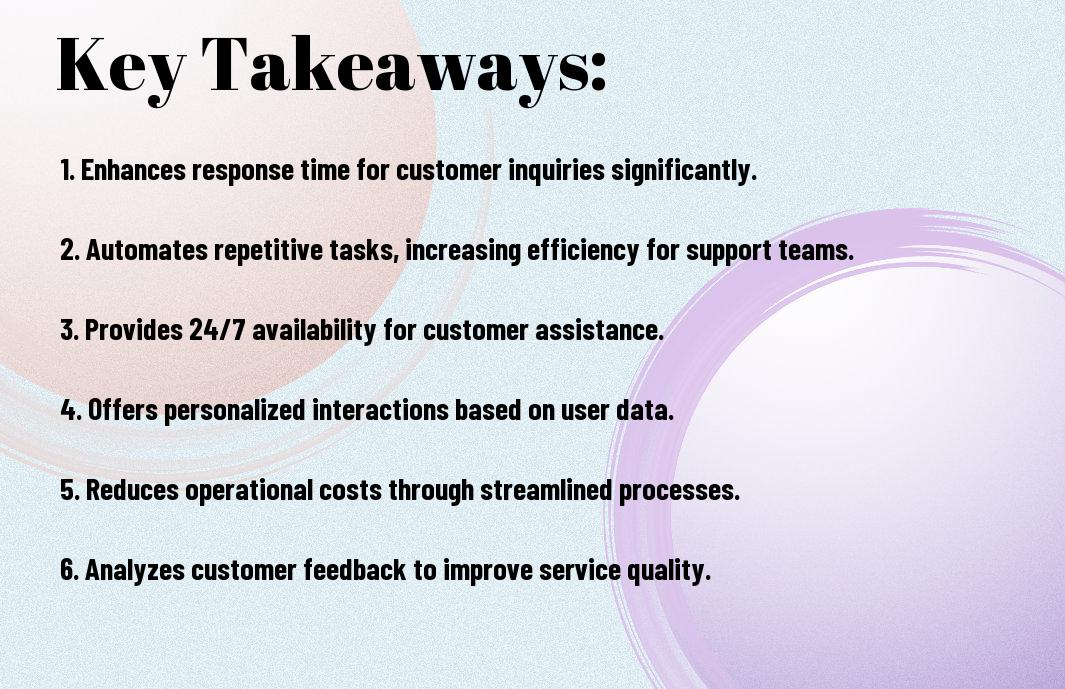
Key Takeaways:
- Efficiency: ChatGPT can handle multiple customer inquiries simultaneously, reducing response time and increasing overall efficiency in customer support.
- Availability: With 24/7 accessibility, ChatGPT ensures that customers can get assistance at any time, enhancing satisfaction through constant support.
- Personalization: By utilizing data, ChatGPT can tailor responses to individual customer needs, creating a more engaging and personalized support experience.
- Scalability: Organizations can easily scale their customer support efforts with ChatGPT, adapting to increasing demand without compromising quality.
- Cost-effectiveness: Implementing ChatGPT can lower operational costs associated with customer support by reducing the need for a large human workforce.
Understanding ChatGPT
Overview of ChatGPT
For anyone exploring the world of artificial intelligence, ChatGPT stands out as a pioneering platform that has made significant strides in the field of conversational AI. Powered by the state-of-the-art machine learning model developed by OpenAI, ChatGPT is designed to comprehend and generate human-like text based on the input you provide. Whether you’re seeking answers to your inquiries or engaging in casual conversations, ChatGPT’s capabilities offer a versatile tool that enhances the way you interact with technology.
Before delving deeper, it’s important to note that ChatGPT isn’t just another chatbot. Its underlying architecture allows for more nuanced understanding and generation of language, making it a valuable asset in environments where effective communication is paramount. You’ll find that its extensive training enables it to grasp context, follow prompts, and address your questions in a coherent manner.
Technical Foundations of ChatGPT
On the technical side, ChatGPT is based on a variant of the GPT (Generative Pre-trained Transformer) model, which utilizes deep learning techniques to process and generate text. At its core, it employs a transformer architecture that excels in understanding context and relationships within the text. This means that when you pose a question or give a command, ChatGPT can analyze it in real-time and respond accordingly, showcasing impressive adaptability.
This architecture is trained on diverse datasets containing a mixture of licensed data, human-created data, and publicly available text from a wide range of sources. This broad base of training allows for a vast understanding of language, expressions, and cultural nuances, which enhances its efficiency in various applications, especially in customer support scenarios where personalized and accurate communication is important.
Evolution of Conversational AI
Understanding the evolution of conversational AI is vital to appreciating the transformative impact of ChatGPT on customer support tasks. Over the past decade, the landscape of AI-driven communication has shifted tremendously. Early chatbots were primarily rule-based systems, confined by scripted responses that often fell short of meeting user needs. However, with advancements in machine learning and natural language processing, systems like ChatGPT have emerged, allowing for far more engaging and fluid conversations.
As organizations strive to improve customer interactions, tools like ChatGPT have become indispensable, offering a level of understanding and efficiency that was previously unattainable. The implications of this progress are significant; by leveraging AI, businesses can reduce wait times, ensure consistency in responses, and enhance overall customer satisfaction. Understanding this trajectory allows you to better grasp how these technologies are reshaping the customer support landscape.
Understanding the evolution of conversational AI not only highlights its rapid advancements but also showcases how AI systems are increasingly tailored to meet user needs through learning from interactions. This opens doors for more personalized experiences, enhancing the way you engage with customer support systems.
The Role of AI in Customer Support
Historical Context of Customer Support
Any discussion about customer support must begin with its historical roots. Behind the scenes of every successful business, customer service has evolved from simple interactions at brick-and-mortar establishments to in-depth call center operations. In the early days, support was provided through letters and telegrams, where responses were slow and often less personalized. As technology progressed, telephone support became the standard, allowing customers to reach representatives directly, but still often resulting in long wait times and varying levels of service quality.
The introduction of the internet brought forth new avenues for customer support, including email and chat services. Businesses started to adopt a more proactive approach, utilizing FAQs and knowledge bases to assist customers without the need for direct interaction. However, these systems still fell short, as they relied heavily on human intervention, which could be limited by time zones, availability, and workload.
Transition from Traditional to AI-driven Support
Customer expectations have dramatically changed in today’s fast-paced digital world. You now demand answers quickly and often prefer self-service solutions over traditional support methods. The transition from traditional customer support to AI-driven solutions represents a significant shift in how support is delivered. Here, AI systems, such as ChatGPT, are prominent players that not only respond to inquiries but also learn and adapt to better serve your needs over time.
This move towards AI-driven support doesn’t mean the elimination of human representatives; rather, it enhances their capabilities. By automating routine inquiries and offering instant responses, AI allows support teams to focus on more complex issues that require human empathy and problem-solving skills. This blend of technology and human interaction leverages the strengths of both, creating a more efficient and effective support experience.
Support services powered by AI also benefit from constant learning and optimization, drawing on a vast pool of data to refine their responses. This means that the more you interact with these systems, the more personalized and accurate your experience becomes.
Benefits of Implementing AI in Customer Support
Any organization that integrates AI into its customer support framework can expect numerous advantages. You will notice an immediate improvement in response times, as AI tools can handle multiple inquiries simultaneously without the need for breaks. Furthermore, with AI’s ability to analyze customer behavior and preferences, it can deliver personalized experiences that enhance customer satisfaction. This efficient service model not only saves time for your customers but also reduces operational costs, leading to better allocation of resources.
In addition, AI-driven support systems help identify patterns in customer inquiries, allowing companies to address common issues proactively. The data collected from these interactions gives you insights into customer needs, helping improve products and services. AI can also ensure that customer service is available around the clock, offering you the flexibility to reach out whenever it suits your schedule.
Considering the myriad benefits, the implementation of AI in customer support is a strategic move that can bolster your business performance. As you embrace this technology, you can expect to see enhanced customer loyalty, better resource management, and a competitive edge in your industry.
Key Features of ChatGPT
Keep in mind that the effectiveness of ChatGPT in transforming customer support tasks is rooted in its strong foundational features. These features allow businesses to enhance their service efficiency and customer satisfaction significantly. Here are some of the key features to consider:
- Natural Language Processing: Enables understanding and generation of human language in a coherent manner.
- Contextual Understanding: Grasp the context of queries for more relevant and accurate responses.
- Memory: Retains conversational history to provide continuity in interactions with customers.
- 24/7 Availability: Provides constant support without the constraints of human availability.
- Scalability: Easily adapts to varying volumes of customer interactions without disruption.
- Customization Options: Tailor responses and functions to meet specific business needs and branding.
- Feedback Learning: Learns from customer interactions to improve over time continually.
After analyzing these features, it’s clear that ChatGPT harnesses advanced technology to address customer concerns actively and efficiently.
Natural Language Processing Capabilities
Processing language data is at the core of ChatGPT’s functionality. The Natural Language Processing (NLP) capabilities allow it to understand user inquiries and respond in a way that feels conversational. This is achieved by analyzing grammar, context, and semantics, which facilitates a smooth dialogue between the customer and the bot. You will find that this level of understanding makes interactions more intuitive, reducing the time required for customers to clarify their questions.
ChatGPT’s NLP capabilities also contribute to its ability to handle complex customer inquiries that require more than just simple yes-or-no answers. As you engage with the system, you will notice its skill in managing varied sentence structures and idiomatic expressions, ensuring that the communication remains fluid and accurate. This quality not only enhances the customer experience but also builds trust in your brand’s commitment to effective customer support.
Contextual Understanding and Memory
On top of Natural Language Processing lies the critical feature of contextual understanding and memory. ChatGPT is designed to retain information from prior exchanges, enabling it to provide more personalized and relevant responses based on user history. This memory function ensures that the dialogue feels continuous rather than disjointed, significantly improving customer satisfaction during service calls.
Moreover, contextual understanding allows ChatGPT to interpret more nuanced questions. For instance, when a customer follows up on a previous inquiry, the system can recall the earlier conversation, providing a seamless transition and demonstrating attentiveness to the customer’s needs. This capability is vital as it fosters a relationship of trust and dependability; customers are more likely to return when they feel their concerns are remembered and valued.
Further enhancing its contextual understanding, ChatGPT’s memory feature allows it to remember key details about your prompts, potentially reducing reiterations and misunderstandings. The integration of these capabilities enables agents to focus on higher-level tasks while the bot manages routine inquiries efficiently.
Scalability and Customization Options
Above all, scalability and customization options are imperative features distinguishing ChatGPT in the customer support domain. As your business grows, so do the demands of your customer service. ChatGPT’s design allows it to manage increased interaction volumes without compromising response quality or times. This functionality ensures that you can maintain high levels of service as your customer base expands.
Additionally, ChatGPT offers extensive customization options, allowing you to align the system’s responses with your company’s voice and branding. You can set tones, formality levels, and even specialized knowledge areas that are crucial for your business. This adaptability allows you to create a unique customer experience that reflects your brand identity, which may enhance customer loyalty and satisfaction.
Natural language processing and contextual understanding combined with scalability and customization options make ChatGPT a formidable tool in customer support. By leveraging these features, you can ensure that your customer service operations remain responsive and personalized, ultimately driving better business outcomes.
Integrating ChatGPT into Customer Support Systems
Not only has ChatGPT revolutionized traditional customer support, but it has also paved the way for seamless integration into existing systems. By leveraging advanced natural language processing capabilities, this AI tool enhances customer interactions, making the entire support process more efficient. When you think about integrating ChatGPT into your customer support framework, it’s vital to have a clear strategy that encompasses various stages of the implementation process.
Step-by-Step Guide to Implementation
| Step | Description |
| 1. Identify Objectives | Define what you want ChatGPT to accomplish—reduce response time, improve customer satisfaction, etc. |
| 2. Choose Integration Method | Select whether you’ll use a pre-built solution or build a custom integration based on your unique needs. |
| 3. Train the Model | Utilize historical chat and support data to train ChatGPT, ensuring it understands your specific industry jargon. |
| 4. Test Thoroughly | Run extensive tests to ensure that ChatGPT responds accurately and improves user experience before full rollout. |
| 5. Launch | Deploy ChatGPT in your customer support systems, monitoring its performance closely for initial feedback. |
ChatGPT can be integrated into various platforms, including customer relationship management (CRM) systems, help desks, and live chat tools, providing a significant boost to your support team’s capabilities.
Platforms and Tools for Integration
ChatGPT works seamlessly with several platforms, making it easier for you to enhance your customer support capabilities. Popular tools like Zendesk, Salesforce, and Intercom can accommodate AI integrations, allowing you to automate responses and streamline workflows. Depending on your existing technological setup, you may choose APIs that are easy to implement and require minimal adjustments.
Platforms like Microsoft Teams and Slack also provide opportunities for ChatGPT to assist customer support teams internally, allowing your agents to access information efficiently and invest more time engaging with customers rather than repetitive tasks.
Case Studies of Successful Implementations
Behind the integration of ChatGPT lies a wealth of case studies that illustrate its transformative potential. Many companies have successfully incorporated this AI technology, resulting in notable outcomes. Here are some key examples:
- Company A: Decreased response time by 40% after implementing ChatGPT, leading to a 25% increase in customer satisfaction.
- Company B: Managed to handle 60% more inquiries per day by automating FAQs with ChatGPT, reducing the workload on human agents.
- Company C: Improved first-response resolution rates by 30% after integrating ChatGPT into their customer support workflow.
- Company D: Achieved a substantial 50% reduction in operational costs by streamlining customer interactions with AI.
Case studies such as these resonate well with organizations considering AI integrations. The outcomes serve as a testament to the overall improvement in operational efficiency and customer experience. By adopting ChatGPT, you can expect enhanced engagement, higher satisfaction scores, and ultimately, a strengthened brand image.
Enhancing User Experience with ChatGPT
Now, as you investigate into the application of ChatGPT in customer support, it’s vital to consider how this powerful AI tool is significantly enhancing user experience. With its ability to understand and respond to queries in a human-like manner, ChatGPT transforms the way businesses interact with their customers. This leads to more satisfying engagements, fostering stronger relationships between you and your customers. By providing swift responses and a tailored experience, this technology allows companies to meet customer expectations consistently.
Personalization of Customer Interactions
Across various industries, personalization has become the standard when it comes to customer interactions. ChatGPT excels in this area by analyzing customer data and tailoring responses to individual needs. This capability ensures that each customer feels valued and understood, which ultimately drives customer loyalty. When your customers receive interactions that reflect their preferences and past behaviors, they are more likely to engage positively with your brand.
This personalized approach can significantly enhance customer satisfaction. The technology’s ability to retain context throughout conversations means you can offer targeted recommendations and solutions based on previous interactions, making each customer feel unique. This not only improves the overall user experience but also boosts your brand’s reputation.
Reduction of Response Times and Improved Efficiency
Customer interactions today often require prompt responses to keep up with consumer expectations. ChatGPT facilitates this by providing rapid replies to an array of inquiries, which drastically reduces wait times for your customers. Customers appreciate the immediacy that ChatGPT brings to customer support, allowing them to receive answers quickly, whether they are seeking information about a product, troubleshooting an issue, or looking for guidance.
Efficient customer support is fundamental for retaining customers, and with ChatGPT’s capability to handle multiple inquiries simultaneously, your team can focus on more complex issues. This not only maximizes your workforce’s efficiency but also creates a seamless experience where customers don’t have to wait in long queues for assistance. The positive impact on customer satisfaction is evident, as users feel that their needs are prioritized.
Response times truly reflect the quality of your customer service. By integrating ChatGPT into your support system, you eliminate delays that can frustrate customers, leading to increased retention rates and enhanced brand loyalty.
Providing 24/7 Customer Support
Before the advent of AI technology like ChatGPT, providing round-the-clock customer support was challenging and often required substantial human resources. However, with ChatGPT, your business can leverage AI-driven support that is always available. This continuous availability means that customers can reach out for assistance any time, ensuring that their needs are addressed regardless of the hour. It’s especially beneficial for businesses operating across different time zones, as customers will appreciate any time the assistance is offered.
Moreover, having a 24/7 support system ensures that your business remains competitive in a demanding market. When customers know they can receive help instantly, they feel more confident in their decisions to shop with you. This accessibility can lead to increased sales and positive customer feedback, consolidating your position in the market.
Efficiency in customer support translates to faster resolution of issues and improved customer satisfaction. Your customers will appreciate the ability to get assistance whenever they need it, reinforcing their loyalty and encouraging them to choose your brand over others. With ChatGPT, you can offer a support experience that matches modern consumers’ expectations, significantly elevating your service standards.
Training and Fine-Tuning ChatGPT
Many organizations are discovering that effectively training and fine-tuning ChatGPT can significantly enhance the quality of customer support. This process begins with acquiring the right dataset, which allows the AI to understand the unique language and context of your business. Success in this area translates to improved interactions and satisfied customers, creating a more efficient support experience.
Importance of Data Quality and Quantity
Beside the technical aspects of implementing ChatGPT, the quality and quantity of data you choose for training are pivotal. High-quality, diverse datasets ensure that the AI can respond accurately to a wide range of customer inquiries. In contrast, insufficient or poor-quality data can lead to erroneous or irrelevant responses, which may frustrate your customers and tarnish your brand’s reputation.
Furthermore, a larger quantity of data helps the model to learn more effectively. It gives ChatGPT a broader context for various topics, allowing for richer and more nuanced understanding. Inadequate data can limit the range of your AI’s capabilities, resulting in a support tool that fails to meet customer expectations.
Strategies for Fine-Tuning Responses
For optimized performance, one of the strategies you can employ involves fine-tuning the responses generated by ChatGPT. This includes implementing feedback loops where customer interactions are analyzed to identify patterns or common issues. Modifying the underlying model based on this data can refine its ability to handle specific customer queries, creating a more tailored support experience.
Even the integration of user ratings and satisfaction scores can serve as a dynamic way to enhance ChatGPT’s responses. By emphasizing accurate feedback from your customers, you can actively guide the model towards improved performance and more relevant answers. Your commitment to continual assessment will yield longer-term benefits in both customer satisfaction and operational efficiency.
Continuous Learning Mechanisms
Quality assurance in customer support using ChatGPT does not end after initial training; continuous learning mechanisms must be in place. Implementing these mechanisms helps the model to adapt to new customer trends, preferences, and language changes that may arise over time. This ongoing process ensures that your AI remains relevant and efficient in addressing the evolving needs of your customers.
Continuous updates, through regular evaluations of ChatGPT’s performance and active adjustments based on new information, further enhance its capabilities. These frequent iterations can empower your AI to predict customer needs more accurately, solidifying your support team’s reliability and effectiveness.

Measuring Success in Customer Support with ChatGPT
After integrating ChatGPT into your customer support system, it becomes necessary to evaluate its effectiveness through various metrics. This allows you to understand how well the AI is performing and where enhancements can be made. Measuring success entails looking at several key performance indicators (KPIs) that reflect both operational efficiency and customer satisfaction. These indicators serve as a compass, guiding your efforts in optimizing and refining the AI’s performance.
Key Performance Indicators (KPIs)
Customer support KPIs will provide you with quantifiable data reflecting your team’s performance. Metrics like average response time, resolution rate, and volume of inquiries managed can be instrumental in understanding how well ChatGPT is serving your customers. By closely monitoring these KPIs, you can identify trends, pinpoint potentially problematic areas, and gauge the overall efficiency of your customer support processes.
Customer Satisfaction Metrics
Measuring customer satisfaction is paramount in assessing the impact of ChatGPT on your support tasks. Your customers’ feedback offers invaluable insights into their experiences with the AI. Utilizing metrics such as Net Promoter Score (NPS), Customer Satisfaction Score (CSAT), and Customer Effort Score (CES) can help you capture a comprehensive view of how well your AI is meeting customer needs. These metrics enable you to adjust your strategies based on customer preferences and expectations.
But a singular focus on data can sometimes obscure the deeper nuances of customer interactions. As you gather metrics, it’s vital to complement them with qualitative data from customer surveys or reviews. This dual approach will allow you to uncover the subtleties behind the numbers, providing you with a sharper lens through which to view customer sentiment and experience.
Analyzing Interaction Data for Improvements
Support analytics serves as a powerful tool in determining the effectiveness of ChatGPT. By examining interactions, you can gain insights into common customer inquiries, identify areas where the AI is excelling, and discover gaps that require further attention. This continuous analysis helps inform your training and development strategies for the AI, ensuring it evolves alongside your customers’ needs.
Due to the volume of data generated from interactions, it’s imperative to have a system in place that can sift through the noise to deliver actionable insights. Regular audits and reports can highlight patterns such as recurring questions, positive interactions, and areas of confusion for customers. This information arms you with the knowledge to enhance your AI’s responses, tailoring its capabilities to better serve your clientele.
Addressing Potential Challenges
To embrace the advantages that ChatGPT brings to customer support, it is vital to understand and address potential challenges. One of the primary concerns many organizations have is the misunderstanding of ChatGPT’s capabilities and limitations.
Common Misconceptions about ChatGPT in Customer Support
Among the prevalent myths is the belief that ChatGPT can wholly replace human agents. While it’s true that ChatGPT can handle numerous tasks, such as responding to FAQs or providing information, it lacks the emotional intelligence and empathy that a human representative can offer. Your customers may prefer to interact with a real person, especially for sensitive issues that require understanding and nuanced communication.
Another misconception is that deploying ChatGPT will eliminate all customer service issues. In reality, while ChatGPT can help reduce response times and manage simpler queries, it cannot address every situation effectively. You must understand that while ChatGPT is a powerful tool, it is most effective when used to complement human support, not replace it entirely.
Managing Customer Expectations
Expectations around AI-driven customer service should be grounded in reality. Your customers might think that ChatGPT can resolve their issues instantly and flawlessly, leading to dissatisfaction if those expectations aren’t met. Communicating openly about what ChatGPT can do will be necessary in setting these expectations appropriately. You need to highlight the scenarios where ChatGPT excels (like quick responses) while also being clear about situations where human interaction is necessary.
By establishing these boundaries, you can foster a more positive experience for your customers. Crafting a message that conveys the support they can expect from ChatGPT—and when they can expect human intervention—will help alleviate potential frustrations and misunderstandings.
But even with clear communication, the possibility of disappointment exists if customers feel their needs are not adequately addressed. Therefore, it’s critical to monitor customer feedback and make adjustments as necessary. This could mean re-evaluating the situations wherein ChatGPT should interact with customers and identifying when a handoff to a human agent is the most appropriate course of action.
Ethical Considerations and Transparency
About ethical considerations, the integration of ChatGPT into customer support raises important questions regarding data privacy and user trust. As organizations increasingly turn to AI, your responsibility is to ensure that customer data remains secure and that you are transparent about how it will be used. Customers deserve to know how their information is being handled, and being forthright can help build trust in your AI system.
Moreover, ensuring that ChatGPT operates within ethical guidelines is vital. This means consistently offering accurate information and avoiding the propagation of any biases or misinformation. As you navigate this landscape, you must prioritize an ethical approach to using AI, assuring your customers that their well-being is a top priority.
And as you enhance transparency, consider how providing insights into ChatGPT’s functioning can bolster customer confidence. Sharing details about how questions are processed and how decisions are made fosters trust and reassures customers that they are interacting with a system designed to serve them effectively. Your commitment to transparency not only addresses ethical concerns but also positions your organization as a trustworthy provider in a rapidly evolving digital landscape.
ChatGPT vs. Traditional Customer Support Channels
Your understanding of customer support approaches is evolving with advancements like ChatGPT, which fundamentally contrasts traditional customer support channels. This transition signifies not only a shift in tools but also in the entire operational philosophy of customer engagement. By examining key aspects of each, you can appreciate benefits that modern technologies bring to your customer interactions.
Cost-effectiveness Comparison
The relationship between cost and customer support efficiency is a pivotal factor for businesses. Utilizing ChatGPT presents various benefits in terms of cost-effectiveness compared to traditional support channels. As you analyze the table below, you’ll see specific areas where savings and improved resource allocation occur when integrating AI solutions.
| Aspect | ChatGPT |
|---|---|
| Initial Setup Costs | Lower |
| Operational Costs | Reduced Labor Expenses |
| Training Time | Minimal Time Required |
| Maintenance Costs | Less Frequent Updates Needed |
Response Accuracy and Customer Satisfaction
For effective customer interactions, the accuracy of responses and overall customer satisfaction have become more important than ever. With ChatGPT, you can expect quick and informative replies, effectively reducing the chances of miscommunication. Now, customers can receive tailored assistance that aligns with their inquiries, creating a more engaging interaction compared to traditional support systems that might struggle with response times and accuracy.
This improved response accuracy can significantly boost customer satisfaction. When your customers feel that their questions are addressed promptly and accurately, they’re more likely to develop brand loyalty, paving the way for a robust relationship. By leveraging technology, you not only enhance the efficiency of customer service but also keep your clientele happy.
Real-time Support vs. Static Support
Customer expectations have shifted towards a demand for real-time support rather than static responses. ChatGPT excels in this area by providing immediate assistance, ensuring your customers receive help even during peak hours. Traditional methods, which often rely on human availability, can lead to frustrating delays where customers are left waiting for responses or solutions.
Also, the ability of ChatGPT to operate 24/7 allows your business to cater to customers at any time, contributing to their overall satisfaction. This level of flexibility and responsiveness fosters a positive customer experience, setting your service apart from competitors that may still rely on static support models.

Future Trends in AI-driven Customer Support
Now, as we look towards the future, the integration of AI in customer support is set to redefine the landscape of consumer interactions. The rising importance of predictive analytics, the expansion of multilingual support, and the evolving role of AI in shaping customer engagement strategies are trends that promise to enhance your experience as a customer while streamlining operational efficiency for businesses.
Predictive Analytics and Customer Insights
The use of predictive analytics in customer support is becoming increasingly sophisticated. By analyzing vast amounts of data, AI can identify patterns and trends, allowing businesses to anticipate customer needs before they even arise. This proactive approach enables you to receive timely support and solutions tailored to your preferences, leading to a more personalized experience. For instance, if a product you frequently purchase is likely to run low based on historical data, you might be notified proactively about restocking or upcoming sales.
The integration of predictive insights also aids companies in refining their customer support strategies. By understanding what issues are likely to arise, they can implement preventive measures, such as improving product features or enhancing user documentation. Such analytics help businesses not only react to inquiries but also proactively enhance their offerings, ensuring you have a seamless experience.
Expansion of Multilingual Support
The demand for multilingual support is rapidly growing as businesses expand their reach in a global marketplace. AI-driven systems are stepping up to meet this demand by providing real-time translation and support services in multiple languages. This enables you, no matter your language preference, to receive assistance without the frustration that language barriers can often create. Enhanced multilingual capabilities empower businesses to connect with a broader audience and ensure that your concerns are addressed in a language you are comfortable with.
Consequently, you will likely find your ability to communicate effectively with customer support significantly improved. Be it through chat platforms, voice recognition systems, or automated email responses, AI’s language capabilities allow for a more inclusive dialogue, making customer support truly accessible for everyone.
The Role of AI in Shaping Customer Engagement Strategies
Above all, AI is shaping how businesses approach customer engagement strategies. The traditional one-size-fits-all approach is being replaced with tailored interactions that consider your specific behaviors and preferences. By leveraging machine learning algorithms, businesses can design campaigns and outreach that resonate with you personally, fostering a stronger connection and trust between you and the company. As a result, you will experience a more meaningful interaction with brands, leading to enhanced client satisfaction.
In fact, these data-driven strategies don’t just cater to your needs; they also empower businesses to refine their offerings continually. By analyzing customer feedback and engagement metrics, companies can iterate on their services and solutions, ensuring they remain relevant and aligned with your expectations. This dynamic process enhances your overall satisfaction, creating a partnership where your voice is heard and valued.
ChatGPT’s Impact on Workforce Dynamics
Despite the rapid advancement of AI tools like ChatGPT, your role in customer support is evolving rather than disappearing. The integration of ChatGPT into customer service tasks allows you to handle more complex customer interactions while letting the AI manage routine inquiries. This shift will enable you to focus on building stronger relationships with customers and resolving more intricate issues, enhancing your overall impact on customer satisfaction.
Changing Roles of Customer Support Agents
Any transformation in the customer support landscape means that you will face a change in your daily responsibilities. As AI takes over repetitive tasks, you will find yourself taking on more specialized roles that require greater empathy, problem-solving skills, and advanced product knowledge. This transition enables you to contribute to your organization in a more significant way, making your work more fulfilling and impactful.
Upskilling and Reskilling Opportunities
Changing technologies lead to evolving job requirements, and as a customer support agent, you will need to invest in upskilling or reskilling yourself. This may involve acquiring new technical skills to work alongside AI tools like ChatGPT, as well as soft skills that help you manage the human aspects of customer interactions. Organizations are recognizing the importance of continuously developing their workforce, often providing training and resources to support your professional growth.
Workforce development initiatives can also help you adapt to changes in customer expectations and industry standards. By expanding your knowledge base, you will not only enhance your career prospects but also improve the quality of customer service your organization provides, leading to increased customer loyalty and satisfaction.
The Synergy between Humans and AI
On the other hand, your collaboration with AI can create a powerful synergy that amplifies the effectiveness of customer support efforts. ChatGPT provides a wealth of information and quick responses, allowing you to tackle multiple tasks efficiently. By combining your unique human intuition and emotional intelligence with AI’s speed and capacity for data processing, you create a more robust support system that ultimately benefits customers and your organization alike.
Customer interactions gain depth when you work alongside AI, as it can handle routine inquiries while you focus on crafting personalized solutions that resonate with individual needs. This collaboration not only enhances the customer experience but also elevates your value as a support agent, fostering a sense of job satisfaction and professional fulfillment.

Industry-specific Applications of ChatGPT
Keep in mind that the integration of ChatGPT into various industries has led to significant enhancements in customer support operations. You may find that businesses are leveraging this technology to provide tailored solutions that address their unique challenges and requirements. Let’s explore a few specific industry applications where ChatGPT excels.
E-commerce Customer Support
Against a backdrop of increasing competition in e-commerce, businesses need to deliver exceptional customer experiences. ChatGPT can assist by handling a multitude of inquiries, from answering product questions to administrating order tracking, all while being available 24/7. You can imagine how such support not only enhances customer satisfaction but also increases retention and conversion rates by providing immediate assistance.
This tool can further streamline processes by automating returns, offering personalized recommendations, and even guiding users through complex purchasing decisions. When you choose to implement ChatGPT in your e-commerce platform, you can expect reduced wait times and greater efficiency during peak shopping seasons.
Financial Services and ChatGPT
Against the highly regulated landscape of financial services, ChatGPT offers businesses a way to efficiently manage customer inquiries without compromising compliance. Whether you’re dealing with questions about loan applications, account balances, or investment options, the AI can provide immediate responses while adhering to the necessary guidelines. This means you can enhance your customer interactions without the strain of extensive human resources.
Additionally, ChatGPT can serve as a powerful tool for risk assessment and fraud detection. By analyzing patterns in customer interactions, it can flag suspicious activities in real time, making it a valuable ally in maintaining security and trust in your financial institution.
Financial services organizations can also utilize ChatGPT for educational purposes, allowing users to better understand various financial products. Whether you aim to demystify complicated mortgage terms or explain retirement plans, ChatGPT can serve as an accessible and engaging resource for your customers.
Healthcare Support and Patient Interaction
Any healthcare provider seeking to improve patient communication and support can benefit from integrating ChatGPT. With its capability to handle inquiries related to appointments, medication information, or general health tips, this AI can ease the burden on your staff. You might find that this kind of support allows healthcare professionals to spend more time on imperative tasks, while patients receive the information they need promptly.
Moreover, ChatGPT can assist in triaging patient symptoms and directing them to appropriate resources, improving overall patient journey management. By enabling a smoother flow of communication, your healthcare facility can enhance the patient experience and potentially reduce no-show rates or unnecessary emergency visits.
Further, the use of ChatGPT in healthcare can facilitate follow-up interactions, ensuring patients understand their treatment plans or post-operative care. Your ability to provide timely information and support can foster trust and adherence to medical recommendations, leading to better health outcomes for your patients.
Regulatory and Compliance Considerations
Once again, as the integration of ChatGPT in customer support evolves, so does the need for a keen understanding of regulatory and compliance frameworks. Organizations must navigate a complex web of laws governing data protection and customer privacy, ensuring that their AI implementations align with regulatory standards. Keeping your operations within these legal boundaries not only protects your business but also fortifies your reputation in an increasingly scrutinized digital landscape.
Data Privacy in AI-Driven Customer Support
An important consideration in deploying AI-driven customer support is the safeguarding of customer data. With ChatGPT handling conversations, it’s imperative to understand how data is collected, stored, and used. You must ensure that the AI model adheres to regulations such as the General Data Protection Regulation (GDPR) in Europe or the California Consumer Privacy Act (CCPA) in the United States. Failure to comply with these regulations can lead to significant financial penalties and damage your brand’s integrity.
An important step in this process is conducting regular audits to assess your data handling practices. This vigilance will help you identify potential vulnerabilities and reinforce compliance measures. Additionally, maintaining open lines of communication with customers about how their data is used will enhance transparency and accountability in your operations.
Adhering to Industry Regulations
Beside data privacy, ensuring adherence to specific industry regulations becomes paramount. Depending on the sector in which your business operates, there may be additional regulatory frameworks in place. For example, the healthcare industry must comply with HIPAA, while financial services are governed by regulations like GLBA. Understanding the nuances of these regulations allows you to tailor your customer support systems appropriately.
Hence, integrating compliant practices into your customer support framework not only mitigates risks but also positions your organization as a leader in ethical standards. This commitment to regulation adherence reflects your dedication to responsible business practices and positions you favorably in the eyes of consumers.
Building Customer Trust through Compliance
Along with regulatory adherence, building customer trust is an important aspect of successful AI-driven customer support. When you prioritize compliance, your customers are more likely to feel assured that their data is secure and respected. This trust can be a significant differentiator in a crowded market, encouraging customer loyalty and repeat business.
Compliance with data protection laws and industry standards creates a foundational layer of trust that customers expect. By being transparent about your practices and actively demonstrating your commitment to protecting their information, you enhance not just their experience but also your brand’s reputation.
Compliance is not merely a legal obligation; it is a strategic imperative that fosters lasting customer relationships. As you navigate the complexities of AI-driven customer support, maintaining a strong compliance framework will not only shield you from potential risks but will also cultivate a positive relationship with your customers based on trust and reliability.
Summing up
Hence, as you explore the transformative capabilities of ChatGPT in customer support, it’s clear that this advanced AI technology is reshaping the way you handle customer inquiries and interactions. By automating responses to frequently asked questions and offering personalized assistance, ChatGPT allows you to improve efficiency and reduce workloads. You can focus on more complex issues while maintaining high levels of customer satisfaction, enabling your team to operate at peak performance without sacrificing quality.
Moreover, adopting ChatGPT empowers you to analyze customer interactions, gaining valuable insights that can further enhance your service offerings. As trends and common concerns are identified, you can refine your strategies and training, ensuring that your customer support efforts remain relevant and effective. By embracing this AI-driven approach, you position yourself at the forefront of customer service innovation, fostering stronger relationships with your clientele and streamlining your operational processes.
FAQ
Q: How does ChatGPT enhance the efficiency of customer support teams?
A: ChatGPT enhances efficiency by automating repetitive tasks such as answering frequently asked questions and handling basic inquiries. This allows human agents to focus on more complex issues that require personal attention. By providing instant responses, ChatGPT reduces wait times for customers, leading to higher satisfaction and streamlined operations for support teams.
Q: In what ways can ChatGPT improve customer interactions?
A: ChatGPT improves customer interactions by offering personalized conversations based on user input. It can remember past interactions, allowing it to tailor responses to individual needs and issues. This capability not only enhances user experience but also builds a sense of rapport between the customer and the support system, making customers feel valued and understood.
Q: What are the limitations of ChatGPT in customer support?
A: While ChatGPT is highly effective for many tasks, it may struggle with queries that require deep domain knowledge or nuanced understanding of specific problems. In cases of highly complex issues or sensitive matters, human intervention is often necessary to provide proper resolution. Additionally, ChatGPT may face challenges in interpreting ambiguous language or slang, which can affect the accuracy of its responses.
Q: How does ChatGPT learn and adapt to customer feedback?
A: ChatGPT can be integrated with machine learning systems that utilize customer feedback to refine its responses over time. By analyzing interactions and outcomes, businesses can train the model to recognize patterns and improve the quality of its answers. Continuous monitoring and evaluation help ensure that ChatGPT remains effective and in tune with evolving customer needs and preferences.
Q: What role does ChatGPT play in 24/7 customer support services?
A: ChatGPT plays a significant role in providing 24/7 customer support by ensuring that assistance is available at any time of day or night. This capability addresses customer needs outside of regular business hours, providing instant responses regardless of when questions arise. The availability of ChatGPT helps businesses maintain customer satisfaction by ensuring they can always receive support when they need it.
Comments