

Many aspiring developers and enthusiasts of artificial general intelligence (AGI) are often unaware of the complex and obscure challenges that lie ahead. As you investigate into this intriguing field, you’ll encounter unique obstacles that not only test your technical prowess but also your philosophical understanding of intelligence itself. From ethical dilemmas to technical limitations, your journey toward creating truly sentient systems requires navigating a labyrinth of esoteric issues that can significantly influence the future of AGI. Knowing these challenges can enhance your approach and improve your contributions to this groundbreaking endeavor.
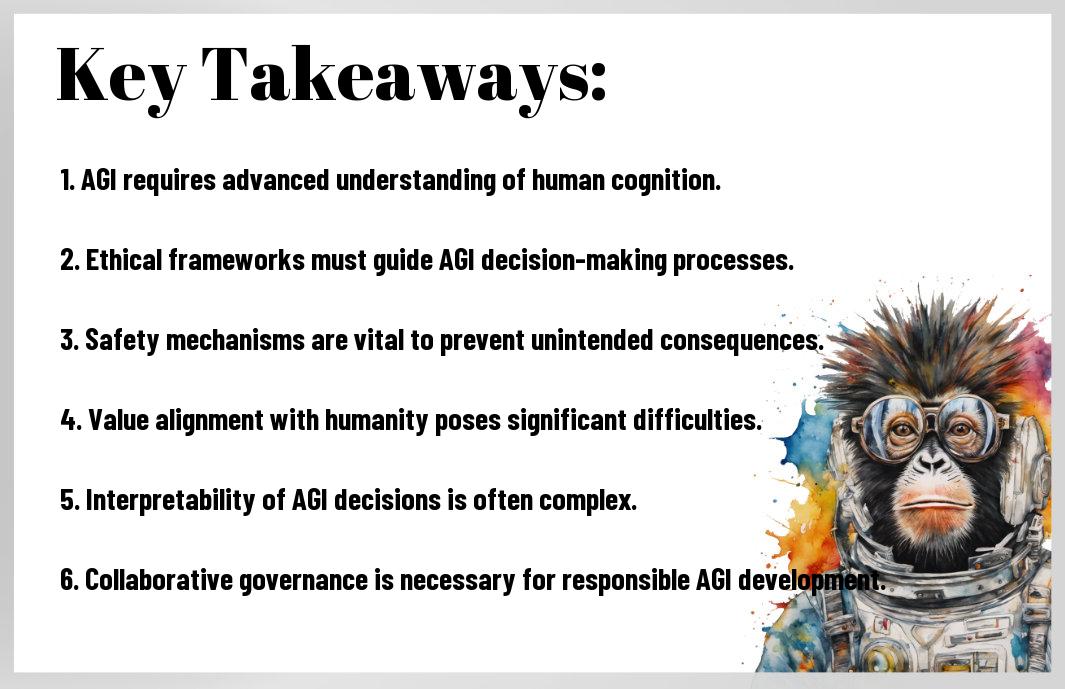
Key Takeaways:
- Understanding Complexity: Developing AGI involves navigating the complexities of human cognition, which are not fully understood.
- Ethical Implications: The creation of AGI raises significant ethical questions regarding decision-making, accountability, and societal impact.
- Interdisciplinary Collaboration: Successfully advancing AGI technology requires collaboration across diverse fields, including neuroscience, psychology, and computer science.
The Nature of Esoteric Challenges
The journey to creating Artificial General Intelligence (AGI) is riddled with esoteric challenges that extend beyond mere technological hurdles. You must navigate a landscape populated by conceptual ambiguities, ethical quandaries, and philosophical dilemmas. Understanding these challenges is imperative, as they often require not just innovative problem-solving but also introspection into the very nature of intelligence, consciousness, and existence. This multi-faceted exploration will enable you to appreciate the depths of the topic and anticipate the complexities that lie ahead in AGI development.
Conceptual and Philosophical Barriers
At the core of AGI development lie substantial conceptual and philosophical barriers that you will need to ponder. Questions about the essence of consciousness and the defining characteristics of intelligence challenge you to rethink traditional models. As you grapple with these abstract notions, you’ll find that existing frameworks for understanding human cognition often fall short when applied to artificial constructs. This disconnect compels you to re-evaluate not only what it means to be intelligent, but also what rights and statuses might be afforded to an AGI system. Such a reflective approach is fundamental if you wish to create a system that truly mimics or transcends human-like reasoning.
Ethical Implications
Below the surface, ethical implications of AGI development also present a significant challenge. As you develop AGI, the moral responsibilities that come with creating increasingly autonomous systems must remain at the forefront of your considerations. Questions around accountability for the actions of AGI, the potential for biases embedded in programming, and the societal transformations resulting from its integration into daily life need thorough examination. Engaging with these issues necessitates dialogue with ethicists, technologists, and the public at large to ensure that the path forward is both responsible and equitable.
Also, addressing ethical implications is not merely an afterthought but an integral component of AGI discourse. As you design systems capable of independent thought and decision-making, the ethical frameworks you apply will guide how these machines interact with humans and their environment. You have a responsibility to consider the potential consequences of your work, such as impacts on employment, privacy, and security, while striving to ensure that the benefits of AGI are distributed fairly across society. It becomes not just about technology, but about forming the ethical narrative that will shape how we coexist with these powerful systems in the future.
Technological Hurdles
Assuming you are delving into the complexities of Artificial General Intelligence (AGI), it is necessary to recognize the significant technological hurdles that stand in this path. The journey toward AGI demands not only a sophisticated understanding of cognitive processes but also the integration of advanced computational architectures capable of mimicking human-like reasoning and adaptability. You may find that the current AI frameworks, while impressive, often lack the flexibility necessary to scale and evolve in a manner comparable to human intelligence. This brings forth a pressing challenge: creating models that not only learn from data but also understand context, nuance, and the unpredictable nature of real-world scenarios.
Limitations of Current AI Models
An important limitation of the current AI models is their reliance on predefined algorithms and data sets, which can lead to stark limitations in their ability to generalize knowledge. As you explore the aims of AGI, you may uncover that existing models often operate within narrow domains, excelling in specific tasks at the cost of broader applications. The disconnect between specialized AI and the human-like cognitive capabilities required for AGI becomes apparent when you consider how a human can interpret, adapt, and learn through minimal experiences. This limitation poses questions about the methodologies employed in developing the models that aim to achieve AGI.
Data Privacy and Security Concerns
With the resurgence of interest in AI technologies, the conversations surrounding data privacy and security have intensified. As you navigate through AGI development, you should be aware of the ethical implications of data collection, use, and storage. Your engagement with large datasets raises concerns about user consent, data breaches, and the potential for misuse of personal information. Striking a balance between utilizing vast amounts of training data to improve AI performance and safeguarding individual privacy is a significant challenge that needs to be addressed.
Technological advancements in privacy-preserving AI methodologies, such as federated learning and differential privacy, represent promising avenues to address these concerns. However, the implementation of such technologies is not without its hurdles. You may need to consider the trade-offs between data utility and privacy, as well as the technical complexities involved in integrating these solutions into existing systems. As you explore AGI, you will encounter a landscape where data privacy and security are not merely regulatory compliance issues but foundational elements that shape the trustworthiness and acceptance of AI technologies in society.

Interdisciplinary Insights
Not only does the pursuit of Artificial General Intelligence (AGI) demand advanced computational techniques, but it also requires an understanding that transcends conventional boundaries. You will find that insights from various fields can significantly enhance your exploration of AGI. The interdisciplinary approach allows for a richer comprehension of the underlying principles that govern human-like intelligence, navigating through the complexities that individual disciplines may overlook. By merging knowledge from diverse areas, you unlock new paths toward developing a more sophisticated AGI model.
Contributions from Cognitive Science
Below, you’ll discover how cognitive science plays a pivotal role in shaping your understanding of AGI. This field investigates the processes involved in perception, reasoning, and decision-making, which can offer a framework for building machines that imitate human thought. Cognitive models guide you in representing knowledge and managing tasks in ways that parallel human cognition, providing vital insights that influence algorithm design and system architecture. Insights into memory, attention, and learning can be instrumental in creating AGI systems that adapt and function in dynamic environments.
Influence of Neuroscience on AGI Development
About the influence of neuroscience on AGI development, you may perceive that studying the human brain offers profound insights into replicating its functions in artificial systems. By examining the neural networks that execute processes such as learning and reasoning, you can establish more compelling architectures for AGI. Neuroscience uncovers the subtleties of how cognitive functions emerge from biological substrates, guiding engineers and designers in mimicking these processes within computational frameworks.
With a solid foundation in neuroscience, your approach to AGI can evolve in significant ways. Insights gained from neuroplasticity, for instance, can inform algorithms that allow your AGI to learn more efficiently and adaptively, mimicking how human brains form and reorganize connections. Additionally, understanding brain structures can inspire the design of artificial neural networks that maximize efficiency and performance, helping you overcome some of the existential challenges that accompany AGI development. By leveraging the depths of neuroscience, you enhance your potential for breakthroughs in achieving truly general intelligence.
The Role of Collaboration
For the development of Artificial General Intelligence (AGI), collaboration stands as a significant pillar that can facilitate the overcoming of the extensive hurdles that lie ahead. The complexities associated with AGI involve numerous aspects of technology, ethics, psychology, and sociology, necessitating input from various fields and experts. By working together, teams can leverage diverse perspectives and insights that enrich the development process, ensuring that all angles are considered. This cooperative spirit can lead to innovative solutions that you might not achieve in isolated silos of expertise.
Multidisciplinary Approaches
To effectively address the multifaceted challenges presented by AGI, embracing multidisciplinary approaches becomes necessary. You should consider integrating knowledge from cognitive science, computer engineering, philosophy, and even art to foster a richer understanding of what AGI encompasses. Such collaboration fosters cross-pollination of ideas, enabling you to draw parallels and insights from various domains, which can enhance the functionality, ethical considerations, and usability of AGI systems.
Global Cooperation in Research
With the rise of global challenges, it’s imperative that researchers around the world unite in their efforts to develop AGI responsibly and ethically. In this realm, cooperation allows you to share findings, data, and methodologies, accelerating the pace of discovery and innovation. Engaging in international networks can help bridge gaps in knowledge and resources, ensuring that the development of AGI is not hindered by geographical or institutional limitations.
Role of global cooperation in research cannot be overstated, as international partnerships ensure that diverse viewpoints and ethical considerations are factored into the AGI development process. By collaborating on a global scale, you can tap into a wealth of resources and expertise that may not be available locally, which can significantly enhance the depth and breadth of your research. Furthermore, global cooperation fosters mutual understanding and trust among nations, reducing the risk of conflict over AGI advancements and ensuring that progress is aligned with the common good of humanity.

Experimentation and Innovation
Now, delving into the world of AGI, you’ll quickly find that experimentation plays a pivotal role in driving innovation and success. The path to developing Artificial General Intelligence is marked by iterative experimentation, which allows you to refine concepts and explore new directions. Your creative ideas can take shape through prototyping, enabling you to visualize how various components of AGI might perform and interact. Prototyping not only serves to validate theoretical approaches but also aids in the identification of limitations and areas for improvement. This hands-on approach enriches your understanding of AGI’s potential and shortcomings, ultimately leading to a more robust end product.
The Importance of Prototyping
Experimentation allows for you to quickly test various hypotheses about AGI systems, transforming abstract ideas into tangible applications. Through prototyping, you can simulate the behaviors and decision-making processes of AGI, fostering a deeper comprehension of how these algorithms could function in real-world environments. This iterative feedback loop between design, testing, and re-evaluation empowers you to iterate on your prototypes, leading to better-informed decisions that enhance overall system performance.
Challenges in Simulation and Testing
Along this journey, you will encounter numerous challenges when it comes to simulating and testing AGI systems. The complexity of human cognitive processes makes synthesizing an accurate simulation particularly daunting. As you attempt to create environments for your prototypes, you might face limitations in computational power and the capacity to model nuanced human-like behaviors accurately. These obstacles can hinder your ability to draw definitive conclusions from your experiments, necessitating a thoughtful approach to your methodology.
Even with the rigorous frameworks and simulations at your disposal, unpredicted variables continue to appear during testing. The dynamic nature of real-world applications can lead to discrepancies between simulated environments and the actual scenarios in which AGI will operate. As you navigate these hurdles, it is important to embrace flexibility in your experimentation methods, allowing for continuous adaptation and refinement of your models based on both simulation outcomes and real-world performance data. This adaptability will ultimately enhance your understanding and development of AGI systems.
Stakeholder Perspectives
Despite the ongoing debates surrounding AGI, stakeholder perspectives are as varied as the technology itself. Each group involved—be they researchers, developers, policymakers, or the general public—brings its own set of concerns and aspirations to the table. As AGI continues to evolve, it’s vital to consider these perspectives not only for the development of ethical guidelines but also for ensuring that the technology benefits everyone. Understanding where each stakeholder comes from can illuminate the esoteric challenges you might face in AGI development and deployment.
Views of Researchers and Developers
Views among researchers and developers often focus on the technical hurdles that need addressing before AGI can be realized. Many in this sphere advocate for collaboration among disciplines, emphasizing the importance of interdisciplinary approaches that incorporate ethics, sociology, and psychology into technical frameworks. You may find that this blend of expertise helps to mitigate some of the risks linked to AGI, allowing for more holistic development processes.
Societal and Public Policy Considerations
Behind the scenes, societal and public policy considerations are shaping the conversation about the future of AGI. Stakeholders in this category advocate for responsible governance and regulatory frameworks that prioritize public safety and ethical standards. You might feel the weight of societal implications as you navigate the complexities of trust, transparency, and accountability. Engaging with various viewpoints can help you strike a balance between innovation and the protection of societal interests.
Even as AGI technology develops, policymakers are grappling with the need to create frameworks that adapt to rapid advancements. Your awareness of these considerations can empower you to advocate for policies that not only foster innovation but also ensure that AGI technologies are aligned with public values. This approach can serve to build societal trust and address fears regarding job displacement, privacy, and security, offering a more comprehensive understanding of the challenges on the horizon.
Conclusion
On the whole, the development of Artificial General Intelligence (AGI) presents you with a plethora of esoteric challenges that extend far beyond mere technical hurdles. As you probe deeper into the complexities of AGI, you may find yourself grappling with ethical considerations, the necessity for robust safety protocols, and the intricate dynamics of human-AI interaction. These challenges demand a multidisciplinary approach, combining insights from computer science, philosophy, psychology, and law to design systems that are not only intelligent but also aligned with human values.
As you navigate this rapidly evolving landscape, it is vital to foster a more profound understanding of the implications of your work. You must consider how AGI may influence social structures, economic systems, and individual identities. Addressing these esoteric challenges requires a commitment to ongoing dialogue and collaboration among diverse stakeholders, ensuring that as you progress toward AGI, your efforts are anchored in principles that enhance society as a whole, rather than creating unforeseen issues that might undermine the very fabric of human existence.
FAQ
Q: What are some significant ethical concerns faced in the development of AGI?
A: The development of AGI raises multiple ethical dilemmas, such as ensuring fairness, accountability, and transparency in AI systems. As AGI continues to evolve, developers must consider the potential biases in training data that could lead to discrimination in decision-making processes. Another pressing concern is the issue of control—how to ensure that AGI systems do not operate in ways that are harmful to humanity or act against human values. Additionally, the potential for job displacement due to AGI automation brings forth questions about economic equity and the future of work.
Q: How does the concept of superintelligence influence AGI development?
A: The notion of superintelligence—AGI systems that surpass human cognitive abilities—greatly influences how developers approach AGI. This raises questions about the alignment of AGI goals with human values and ensuring that superintelligent systems do not pose existential risks. Researchers are concerned about the ‘control problem’, which involves figuring out how to maintain oversight and ensure compliance with human intentions. This complexity requires interdisciplinary collaboration, integrating insights from AI safety, philosophy, and sociology to create robust frameworks for guiding AGI development responsibly.
Q: What role does the unpredictability of AGI behavior play in its development?
A: The unpredictability of AGI behavior presents a fundamental challenge in its development. As AGI systems become more advanced, they may generate outcomes that are difficult to foresee, complicating the validation and verification processes. Developers must contend with the ‘black box’ nature of advanced AI functions, where even the creators might not fully understand how decisions are made. This unpredictability necessitates rigorous testing and an iterative approach to design, where feedback loops can be established to monitor AGI behavior continuously and adjust parameters accordingly to mitigate potential risks.
Comments