

There’s a transformative power in leveraging AI technology to enhance your real estate transactions. By incorporating smart tools and solutions into your workflow, you can save time, reduce errors, and improve client satisfaction. In this post, you’ll discover practical tips that will help you harness AI effectively, enabling you to streamline processes from property valuations to contract management. Dive in to unlock a more efficient way of managing your real estate operations.

Understanding AI in Real Estate
While the real estate industry continues to evolve, understanding the role of artificial intelligence (AI) is vital for navigating modern transactions. AI refers to computer systems that can perform tasks typically requiring human intelligence, such as visual perception, speech recognition, decision-making, and language translation. In the real estate sector, AI’s role encompasses data analysis, process automation, and enhancing customer experience, ultimately facilitating smoother transactions. (Integrating AI into your workflow can significantly improve efficiency and accuracy.)
Definition of AI and its Role
Clearly, AI has become an integral part of real estate by offering innovative solutions that streamline operations and improve decision-making. With machine learning algorithms, AI can analyze vast amounts of data, identify patterns, and provide insights that aid in pricing properties, predicting market trends, and matching clients with their ideal homes. With its ability to enhance processes, AI is proving to be a game-changer for agents and buyers alike. (Understanding AI’s functions could be a vital step towards becoming more competitive in the market.)
Benefits of AI for Real Estate Transactions
Any real estate professional looking to maximize their productivity should explore the benefits of AI in transactions. The technology can facilitate faster property searches, automate administrative tasks, and reduce errors in data entry. Additionally, AI can offer personalized property recommendations based on client preferences, thus improving overall client satisfaction. (Leveraging AI could significantly elevate your business strategy and client engagement.)
Estate transactions can be complex and time-consuming, but AI helps alleviate these challenges by providing tools that simplify the process. For instance, AI-powered chatbots can handle customer inquiries 24/7, providing instant responses and freeing up your time for more crucial tasks. Furthermore, predictive analytics can forecast market trends that enable you to make informed decisions and develop sound strategies for your clients. (Investing in AI tools could transform your real estate practice in ways you never thought possible.)
How to Identify the Right AI Tools
Any real estate professional looking to leverage AI must first identify the right tools that align with their unique needs and objectives. There are several factors to consider in your AI selection process, including the scalability of the tool, its integration capabilities with your existing systems, and the specific tasks you aim to automate or enhance. (Choosing the right tool can significantly impact your workflow and client relationships.)
Factors to Consider in AI Selection
- Functionality: Ensure the AI tool addresses specific challenges you face in real estate transactions.
- User-Friendliness: Opt for a solution that your team can easily adopt without extensive training.
- Cost: Evaluate the total cost of ownership, including subscriptions and maintenance.
- Support: Look for platforms that offer robust customer support to assist you when needed.
Recognizing these factors will help you filter the multitude of available AI options and focus on those that would bring the most value to your business.
Right after narrowing down your options, it’s imperative to evaluate AI platforms and solutions closely. This involves assessing user feedback, demos, and case studies to get a clear picture of how these tools can enhance your agility in the marketplace. You should also consider the AI tool’s ability to stay updated, as technology evolves rapidly in this field.
Evaluating AI Platforms and Solutions
Another critical step in the evaluation process is to test the AI platform through pilot programs or free trials wherever available. This hands-on experience will allow you to assess the practicality, accessibility, and overall fit of the tool within your real estate processes. Pay attention to how well the AI integrates with your current workflow and its contribution to improving transaction efficiency and client satisfaction.

Tips for Implementing AI in Transaction Processes
For real estate professionals looking to integrate AI into their transaction processes, it is crucial to take a strategic approach. Here are some tips to help you effectively incorporate AI technologies:
- Assess your current workflows to identify areas where AI can provide the most value.
- Choose the right AI tools that are compatible with your existing systems.
- Train your team to utilize AI technologies effectively and embrace the changes.
- Monitor and evaluate AI performance to ensure continuous improvement.
Perceiving the potential of AI in your transaction processes could lead to more efficient workflows and enhanced client satisfaction.
Streamlining Transactions with Chatbots
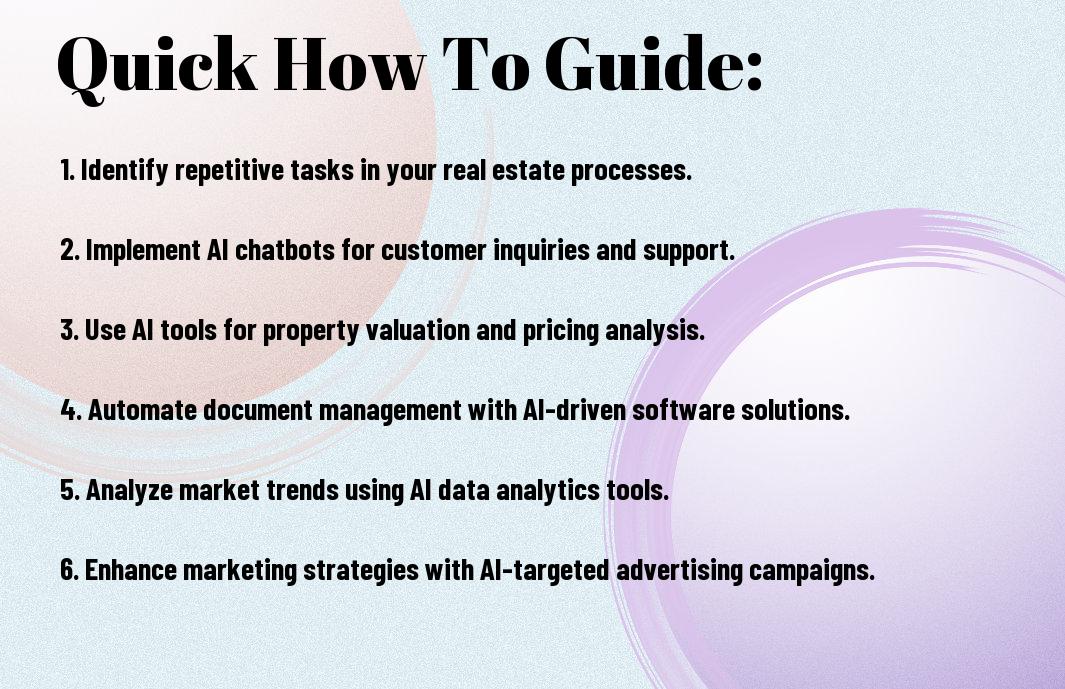
To enhance communication during real estate transactions, deploying chatbots can greatly improve your efficiency. Chatbots can handle routine inquiries from clients, schedule appointments, and even provide property information around the clock. (Investing in a robust chatbot system can significantly reduce manual workload for your team and expedite customer support.) By automating these tasks, you free up your agents to focus on more complex matters that require personal attention, leading to improved client relationships.
On the other hand, chatbots can also be programmed to guide potential buyers through the process, helping them understand what is needed at each stage. This proactive approach keeps clients informed and engaged, decreasing the chances of misunderstandings or delays. (Selecting a user-friendly chatbot interface is vital for ensuring positive client experiences.) With a well-implemented chatbot system, you can bring significant enhancements to your transaction processes.
Utilizing AI for Market Analysis and Pricing
On your journey to adeptly harness AI for market analysis and pricing, it’s important to understand that leveraging data-driven insights can greatly enhance your decision-making. By using AI algorithms, you can gain a more accurate understanding of market trends, property values, and buyer behavior. (Making informed decisions based on comprehensive AI analysis can lead to competitive advantages in your market.) Implementing these technologies can allow you to set strategic pricing, helping you to optimize sales and reduce time on the market.
Another crucial aspect of utilizing AI in market analysis pertains to the predictive analytics capabilities of these systems. By evaluating historical data and current market conditions, AI can provide forecasts that help you anticipate fluctuations and adjust your strategies accordingly. (Choosing the right AI tools for market analysis can empower you to stay ahead of competitors.) The ability to predict market trends will allow you to prepare and adapt, ensuring you remain a key player in the real estate landscape.
Maintaining Compliance and Security with AI
Unlike traditional methods, utilizing AI in real estate can enhance compliance and security protocols, providing more robust systems for managing sensitive information. As you integrate AI tools into your operations, it’s imperative to stay updated on the latest regulations to ensure your workflows align with legal requirements. For a deeper understanding of implementing AI responsibly, check out How to Use AI for Real Estate: A Comprehensive Guide.
Understanding Legal Implications
To navigate the complexities of using AI, you should familiarize yourself with applicable laws and regulations governing data use within real estate. Different jurisdictions may have distinct guidelines about how AI can be employed, especially concerning data processing and consumer protection. Consequently, ensuring that your AI tools comply with local and federal regulations will protect you from legal ramifications and foster trust among your clients.
Ensuring Data Privacy and Security
Privacy is vital when using AI in real estate, as handling sensitive client data requires the highest standards of security. You need to implement robust security measures, such as encryption and secure access protocols, to safeguard personal and financial information. Understanding your responsibilities under laws like the General Data Protection Regulation (GDPR) can help shape your compliance strategy and highlight the importance of gaining explicit consent before utilizing customer data (ensure you’re up-to-date with all legal frameworks relevant to your business).
For instance, employing artificial intelligence can simplify your data management practices, but it’s equally important to remain vigilant about potential vulnerabilities. Regular audits of your AI systems can help you identify any gaps in security and address threats proactively. Ensuring transparency in how you collect and use data enhances your relationship with clients and bolsters your reputation in the industry (establishing clear policies on data handling reinforces your commitment to protecting client information).
How to Train Your Team on AI Tools
Keep in mind that training your team on AI tools is vital for maximizing their effectiveness and ensuring everyone is on the same page. A structured and well-designed training program will not only familiarize your team with the AI tools you are implementing but also build their confidence in using these technologies to enhance their productivity and workflow. Start by assessing the current skill level of your team and identifying gaps that need to be filled in order for them to effectively utilize the new AI tools at their disposal. This may involve creating individual learning paths or group workshops tailored to suit various learning styles and needs.
Creating Training Programs
On the matter of developing training programs, consider leveraging various formats to engage your team. You can create online courses, conduct in-person workshops, and encourage peer-to-peer learning opportunities. Incorporating hands-on practice with the AI tools within these programs is vital, as it allows your team members to apply what they learn in real-world scenarios. Ensure your training materials are updated regularly, reflecting any advancements in the AI tools or changes in your company procedures.
Encouraging Adaptability and Integration
Now that your team is equipped with the necessary training, fostering an environment that encourages adaptability and integration is critical. You should promote open communication about the benefits of using AI, allowing your team to voice concerns and suggestions as they navigate through the learning curve. In doing so, you create a culture where team members feel empowered to embrace new technologies as they emerge. (Making this step a priority can significantly increase team buy-in.)
As you encourage adaptability and integration, be prepared to provide ongoing support and resources to your team. Regular check-ins can help you gauge their comfort level with the AI tools and address any hurdles they may face. Providing incentives for those who actively engage with and excel in using the tools will not only motivate your team but also promote a perception of AI as an integral part of your operations. (Establish your expectations early to solidify the importance of a smooth transition.)
Measuring the Impact of AI on Transactions
To effectively gauge the success of AI in real estate transactions, it’s important to identify and monitor key performance indicators (KPIs) that reflect improvements in efficiency and client satisfaction. Metrics such as transaction speed, cost savings, percentage increase in leads, and client feedback can provide valuable insights into how AI is influencing your business. By establishing these KPIs, you can make data-driven decisions that enhance your operations and maximize the return on your AI investments. (Ultimately, understanding AI’s effectiveness will help you allocate resources more wisely.)
Key Performance Indicators to Monitor
With a clear set of KPIs, you can track the performance of AI technologies over time and adjust your strategies accordingly. For example, measuring the time taken to complete transactions before and after AI implementation can highlight efficiency gains, while client satisfaction scores can indicate the impact on service quality. Staying attuned to these metrics allows you to continuously optimize your approach and achieve your business goals. (The right metrics will guide you in making informed decisions about future AI tools and platforms.)
Collecting Feedback and Continuous Improvement
Any successful implementation of AI also requires a commitment to collecting feedback from all stakeholders involved. Regularly assess the experiences of your clients and your team to identify pain points or areas of improvement. Establishing feedback loops helps refine your AI strategies and tools, fostering a culture of ongoing enhancement. (Valuing feedback ensures that your AI solutions remain relevant and effective.)
To harness the full potential of your AI initiatives, actively seek feedback from both clients and team members to identify emerging trends or challenges. By creating incentives for honest feedback, you establish an environment where continuous improvement is not just encouraged, but expected. You can also conduct periodic reviews of your AI systems and their outputs, further aligning with your overall goals. (Incorporating constructive input can lead to innovative solutions and a more satisfied clientele.)
Final Words
Considering all points, leveraging AI in real estate can significantly enhance your transaction processes. By incorporating AI tools for tasks such as property valuations, client management, and data analysis, you can save time and reduce the potential for errors. Utilizing chatbots for customer service and AI-powered platforms for predictive analysis can also give you a competitive edge, allowing you to better understand market trends and client needs. Ultimately, these technologies not only streamline your operations but also improve the experience for your clients, paving the way for successful transactions.
As you consider integrating AI into your real estate business, focus on tools that align with your specific objectives and workflows. Whether it’s automating repetitive tasks or gaining insights from data analytics, adopting AI will empower you to make informed decisions and enhance your efficiency. Staying ahead in a rapidly evolving landscape can be achieved through strategic implementation of these technologies, making your real estate transactions smoother and more effective.
FAQ
Q: How can AI improve property pricing strategies in real estate transactions?
A: AI can enhance property pricing strategies by analyzing large datasets that include recent sales, market trends, and neighborhood characteristics. Machine learning algorithms can forecast property values by identifying patterns that human agents might miss. This allows realtors to set competitive prices, thereby improving the likelihood of a quick sale while maximizing revenue.
Q: In what ways can AI assist in the property search process for clients?
A: AI-powered tools can provide personalized property recommendations based on clients’ preferences and past behavior. Chatbots and virtual assistants can engage with potential buyers to answer questions and suggest listings that meet specific criteria, such as budget, location, and amenities. This not only saves time for clients but also streamlines the entire searching and narrowing down process for agents.
Q: What role does AI play in automating documentation and compliance in real estate transactions?
A: AI can automate the generation and review of imperative documents involved in real estate transactions, such as contracts and compliance forms. Natural language processing tools can reduce human errors by scanning contracts for legal discrepancies or missing information. Additionally, AI can help ensure that transactions comply with current regulations by providing timely reminders and updates, thus minimizing delays in the closing process.
Comments