

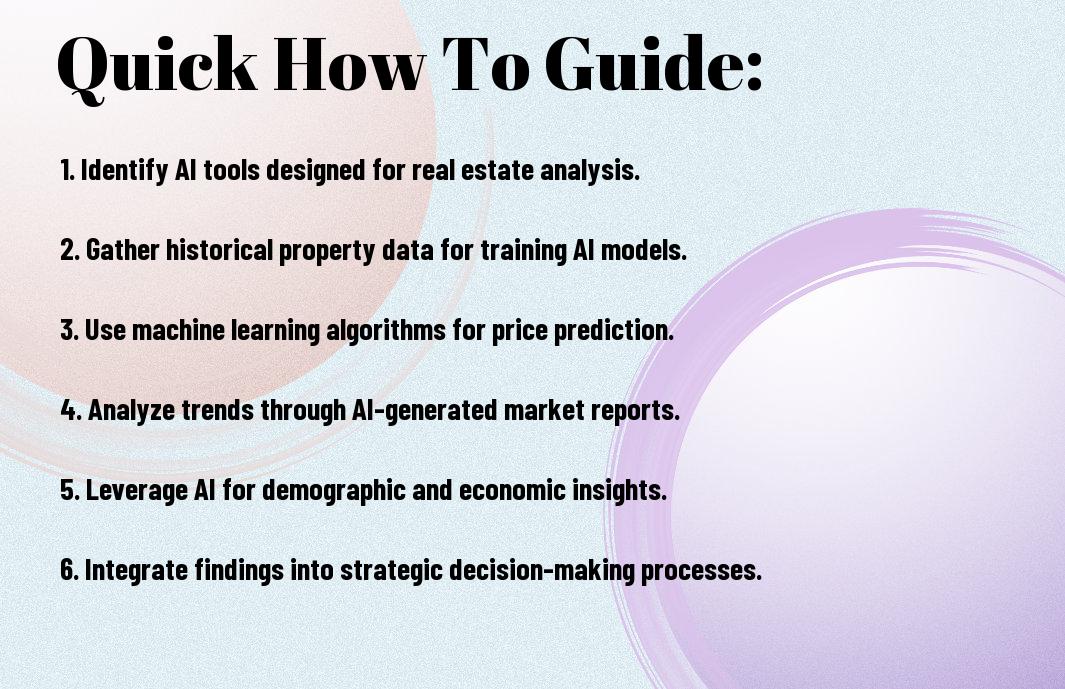
AI is transforming the real estate landscape, offering you tools that enhance your market analysis like never before. By integrating artificial intelligence into your strategies, you can gain deeper insights into trends, predict property values, and make more informed decisions. In this blog post, you’ll discover powerful approaches that will enable you to harness AI effectively, turning data into actionable intelligence that keeps you ahead in the competitive real estate market.
Understanding AI in Real Estate
How to Define AI and Its Role in Real Estate
A key component in enhancing your decision-making in the real estate market is understanding artificial intelligence (AI) and the role it plays in this sector. Real estate AI encompasses a variety of technologies and algorithms designed to analyze data, predict market trends, and evaluate property values. By leveraging this technology, you can streamline your processes and enhance your insights, whether you are buying, selling, or investing. (An important decision about this topic is recognizing that AI can significantly reduce the time and effort required for data analysis.)
Real estate involves a significant amount of data, from historical property prices to neighborhood trends. AI applies machine learning algorithms to this wealth of information to uncover patterns and insights that would be challenging to identify manually. With AI, you can not only improve accuracy in appraisals but also anticipate shifts in the market, enhancing your strategy for both immediate transactions and long-term investments.
Key Benefits of Utilizing AI for Market Analysis
While traditional methods of market analysis often rely on manual processing and subjective expertise, AI brings speed and objectivity to the table. You can harness the power of AI to perform complex calculations and analyses in a fraction of the time it would take a human, enabling you to make more informed decisions based on up-to-date data and predictive analytics. This technology helps you identify potential investment opportunities by assessing risk factors and highlighting promising trends in the market.
The benefits of utilizing AI in market analysis extend beyond mere convenience. By employing AI tools, you gain access to advanced predictive modeling, which can analyze and forecast market shifts based on a multitude of variables like economic indicators, demographic data, and consumer behavior. This level of analysis allows you to develop a strategic approach to your real estate endeavors, enabling you to stay ahead of the competition and optimize your investment outcomes.
Tips for Implementing AI Tools
It is necessary to approach the integration of AI tools in real estate thoughtfully and strategically to maximize their potential benefits. Begin by understanding your specific needs and objectives, as this will guide your selection process. Here are a few tips to help you navigate this journey:
- Assess your current processes and identify areas for improvement.
- Research various AI tools suited for real estate analytics.
- Consider scalability and ease of use when selecting a platform.
- Involve your team in the decision-making process to ensure buy-in.
After establishing a clear understanding of what you need, proceed to implement AI tools that align with your business goals.
How to Choose the Right AI Tools for Real Estate
Little effort spent on researching and understanding the landscape of AI tools will pay off significantly in the long run. Start by defining your requirements, such as whether you need predictive analytics, market trend analysis, or customer relationship management. The market has a wealth of options, so it’s important to eliminate tools that do not fit your purpose (consider your budget and the specific features you require). Assess user reviews, request demonstrations, and look for case studies showcasing successful implementations to make an informed choice.
Additionally, don’t hesitate to consult industry professionals to gain insights into which tools have been effective for them, as their experiences may illuminate potential pitfalls or highlight overlooked advantages.
Best Practices for Integrating AI with Existing Systems
Existing systems can often present barriers when integrating new AI technologies, but following best practices can ease the transition. Understand the architecture of your current systems and determine how the AI tools will interface with them—whether through APIs or other integration methods is a critical point you must address (ensure compatibility to avoid disruption). It is wise to prioritize a step-by-step implementation, starting with less critical operations to fine-tune processes before scaling up.
Choose training resources for your team early on to ensure they are comfortable using the new tools and can leverage them effectively for market analysis. Engaging your employees through gatherings or workshops dedicated to the new systems can foster a collaborative environment, ultimately leading to a more successful implementation. This commitment can greatly enhance the efficiency of your AI integration efforts.
Factors Influencing Market Analysis
Despite the inherent complexity of the real estate market, several key factors can significantly influence your market analysis outcomes. Understanding these factors can provide deeper insights into property values, rental rates, and consumer behaviors. These factors typically include:
- Economic conditions and employment rates
- Demographic trends and population growth
- Interest rates and mortgage availability
- Seasonality and local market cycles
- Government regulations and zoning laws
Knowing these influences and how they interact can empower you to make informed decisions, ultimately improving the accuracy of your market predictions and investments.
How to Identify Critical Market Factors with AI
Factors impacting real estate markets can be multi-faceted and dynamic. Leveraging AI technology enables you to extract valuable insights from vast datasets, allowing you to identify market factors effectively. Here’s how you can do this:
- Utilize predictive analytics to forecast trends based on historical data
- Implement natural language processing to analyze social media and news sentiment
- Monitor geographic data for micro-market trends
- Correlate economic indicators with property performance metrics
- Deploy machine learning algorithms for pattern recognition
The use of these advanced techniques may yield a clearer understanding of the forces that drive the real estate market, enhancing your strategic positioning.
Techniques for Analyzing Data Trends Using AI
There’s a wealth of techniques at your disposal when it comes to analyzing data trends in real estate using AI. By employing various data analysis methods, you can glean actionable insights from enormous volumes of data. Some effective techniques involve:
- Time series analysis to assess trends over time
- Cluster analysis to categorize similar property types and neighborhoods
- Regression analysis to identify relationships between variables
- Sentiment analysis to gauge buyer and seller confidence
- Geospatial analysis for location-based insights
Data-driven decision-making is necessary in today’s competitive real estate landscape; therefore, applying these techniques can enhance your ability to detect emerging trends and make calculated investments.
Data plays a pivotal role in shaping your understanding of the market landscape. As you aggregate and analyze data trends using AI, you’ll discover how minute fluctuations can signal larger shifts, allowing you to stay ahead of the curve. The insights gathered from comprehensive data analysis can provide you with a competitive edge that traditional methods may not offer.

Enhancing Decision-Making with AI
To navigate the fast-paced real estate market effectively, leveraging AI can significantly enhance your decision-making processes. By integrating AI tools and technologies, you can analyze vast datasets, uncover hidden patterns, and derive insights that empower you to make informed choices. This shift enables you to respond proactively to market changes, improves operational efficiency, and ultimately increases your competitive edge in the industry.
How to Use AI for Predictive Analytics in Real Estate
One of the key applications of AI in real estate is predictive analytics, which allows you to forecast trends and outcomes with greater accuracy. By analyzing data from various sources—such as historical sales, demographic information, and economic indicators—you can identify potential investment opportunities and understand market dynamics better. AI algorithms can process this information rapidly, producing predictive models that can assist you in making strategic decisions on property acquisition, pricing, and market entry.
Moreover, predictive analytics can enhance your risk assessment capabilities. You can leverage AI to evaluate various risk factors associated with specific properties or markets, which helps you minimize potential losses while maximizing profit potential. By adopting this advanced analytical framework, you can stay ahead of market fluctuations and develop strategies that are responsive to emerging trends.
Tips for Communicating Insights to Stakeholders
Little nuances in how you communicate insights derived from AI analytics can significantly impact stakeholder engagement. It’s imperative to present data in a clear, concise manner that is tailored to your audience’s understanding. Use visualizations and dashboards to make complex information digestible. In addition, provide context to your insights, explaining how they relate to broader market conditions or specific business objectives. This approach can facilitate productive discussions and ensure stakeholders grasp the actionable intelligence being presented.
- Utilize storytelling techniques to connect with your audience.
- Highlight key takeaways to emphasize the most relevant insights.
- Encourage questions to foster a collaborative environment.
Plus, applying a strategic communication plan can amplify the effectiveness of your presentations. Regularly engaging stakeholders with updates and ensuring they are informed of developments can build trust and collaboration over time. It’s beneficial to involve them in the decision-making process, as their insights can offer valuable perspectives.
- Tailor your messages to align with the interests of your audience.
- Leverage multimedia tools to enhance engagement.
- Summarize findings in action-oriented recommendations.
Any time you communicate with stakeholders, emphasizing clarity and relevance will fortify your relationships and further solidify your position as a knowledgeable leader in the real estate market.

Common Challenges and Solutions
Unlike many industries that have seamlessly integrated AI technologies, real estate faces unique obstacles when it comes to AI adoption. These challenges often stem from a lack of understanding, resistance to change, and the significant investments required to implement AI tools. For you, as a real estate professional, acknowledging these barriers is the first step toward overcoming them. Engaging in ongoing education and collaboration with tech experts can help you navigate the complexities associated with AI integration, ultimately fostering a more innovative mindset within your organization. (Adopting AI can significantly enhance your market analysis capabilities.)
Overcoming Barriers to AI Adoption in Real Estate
For you to successfully embrace AI in your real estate processes, it is vital to cultivate an organizational culture that values innovation. Start by providing training sessions and workshops that educate team members on the benefits of AI tools. Additionally, consider creating pilot projects that allow your team to experiment with AI technologies in a low-risk environment, enabling your organization to understand the value of data-driven decisions without overwhelming your existing workflow.
How to Address Data Privacy and Ethical Concerns
On the topic of data privacy, it is pertinent that you stay informed about the legal and ethical implications of incorporating AI into your real estate strategies. As you collect and analyze vast amounts of data, the importance of protecting your clients’ information cannot be overstated. Implement robust data protection measures and ensure compliance with regulations such as GDPR, which not only shields you from potential legal consequences but also establishes trust and credibility with your clients.
Understanding the principles of ethical AI use is key to successfully navigating this landscape. By ensuring transparency in your data collection practices and promoting fairness in algorithmic decision-making, you can mitigate potential biases that might arise in your analysis. Moreover, regular audits of your AI systems can help maintain accountability and allow you to identify any areas for improvement. Striving for ethical practices not only safeguards your business but also strengthens your relationships with stakeholders who appreciate a commitment to responsible technology use.
Future Trends in AI and Real Estate
Many professionals in the real estate industry are beginning to realize the transformative potential of artificial intelligence. The integration of AI can enhance decision-making processes, streamline operations, and lead to improved customer experiences. You might want to explore insights regarding AI in commercial real estate: Benefits, drawbacks and strategies, as navigating these waters requires both an understanding of technology and its implications on the market.
How to Stay Ahead with Emerging AI Technologies
There’s no doubt that staying ahead in the fast-paced world of real estate means keeping an eye on emerging AI technologies. Engaging with ongoing education and subscribing to industry reports can help you gain knowledge about advancements. You will want to make informed choices regarding AI tools, ensuring that they align with your specific market demands and operational needs (investing in tailored solutions can set you apart from competitors).
Anticipating Changes in Market Dynamics
On your journey through the evolving landscape of real estate, you’ll find that AI’s ability to analyze vast amounts of data will significantly impact market dynamics. By leveraging AI-driven insights, you can anticipate fluctuations in pricing, demand, and consumer behavior, allowing you to make proactive rather than reactive decisions. This foresight can empower you to identify lucrative opportunities before they become mainstream.
The ongoing adaptation to AI’s capabilities will undoubtedly change how you assess market trends. With predictive analytics, you can not only gauge current conditions but also forecast the direction of the market, helping to optimize your investments. Engaging with AI tools that refine your insights into buyer preferences and investment trajectories becomes an vital strategy for maintaining a competitive edge in an ever-evolving marketplace.
Summing Up
With this in mind, leveraging AI technology in your real estate endeavors can significantly enhance your market analysis capabilities. By integrating AI tools, you gain access to vast amounts of data that can be processed and analyzed in the blink of an eye. These tools not only offer accurate projections but also help you identify emerging trends and market patterns that can impact property values. Utilizing AI allows you to make informed decisions, streamline your operations, and ultimately improve your investment outcomes.
As you adopt these powerful approaches, consider how AI can automate routine tasks, freeing up your time to focus on strategic planning and relationship-building. The more you familiarize yourself with AI’s capabilities, the better you’ll be equipped to navigate the complexities of the real estate market. Harnessing AI for accurate market analysis positions you to outperform competitors, ensuring that your strategies remain adaptive and effective in an ever-evolving landscape.
Q: How can AI improve market analysis in real estate?
A: AI enhances market analysis in real estate by processing vast amounts of data quickly and accurately. It can analyze trends from historical sales data, property features, neighborhood statistics, and economic indicators to provide insights that human analysts might miss. Machine learning algorithms can identify patterns in consumer preferences and pricing trends, leading to more informed investment decisions. This advanced data processing helps real estate professionals predict future market movements and adjust strategies accordingly.
Q: What types of data should be used for AI-driven market analysis in real estate?
A: For effective AI-driven market analysis, it’s necessary to gather a diverse set of data types. Key data includes historical property prices, transaction records, property characteristics (like square footage and amenities), local housing supply and demand statistics, demographics of neighborhoods, macroeconomic indicators, and competition analysis. Including unstructured data such as social media sentiment or online reviews can also provide deeper insights into consumer behavior and preferences, making the analysis even more comprehensive.
Q: What are some challenges of implementing AI in real estate market analysis?
A: Implementing AI in real estate market analysis comes with several challenges. One major hurdle is data quality; data must be accurate, consistent, and up-to-date for AI models to be effective. Additionally, integrating AI tools with existing systems can be complex, requiring skilled personnel to bridge the gap. There may also be resistance from stakeholders who are accustomed to traditional analysis methods. Ensuring transparency in AI decision-making processes can help build trust and foster a smoother transition to AI-driven approaches in real estate analysis.
Comments