

Over the past few years, advances in artificial intelligence have begun to reshape various fields, and software architecture is no exception. As you research into this esoteric realm, you’ll discover how AI can enhance your design processes, streamline workflows, and enable more predictive analysis of system architectures. However, with these exciting innovations come potential challenges, like requiring constant learning and adaptation to new tools. By understanding these impacts, you can leverage AI to transform your software architecture practices and stay ahead in this rapidly evolving landscape.
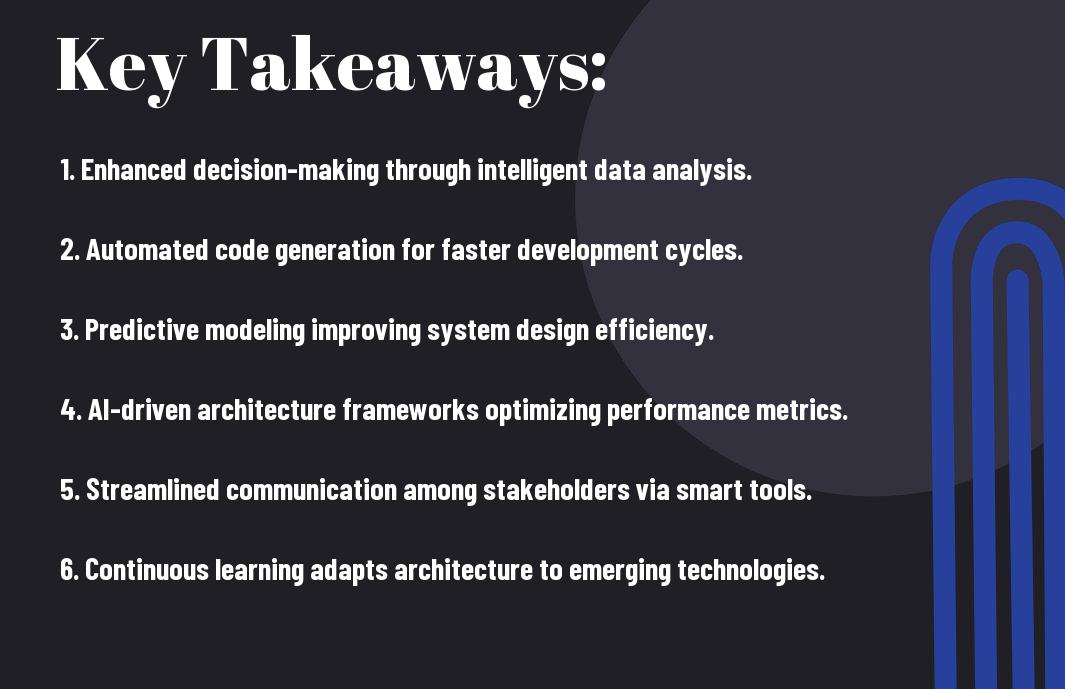
Key Takeaways:
- Enhanced Design Efficiency: AI tools can automate repetitive tasks, allowing architects to focus on creative and strategic aspects of their work.
- Predictive Analytics: By analyzing historical data, AI can forecast performance issues and design flaws, leading to more robust architecture choices.
- Improved Collaboration: AI-driven platforms can facilitate better communication among team members, integrating diverse inputs seamlessly into the design process.
- Dynamic Adaptation: Software architectures can evolve in real-time using AI to adapt to changing user requirements and environmental factors.
- Accessibility of Expertise: AI can democratize access to high-level architectural knowledge, enabling less experienced developers to create effective solutions.
The Role of AI in Software Architecture
AI is set to revolutionize the field of software architecture, providing innovative solutions that streamline processes, enhance design, and improve documentation. By integrating machine learning and predictive analytics, you can expect faster decision-making, enhanced collaboration, and an overall increase in the productivity of software architects. As AI tools evolve, they will become indispensable assets in your toolkit, guiding you toward more efficient architectural choices.
Enhancing Design Processes
Along with traditional design methods, AI tools are streamlining architectural workflows, identifying patterns and best practices that lead to better outcomes. With the ability to analyze vast amounts of data, these tools allow you to visualize different architectural scenarios, enabling more iterative and informed decision-making. Consequently, your design practices become increasingly efficient and effective, significantly reducing time to market.
Automating Documentation
Before integrating AI, documenting software architecture often consumed a considerable amount of your time and resources. Thanks to AI technologies, this process is now being automated, enabling you to focus more on design and strategy. By generating accurate, up-to-date documentation with high precision, AI minimizes the risk of errors while maintaining clarity, ultimately enhancing communication among stakeholders.
In addition, using AI for automating documentation not only ensures accuracy but also significantly reduces your workload. This means that you can dedicate more energy to designing innovative solutions rather than getting bogged down by repetitive tasks. With AI handling documentation, you can enhance collaboration and transparency, ultimately leading to improved project success rates and stakeholder satisfaction.

Predictive Analytics in Software Projects
Some of the most significant advancements in software development lie in the use of AI-driven predictive analytics. By analyzing historical data and patterns, AI can forecast project outcomes, providing you with insights that lead to informed decision-making. This foresight not only aids in budget management but also allows for more precise project timelines, enhancing overall efficiency and success rates.
Risk Assessment and Mitigation
With AI’s ability to analyze vast amounts of data, you can identify potential risks in your software projects before they arise. By evaluating historical project data, AI can highlight patterns that may lead to issues, prompting you to adopt strategies for mitigation, such as adjusting timelines, reallocating resources, or implementing additional quality checks.
Resource Allocation Optimization
Below the surface of your software projects, AI plays a vital role in optimizing resource allocation. By predicting which tasks require specific skills and determining peak workflow times, AI ensures that you have the right personnel and tools available precisely when needed, enhancing productivity and minimizing downtime.
Plus, when you utilize AI for resource allocation, the impact on your projects can be profound. It allows you to allocate your most skilled personnel to high-priority tasks while freeing up less critical resources for other activities. This strategy not only optimizes your team’s workload but also reduces project delays and enhances work quality. By having tools and personnel ready at optimal times, you directly influence your project’s success and create a more efficient operational environment.
AI-Driven Code Generation
Keep an eye on the future as AI-driven code generation reshapes the software landscape, allowing developers to explore The Role of AI in Modern Software Architecture. These tools enable seamless transitions from design to implementation, ensuring faster turnaround times and reducing the likelihood of human error.
Enhancing Developer Productivity
About AI-driven code generation tools significantly enhance your productivity by automating repetitive coding tasks. This automation frees up precious time for you to focus on more complex aspects of software development, thus increasing your overall output. (You must choose the right tool that aligns with your workflow for maximum benefits.)
Ensuring Code Quality and Standards
About AI plays an integral role in ensuring code quality across projects by enforcing standards and best practices during the coding process. By integrating these AI systems, you can guarantee that your codebase remains consistent and maintainable. (Maintaining a balance between efficiency and rigor is vital for lasting success.)
Developer AI tools continuously analyze your code, offering feedback and suggestions that uphold high-quality standards. This results in a more coherent codebase, reducing the chances of technical debt and facilitating easier collaborations among team members. (Acknowledging the importance of code reviews can enhance the overall health of your projects.)

Your AI-Enhanced Decision-Making Landscape
Your understanding of decision-making in software architecture will transform with AI’s impact. AI can refine and expedite your decision-making process, enabling more efficient resource allocation and architectural choices. By leveraging AI in Architecture: 10 Use Cases, Examples & Technologies, you can explore innovative solutions that reshape your approaches and enhance performance.
Data-Driven Insights
For architectural decisions, AI provides invaluable data-driven insights that empower you to make informed choices in strategic planning. By analyzing vast datasets, AI can identify patterns and trends that traditional methods might overlook. This enables you to prioritize projects wisely (which can lead to streamlined processes and optimized outcomes).
Scenario Simulations
Scenario simulations employ AI to model potential outcomes, allowing you to visualize the impact of various architectural alterations. This predictive analysis is necessary for understanding architectural viability, leading to more confident strategic decisions (necessary when considering future growth and adaptability).
Hence, the ability of AI to run scenario simulations enhances your capability to foresee the implications of design choices. With these simulations, you can assess risk factors, performance metrics, and user experiences before implementation. This proactive approach helps you avoid potential pitfalls and seize opportunities for innovation (which ultimately fosters a more resilient architecture).
Ethics and Challenges of Implementing AI
After considering the impact of AI technologies on software architecture, it is important to address the ethical challenges that may arise. As you implement AI, be mindful of potential biases embedded in algorithms that can lead to unfair decision-making. Furthermore, ensuring transparency in AI-driven processes is vital to maintain trust and accountability, allowing stakeholders to comprehend how decisions are made and the rationale behind them.
Ethical Considerations
For those involved in software architecture, the ethical implications of AI usage cannot be overlooked. You must recognize that biases in algorithms can result in skewed outcomes, potentially perpetuating discrimination. Additionally, the transparency of AI decision-making processes is vital, as stakeholders deserve to know how conclusions are reached and should feel confident in the fairness of these systems.
Integration Challenges
Against this backdrop, integrating AI into existing software architecture frameworks presents numerous challenges. You may encounter resistance from teams accustomed to traditional approaches, and aligning AI capabilities with current processes can be daunting. Developing the necessary skills and technical knowledge to manage AI tools further complicates the transition, requiring careful planning and training.
Even with the potential for significant improvements from AI, the integration process can be laden with obstacles. Legacy systems may not easily accommodate new AI functionalities, leading to disruptions in established workflows. Furthermore, inadequate training may result in suboptimal use of AI tools, ultimately jeopardizing the success of your projects. It’s vital to approach these challenges proactively, ensuring that you have the right support and resources to make AI adoption a seamless endeavor.
Future Trends in AI and Software Architecture
To anticipate the future landscape of AI in software architecture, it’s imperative to consider how its integration will revolutionize design and development processes. As you explore these transitions further, check out Software Architecture in an AI World for more insights. Innovations are increasingly enabling architectures to be more dynamic, responsive, and capable of self-optimization, effectively changing how you approach software solutions.
Emerging Technologies
Among the technologies poised to influence AI in software architecture are machine learning frameworks, blockchain for decentralized services, and cloud-native environments. These advancements will enhance your ability to create scalable and efficient systems, providing opportunities to integrate AI in unprecedented ways.
Shifting Paradigms
By embracing the evolution of AI, you will witness significant shifts in traditional software architecture practices. This evolution will demand a rethink of established workflows, encouraging you to adopt iterative, user-centered design models.
Technologies like automated testing, real-time analytics, and microservices architectures will lead to a more adaptive approach to development. As you implement these changes, you’ll find that traditional structures may limit innovation. By leveraging AI, you can achieve greater efficiency and agility in your workflows, while also encountering potential risks related to security and data privacy. This presents both challenges and opportunities for crafting resilient software solutions in this new era.
Summing up
With these considerations, you can begin to appreciate how AI will transform the esoteric world of software architecture. By enhancing design efficiency, enabling predictive analytics, and fostering more intuitive user experiences, AI empowers you to create architectures that are not only robust but also adaptable to changing demands. As these innovations emerge, you’ll find new opportunities to refine your approach, streamline processes, and ultimately elevate the quality of your software solutions, equipping you with the tools needed for success in an ever-evolving landscape.
FAQ
Q: How will AI impact the design process of software architecture?
A: AI is poised to revolutionize the design process of software architecture by automating routine tasks, enhancing decision-making with predictive analytics, and providing intelligent recommendations based on vast datasets from previous architectures. This will allow architects to focus on more complex problems, generate innovative solutions faster, and improve the overall quality of the architecture.
Q: In what ways can AI enhance the performance of software systems?
A: AI can enhance performance through intelligent resource allocation and optimization of system configurations. By analyzing real-time data, AI can predict workloads and adjust resources dynamically, ensuring systems run efficiently and remain responsive. Additionally, AI can help identify bottlenecks and recommend performance improvements based on historical performance data.
Q: What role will machine learning play in software architecture going forward?
A: Machine learning will play a significant role in software architecture by enabling systems to learn and adapt over time. It can help architects identify patterns in user behavior or system performance, leading to the creation of adaptable architectures that respond effectively to changing requirements. Moreover, machine learning algorithms can assist in code generation and optimization, further streamlining the development process.
Q: How can AI improve security measures in software architecture?
A: AI can enhance security in software architecture by detecting and responding to threats in real time. Advanced algorithms can analyze network traffic and identify suspicious behavior, significantly reducing the time it takes to mitigate potential cyber threats. Additionally, AI can help in automating compliance checks and recommending best security practices based on emerging threats, ensuring architectures are more resilient to attacks.
Q: What challenges might arise from incorporating AI into software architecture?
A: While AI integration offers numerous benefits, it also presents challenges, such as the need for strong data governance, potential biases in AI models, and the risk of over-reliance on automated systems. Architects must remain vigilant about the ethical implications of AI and ensure that human oversight is maintained. Additionally, there may be challenges related to keeping AI algorithms up to date and managing the complex interactions between various AI systems within the architecture.
Comments