

Many professionals in the software development industry are beginning to explore how AI-powered tools can enhance your approach to Agile methodologies. These innovative solutions promise to streamline processes, improve team collaboration, and ultimately lead to faster project delivery. However, it’s important to recognize the potential challenges and risks associated with integrating AI into your Agile practices. This post will probe into how these technologies might not only support but also transform your Agile framework for greater efficiency and adaptability.

Key Takeaways:
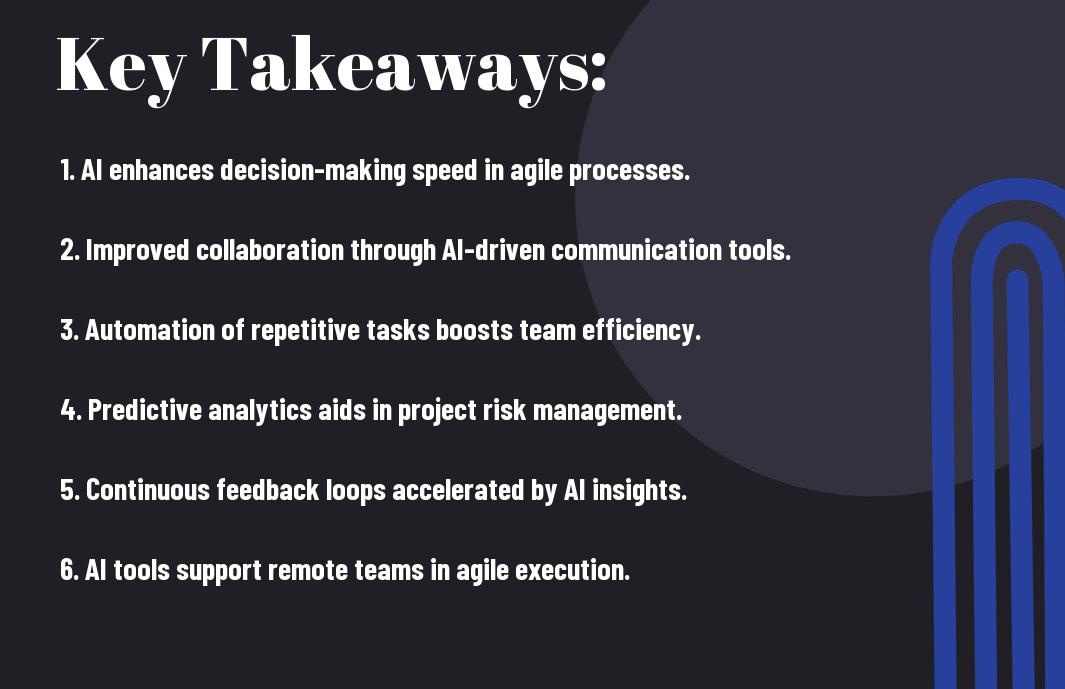
- Enhanced Collaboration: AI-powered tools can foster better team collaboration by streamlining communication and making it easier to share feedback in real-time.
- Data-Driven Decisions: Leveraging AI allows teams to make informed choices through predictive analytics, leading to more efficient project management and prioritization.
- Automated Tasks: Automation of routine tasks through AI can significantly reduce manual effort, enabling teams to focus more on value-adding activities.
- Continuous Improvement: AI tools facilitate a habit of continuous learning, allowing teams to analyze past performance and improve their methodologies iteratively.
- Scalability: AI can enhance the scalability of agile practices, making it easier for organizations to adopt agile principles across different teams and projects effectively.
Understanding Agile Methodologies
While traditional project management often adheres to a linear approach, agile methodologies embrace flexibility and adaptability. Agile prioritizes continuous improvement, fostering collaboration among teams and stakeholders. This approach allows you to respond swiftly to changing requirements and encourages a focus on delivering value to customers quickly. Agile methodologies emphasize iterative progress, ensuring that you can adapt and enhance your processes to meet the demands of dynamic environments.
Historical Context
About two decades ago, the concept of agile methodologies emerged as a response to the challenges posed by traditional project management frameworks, which often struggled to keep pace with rapidly evolving technology and market demands. The Agile Manifesto, published in 2001, established key principles such as prioritizing individuals and interactions over processes and tools. This pivot not only transformed how teams approach software development but also highlighted the limitations of conventional methods, revealing the need for iterative processes that thrive in fast-paced environments.
Core Principles of Agile
For your projects to succeed, you need to focus on the primary tenets of agile methodologies: iterative development, collaboration, and customer feedback. These principles drive effective project outcomes by enabling you to adapt to changes, regularly deliver functional increments, and foster a culture of teamwork. By embracing these values, you are poised to enhance communication, streamline processes, and ultimately provide better solutions that align with customer expectations.
Agile promotes frequent feedback, allowing you to refine your product continuously. The iterative development cycle encourages you to break tasks into manageable segments, enabling quick adjustments based on stakeholder input. This method enhances collaboration within your team, fostering a shared vision and accountability that drives motivation. By engaging customers early and often, you ensure that your project remains aligned with their needs and expectations, reducing the risks often associated with large-scale project failures.

The Rise of AI-Powered Tools
The integration of AI-powered tools in modern methodologies marks a significant shift in how teams operate. These tools can enhance your workflow by automating processes that traditionally consumed valuable time. For insights on how to successfully incorporate these tools into your processes, check out AI-Driven Agile: How to Seamlessly Integrate Artificial ….
AI in Project Management
Behind the scenes, AI is transforming project management through applications like predictive analytics, resource optimization, and risk assessment. Tools such as Monday.com and Jira use AI to improve efficiency and aid decision-making by analyzing patterns in data. These innovations allow you to allocate resources effectively, monitor project health, and manage risks proactively. (Investing in these AI tools can give your projects a competitive edge.)
Benefits of AI Integration
Along with improving predictions and automating repetitive tasks, integrating AI into agile frameworks enhances communication within teams. By utilizing AI for data-driven insights, you can make informed decisions swiftly, resulting in increased productivity and collaboration. AI not only streamlines operations but also unleashes your team’s potential to focus on more strategic initiatives. (Choosing the right AI tools can significantly elevate your agile practices.)
Further, the benefits of AI integration are evident as it creates opportunities for your team to work smarter rather than harder. With enhanced data-driven insights, improved predictions, and the ability to automate mundane tasks, your agile process becomes more efficient. These innovations facilitate better communication and collaboration among team members, allowing for greater flexibility and adaptability within projects. (Making informed decisions about AI tools can lead to substantial growth.)
Case Studies of AI in Agile Environments
Your exploration into AI in agile methodologies reveals impressive case studies that demonstrate measurable improvements. For example, a notable company experienced a 30% increase in productivity after implementing AI-driven project management tools, while another organization reported a 40% reduction in time-to-market due to enhanced team collaboration. Additionally, a leading firm noted a 25% improvement in code quality using AI-assisted code review processes. These findings underscore the potential impact of AI on agile practices. For more insights, visit Agile Reimagined: The Transformative Power of AI.
Successful Implementations
Implementations of AI-powered tools have showcased significant benefits in agile environments. For instance, a major retail company integrated an AI-driven analytics platform to streamline product development, resulting in a 50% increase in team collaboration and a 20% boost in overall project delivery speed. Another tech startup leveraged machine learning for backlog prioritization, leading to a 35% enhancement in product iteration cycles. (These case studies highlight that investing in AI can lead to substantial benefits in agile settings.)
Lessons Learned from Challenges
From the outset, challenges emerged during the integration of AI into agile practices. Organizations faced resistance to change and misunderstanding of AI capabilities, leading to setbacks. Common pitfalls included the inability to align AI tools with existing workflows and insufficient training. Strategies to overcome these obstacles encompassed fostering a culture of continuous learning and involving team members in the integration process. (Adopting a clear strategy for AI implementation is imperative for success.)
In addition, understanding the importance of clear communication among team members significantly mitigates challenges. Fostering a cohesive environment where teams can embrace AI technologies while addressing concerns promotes smoother transitions. Emphasizing comprehensive training and progressively introducing AI tools ensures teams are well-prepared to adapt. (This approach not only reduces resistance but also enhances overall team dynamics.)
Future of AI and Agile Methodologies
Once again, the synergy between AI and agile methodologies promises to revolutionize project management. Tools driven by AI will empower your agile teams, enhancing collaboration and decision-making. Explore How AI Can Empower an Agile Dev Team to understand the potential benefits that lie ahead.
Trends and Predictions
Behind this intersection, emerging trends indicate a shift toward automated project management tools that enhance real-time decision-making and analytics. Expect AI to play a vital role in forecasting project risks, personalizing user experiences, and streamlining sprints in the coming years. These advancements can lead to a more adaptive, intelligent approach to project delivery.
Preparing for Change
At this juncture, it’s crucial for you to strategize for the integration of AI tools within your agile practices. This involves not only offering training and fostering cultural shifts but also developing the necessary infrastructure to support these changes. Adaptability will be key as your organization navigates this evolution. (You must evaluate your current tools to determine compatibility with AI integration.)
This transition requires your organization to cultivate an environment receptive to innovation. Embrace ongoing training for your team and establish feedback loops to ensure smooth AI tool integration. Prioritize enabling your employees to adapt, as this resilience will directly impact the efficiency and effectiveness of your agile processes. (You should set clear benchmarks to assess the integration of AI tools with your existing methodologies.)
Summing up
Considering all points, you can see that AI-powered tools have the potential to revolutionize how agile methodologies are implemented in your projects. By enhancing communication, automating routine tasks, and providing insightful analytics, these tools can help you streamline processes and improve team collaboration. Embracing AI could usher in a new era for agile practices, allowing you to adapt more rapidly to changing demands while maintaining high levels of performance and innovation. The future of agile lies in the smart integration of these technologies, enabling you to unlock new possibilities and efficiencies.
FAQ
Q: What are AI-powered tools and how can they influence Agile methodologies?
A: AI-powered tools are software applications that utilize artificial intelligence algorithms to automate processes, provide data-driven insights, and enhance decision-making. In the context of Agile methodologies, these tools can streamline workflows, improve communication within teams, and enable better tracking of project progress. By analyzing data and providing real-time updates, AI can help teams adapt to changes more efficiently, thus fostering a more agile and flexible approach to project management.
Q: Can AI tools help in improving team collaboration within Agile frameworks?
A: Yes, AI tools can significantly enhance team collaboration by providing platforms that facilitate communication and knowledge sharing. Features such as automated reminders, chatbots for scheduling meetings, and collaborative dashboards can keep team members aligned with project goals. By minimizing the administrative burden, AI allows team members to focus on working together more effectively, thus reinforcing the principles of collaboration found in Agile methodologies.
Q: What role does data analysis play in enhancing Agile practices through AI?
A: Data analysis is a key aspect of AI that can provide valuable insights into team performance and project outcomes. By processing large volumes of data, AI tools can identify patterns, predict potential obstacles, and suggest improvements to workflows. This analytical capability helps Agile teams make informed decisions, prioritize tasks better, and ultimately deliver higher-quality projects in shorter time frames, aligning with Agile principles of continuous improvement and responsiveness to change.
Q: Are there potential challenges in integrating AI tools with current Agile practices?
A: While AI-powered tools offer many benefits, there can be challenges in their integration with existing Agile practices. These challenges may include resistance to change from team members, the need for training on new technologies, and the potential for over-reliance on automated systems that could diminish human oversight. It’s crucial for organizations to approach AI integration thoughtfully, ensuring it complements rather than complicates Agile processes, fostering a balanced approach to team dynamics and workflow management.
Q: How can organizations ensure that AI technologies are effectively utilized in their Agile processes?
A: To effectively utilize AI technologies within Agile processes, organizations should start with a clear understanding of their specific needs and goals. This involves selecting the right AI tools that align with their Agile methodologies, training team members on how to use them effectively, and regularly assessing the performance and impact of these tools. Additionally, fostering a culture of open feedback will help teams adapt and optimize their use of AI, ensuring that the technologies are enhancing, rather than hindering, Agile practices.
Comments