

It’s becoming increasingly clear that emerging AI technologies are transforming the landscape of code craftsmanship in remarkable ways. As you navigate this evolving environment, you’ll find that these advancements can enhance your coding efficiency and creativity, making mundane tasks more manageable. However, you must also be aware of the risks associated with over-reliance on automation, which could compromise your unique problem-solving skills. Embracing AI tools thoughtfully can lead to greater innovation and mastery in your coding endeavors, ensuring you remain at the forefront of the tech revolution.

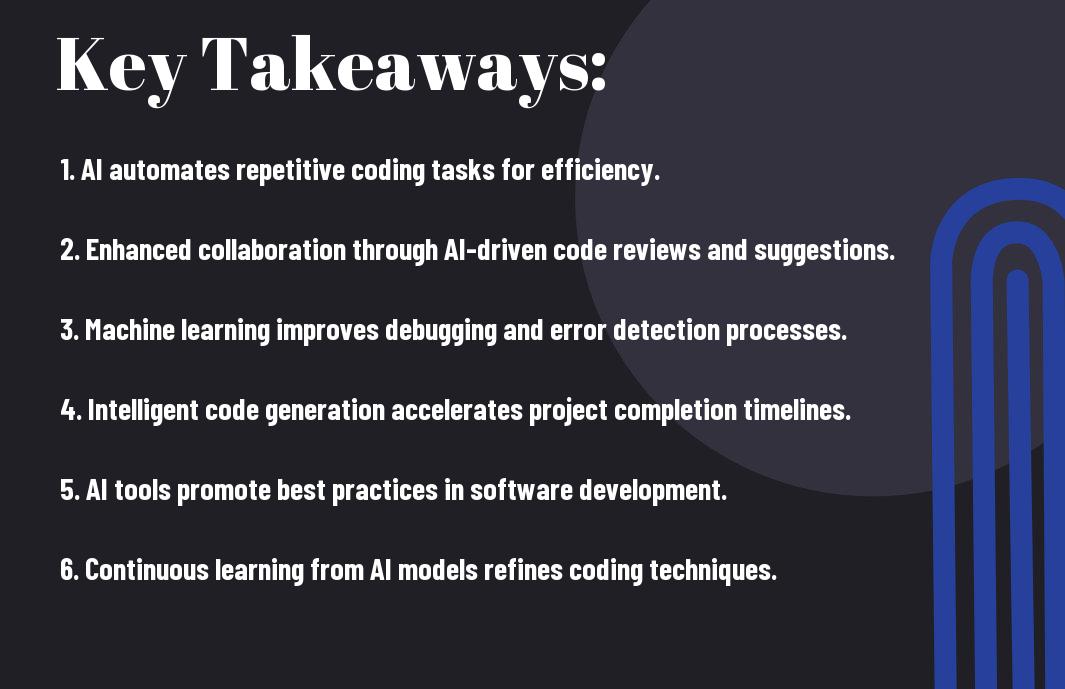
Key Takeaways:
- Enhancing Productivity: Emerging AI technologies streamline coding processes, allowing developers to write and test code more efficiently.
- Code Quality Improvement: AI-driven tools assist in identifying bugs and optimizing code, thereby enhancing overall software quality.
- Intelligent Automation: Automation of repetitive tasks through AI frees developers to focus on complex problem-solving and creative aspects of programming.
- Personalized Learning: AI provides tailored learning experiences for coders, adapting to individual skill levels and preferences to accelerate skill development.
- Collaboration Enhancement: AI technologies foster better teamwork by providing predictive insights and facilitating smoother communication among developers.
The Evolution of AI in Software Development
Your understanding of the evolution of AI in software development is enriched by a timeline that reveals significant milestones. In the 1950s, the origins of AI trace back to theoretical concepts, followed by the advent of expert systems in the 1980s. Fast forward to the 2010s, deep learning breakthroughs began to reshape programming paradigms, culminating in the rise of modern coding assistants. (This trajectory highlights AI’s increasing role in enhancing developer productivity.)
Historical Context
Across the decades, AI’s integration into programming has transformed how code is written and maintained. Early efforts, such as rule-based systems, laid a foundation for more complex algorithms. By the early 2000s, machine learning models started becoming mainstream, enabling automation tools to assist developers in their workflow. Each stage in this evolutionary path exemplifies an ongoing commitment to enhancing software craftsmanship through intelligent solutions.
Recent Advances
Around the globe, recent advances in AI are reshaping the landscape of code creation and maintenance. Innovations like natural language processing and predictive coding tools empower you to write code more efficiently and accurately. These developments are not just speculative; they have become integral parts of modern integrated development environments (IDEs) and indeed redefine coding practices.
Further exploring these advancements, you’ll find that tools such as GitHub Copilot and OpenAI’s Codex significantly streamline your development process. With their ability to suggest entire blocks of code or autonomously complete functions, these AI tools enhance not only productivity but also the accuracy of your codebase. However, it’s vital to remain vigilant about the implications of relying heavily on AI, as challenges such as overfitting or inadequate error handling can arise, impacting your overall project outcomes. The balance between leveraging AI and maintaining human oversight is necessary for successful outcomes in software craftsmanship.

AI-Driven Development Tools
You are entering a new era of coding with AI-driven development tools that assist in writing, automating, and optimizing code. These innovations promise to enhance your coding efficiency while raising questions about the future of software development. For a deeper exploration, check out Will AI Replace Programmers? Explore the Future of AI …
Code Generation Tools
Along with AI tools like GitHub Copilot and OpenAI Codex, code generation is transforming how you automate coding tasks. These tools understand context and suggest code snippets, making it easier and faster for you to develop applications. As a result, your productivity increases significantly, but relying too heavily on these services can lead to a loss of fundamental coding skills (making it imperative to balance their use).
Debugging and Testing Automation
Between the complexities of software development, AI is streamlining the debugging process and enhancing the efficiency of testing. By automating these tasks, AI tools help you identify and fix errors more quickly, leading to more reliable software outcomes.
Generation after generation of software development, AI stands out as a game-changing force in debugging and testing automation. With the ability to reduce errors and improve software reliability, these technologies are not only saving you time but also ensuring that your projects meet higher quality standards. However, you must stay alert to the potential for over-relying on automation, which could blunt your problem-solving skills that are vital in truly understanding your code.
Impact on Code Quality
Not only do emerging AI technologies streamline the coding process, but they also significantly impact code quality. By automating tedious tasks and offering insights, these tools help you maintain high standards and implement best practices, leading to more reliable and maintainable codebases.
Enhancing Code Quality through AI
An array of AI tools are designed to assist you in upholding coding standards. From linting and code review tools that catch errors early to intelligent systems that provide code suggestions and optimizations, AI empowers you to write cleaner, more efficient code, ensuring that quality remains a top priority throughout the development lifecycle.
Challenges and Limitations
Code reliance on AI presents various risks and challenges. While AI can enhance productivity, its limitations may lead to over-reliance, potentially undermining your coding skills. Furthermore, ethical considerations surrounding data privacy and algorithm bias must not be overlooked, as these issues may impact the integrity of your work.
For instance, while AI can automate many aspects of coding, over-reliance on these technologies may lead to a decline in your critical thinking and problem-solving abilities. Additionally, ethical concerns, such as data privacy and the potential for algorithmic bias, can pose significant risks. The reliability of AI-generated code is also contingent on the quality of the data it has been trained on, leading to possible errors that may compromise your project’s integrity. Balancing AI assistance with your skills is vital for effective code craftsmanship.
Skill Evolution and Developer Roles
Unlike past technological shifts, the rise of AI is fundamentally transforming how you approach code craftsmanship. The integration of AI into development processes requires a reexamination of your skill set and a willingness to adapt. For additional insights, explore The Integration of AI in Traditional Crafts: A New Era ….
New Skills for Developers
By embracing the AI-driven landscape, you will need to acquire new skills, such as understanding machine learning principles, data analysis, and familiarity with AI tools and frameworks. Additionally, enhancing your soft skills, including communication and collaboration, is vital as you work alongside AI systems. (The decision to engage in continuous learning is vital for staying relevant in this evolving field.)
Changing Roles in Development Teams
One of the most significant changes AI is bringing to development teams is the shift toward more collaborative environments. As AI takes on repetitive tasks, team members can focus on higher-level problem-solving and creativity, leading to a more dynamic workspace. (The need to redefine team structures and roles is an important consideration for developers.)
The shift in team dynamics encourages you to leverage each member’s strengths while fostering a culture of collaboration and innovation. AI technologies are not just here to assist; they are enhancing your role as a developer, making you a facilitator of creativity rather than just a builder. As such, adapting to this new paradigm of work can lead to greater productivity and job satisfaction while pushing the boundaries of what your team can achieve. (Consider how you can actively contribute to this collaborative energy for the best outcomes.)
Future Trends in AI and Code Craftsmanship
After examining the current landscape of AI in coding, it’s clear that emerging technologies will continue to transform how software is developed. Innovations such as How AI is Turning Craftsmanship into Code: From Masterpiece to … are paving the way for new methodologies that prioritize efficiency and collaboration among developers. As AI tools evolve, expect faster development cycles and improved code quality, allowing you to focus on more creative aspects of coding.
Predictions for the Next Decade
Around the upcoming decade, we anticipate intriguing advancements in AI-based tools that will automate complex coding tasks and enhance collaborative environments. With such technologies, coding could become more intuitive, allowing you to harness AI for innovative problem-solving. Organizations will need to make a fundamental shift toward embracing these tools to stay relevant (as the demand for digital solutions will only grow).
Preparing for Change
Craftsmanship in coding means embracing change and evolving with technology. As AI becomes a significant player in software development, you and your organization should adapt by investing in training and developing skills that complement AI capabilities. Your ability to leverage AI insights will be a vital aspect of your coding skill set moving forward.
Next, take proactive steps to integrate AI into your workflow, enabling a smoother transition. Empower yourself by participating in training programs focused on AI tools and collaborative coding practices. Build a culture of innovation within your team, so you can harness the benefits of AI integration while also addressing potential risks and challenges. By staying informed and agile, you can thrive in this rapidly changing landscape.
To wrap up
The emergence of AI technologies is significantly influencing the landscape of code craftsmanship, empowering you to enhance productivity and improve code quality. As these technologies evolve, they enable you to leverage automation, refine debugging processes, and foster collaboration among teams. By integrating AI tools into your workflow, you are positioned to stay ahead of industry trends, allowing you to focus on creative problem-solving and innovation in your coding practices. Embracing these advancements ensures that you remain adaptable and skilled in a rapidly changing technological environment.
FAQ
Q: What role do emerging AI technologies play in enhancing code craftsmanship?
A: Emerging AI technologies are reshaping code craftsmanship by automating repetitive tasks, generating code based on specific inputs, and providing intelligent suggestions for code optimization. This not only speeds up the development process but also helps developers focus more on creativity and complex problem-solving, allowing for higher quality and more maintainable code.
Q: How do AI-powered code review tools contribute to improving software quality?
A: AI-powered code review tools analyze code for potential errors, adherence to coding standards, and overall quality. They provide feedback and suggestions, often in real-time, allowing developers to address issues before they become problematic. By minimizing human error and ensuring best practices, these tools enhance the overall integrity of the software developed.
Q: In what ways does AI facilitate collaborative coding among teams?
A: AI fosters collaboration among coding teams by enabling tools that understand and streamline communication, code merging, and version control. These tools can suggest the best resolution for code conflicts or integrate changes seamlessly, allowing developers to work together more efficiently, regardless of their geographical locations.
Q: What impact does AI have on learning and onboarding new developers?
A: AI-driven platforms can significantly enhance the onboarding process for new developers by providing personalized learning paths and tailored resources. These technologies can assess the new hire’s skill level and suggest appropriate tutorials, documentation, or mentorship opportunities, helping them acclimatize to the coding environment faster and more effectively.
Q: How are AI technologies influencing the future of programming languages?
A: AI technologies are prompting the evolution of programming languages to become more intuitive and user-friendly. For example, languages may increasingly incorporate natural language processing features, enabling developers to write code using conversational commands. This shift can lower barriers for entry, empowering a broader range of individuals to engage in software development efficiently, thereby potentially changing the landscape of code craftsmanship.
Comments