

This guide will equip you with innovative strategies to seamlessly integrate AI into your real estate business, enhancing your client offerings. By leveraging advanced AI tools, you can provide tailored experiences that resonate with your clients’ needs. With the dynamic nature of the industry, it’s vital to stay ahead of the curve. Explore insightful resources, such as Embracing the Future: AI in Marketing Residential Real …, to inspire your approach in adopting AI effectively.

Understanding AI in Real Estate
For those who are looking to elevate their real estate strategies, understanding the foundational elements of AI is imperative. AI, or artificial intelligence, refers to the simulation of human intelligence in machines programmed to think like humans and mimic their actions. In real estate, AI is impactful as it drives efficiency and personalization in client solutions. By leveraging AI technologies, you can analyze vast amounts of data to forecast market trends, enhance property valuations, and tailor services to meet the unique needs of your clients. If you want to dive deeper into the implications of AI in real estate, consider Transforming AI in Real Estate with Realty AI Advisor – Flyfish.ai.
What is AI and its Importance in Real Estate
For real estate professionals, realizing the significance of AI is the first step toward modernization. AI can automate repetitive tasks, analyze interactions with clients, and provide insights to make informed decisions. When leveraging AI, you can enhance your service, streamline operations, and ultimately increase client satisfaction and retention rates (this can significantly impact your bottom line). In today’s competitive landscape, AI empowers you to stay ahead of the curve and adapt to the evolving demands of your clients.
Key AI Technologies Transforming the Industry
With the onset of various innovative technologies, the way you operate in real estate can be dramatically transformed. Key AI technologies like machine learning, natural language processing, and predictive analytics are revolutionizing processes such as customer relationship management and property marketing. By employing these technologies, you can analyze customer data to provide personalized recommendations and forecasts, which enhances your decision-making capabilities (implementing these technologies can lead to improved operational efficiency). Understanding these technologies is imperative for you to leverage their full potential in your real estate endeavors.
Understanding these key AI technologies not only allows you to adapt but also empowers you to integrate AI effectively within your operations. Machine learning, for example, allows for the analysis of patterns in data, leading to insightful predictions about property prices and customer preferences. In addition, natural language processing enables the automation of responses in customer interactions, enhancing the overall client experience (the way you engage with clients is pivotal for your success). By focusing on these transformative technologies, you can tailor your approach in real estate and set yourself up for a prosperous future.
How to Identify Client Needs
Any successful engagement in the real estate arena starts with understanding your client’s unique requirements. This comprehension not only fortifies your relationship with your clients but also empowers you to tailor your offerings effectively. By leveraging AI tools, you can analyze client behavior and preferences in real-time, gaining profound insights into what they truly desire. (Establishing these needs early on is key to ensuring a strong connection with your clients.)
Tips for Gathering Client Preferences
Clearly identifying client preferences requires a thoughtful approach to data gathering. Cultivating open communication is crucial; you can achieve this through targeted surveys, direct conversations, and an awareness of their previous property interactions. Encourage your clients to express their likes and dislikes freely, as this information can guide your personalized solutions significantly. Here are some tips to keep in mind:
- Utilize online forms to collect detailed information about preferences.
- Conduct interviews to research deeper into specific needs.
- Analyze past transactions to identify patterns in their preferences.
The process of gathering client preferences is not simply a one-time task; instead, it should be an ongoing dialogue that becomes refined with each interaction.
Factors Influencing Personalized Solutions
Factors affecting personalized solutions in real estate are abundant and complex. By understanding these elements, you can develop a more customized approach to meet your clients’ aspirations. These factors may include demographic details, lifestyle choices, and even regional market trends that can influence your clients’ decisions. Addressing such variables allows you to create a well-rounded understanding of their needs.
- Consider the client’s age and family dynamics.
- Assess their financial status and purchasing power.
- Evaluate their preferred neighborhoods and amenities.
Thou should take the time to investigate these factors maturing over time, ensuring that your AI-driven strategies continually adapt to suit your client’s evolving desires and expectations.
Further Insights on Factors Influencing Personalized Solutions
For instance, you might notice that a young couple is focused on practical features, such as proximity to schools and parks, while an older client may value low-maintenance properties. Tailoring your insights to these various demographics can lead to more significant engagement and satisfaction. So, ask yourself how their preferences might shift over time.
- Keep in mind regional market fluctuations.
- Monitor seasonal changes that may alter buying habits.
- Recognize shifts in generational preferences regarding technology and convenience.
Thou can harness this information to refine your personalized offerings effectively, creating a potent strategy that resonates with your clients’ specific needs and aligns with the market’s evolution.
Implementing AI Tools
Now that you’ve understood the significance of adopting AI in real estate, it’s time to investigate into the implementation phase. Selecting the right AI tools tailored to your specific needs is a pivotal step in ensuring that your transition into this digital age is smooth and effective. The landscape is vast, with numerous AI solutions designed to cater to various aspects of real estate—from predictive analytics to customer engagement. The challenge lies in discerning which tools will offer you the maximum benefit and enhance your business operations.
How to Choose the Right AI Tools for Your Business
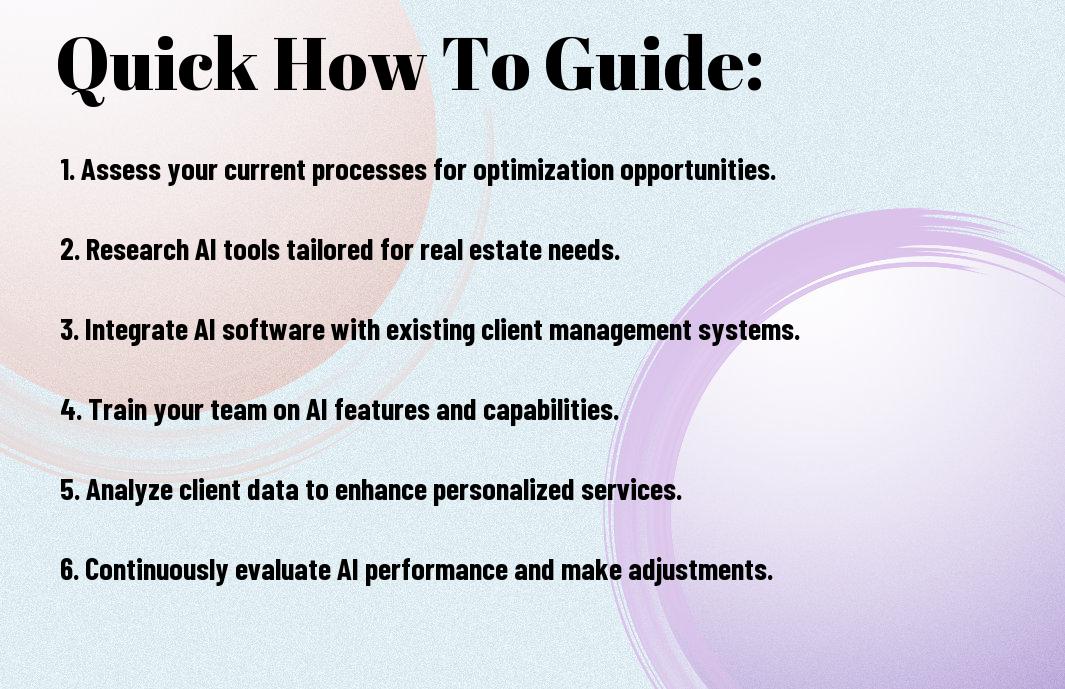
On this journey of selecting AI tools, you should start by assessing your current business needs and objectives. Consider what aspects of your operations could benefit from AI—whether it’s lead generation, market analysis, or customer relationship management. Once you identify these areas, research various options available in the market catering to your preferences. You can engage with industry peers, read reviews, and even seek demonstrations to see how these tools perform in real time. Importantly, ensure the chosen tools are flexible and scalable to adapt to your evolving business requirements.
Tips for Integrating AI into Your Existing Systems
Clearly, integrating AI tools into your current systems requires a well-thought-out strategy to minimize disruption. Begin by conducting a thorough analysis of your existing technology to pinpoint any potential conflicts. Ensure that your team is adequately trained and prepared to work with these new systems through specialized workshops or training sessions. Additionally, consider starting with a pilot program that allows you to test small-scale implementations before rolling out the tools more broadly.
- Conduct a needs assessment to determine which areas can benefit from AI.
- Engage your team for their insights, as their buy-in is necessary for a successful integration.
- Take a phased approach to implementation to help smooth the transition.
- Monitor performance closely and make adjustments as necessary.
Thou will find that a measured integration of AI not only optimizes your operations but also enriches your client experience.
Integrating AI into your existing systems can be a transformative undertaking. You should also prioritize communication among your team during this process, as collaboration can highlight unforeseen challenges and foster innovative solutions. Be proactive in documenting each step and maintaining an open dialogue about the progress and outcomes of your AI integration strategy. This will ensure that your team remains aligned and engaged throughout the transition.
- Establish clear communication channels for feedback during the integration process.
- Create detailed documentation of each integration phase.
- Regularly consult your team to gather input and make necessary adjustments.
- Celebrate early wins to maintain enthusiasm and morale.
Thou will undoubtedly recognize that an organized approach paves the way for a seamless incorporation of AI technologies into your real estate business.
Enhancing Client Experience
Many real estate professionals are leveraging AI technologies to elevate their client interactions, ultimately enhancing the overall client experience. By integrating AI, you can gain valuable insights into your clients’ preferences, interests, and behaviors, allowing you to tailor your services to meet their unique needs. This level of personalization not only fosters stronger relationships but also builds trust and loyalty among your clientele, setting you apart from your competition.
How AI Can Personalize Interactions
Some real estate agents utilize AI-driven chatbots to engage with clients instantly, providing them with personalized recommendations based on their specific requirements. These tools can analyze client data and deliver customized property suggestions, ensuring that you’re not only meeting their expectations but exceeding them. By automating responses and offering curated content, you keep clients engaged and informed throughout their journey.
Tips for Using AI to Improve Client Communication
Little adjustments in your communication approach can lead to significantly enhanced interactions with your clients. Using AI tools such as CRM software can help you track client interactions, preferences, and important milestones. You should personalize your communications by sending tailored emails, texts, or notifications that align with their interests and behaviors. (Evaluating customer responses will help refine your approach.) Consider the following tips:
- Implement an AI-driven CRM system to gather insights about your clients.
- Use automated systems to generate personalized property updates.
- Schedule regular check-ins with AI tools to follow up on client inquiries.
Assume that by maintaining consistent communication tailored to individual clients, you will foster a more satisfying experience for them. Incorporating feedback loops through AI can also allow you to quickly adjust your strategies based on real-time client preferences. (Your adaptability will resonate positively with clients and can enhance retention.)
- Encourage feedback through automated surveys.
- Analyze client data regularly to update your communication strategies.
- Utilize social media and other platforms to maintain an active presence.
Personalize your communications by harnessing the power of AI in your real estate practice, leading to a more engaged and satisfied clientele. In doing so, you can tailor your messaging to align perfectly with the needs of your clients, establishing a sense of personalized service throughout the relationship. (This will ultimately lead to higher referrals and an expanded client base.)
Measuring Success
After you implement AI solutions in your real estate processes, it becomes necessary to measure their effectiveness. This involves analyzing various metrics to evaluate how well these technologies are meeting your objectives. Keeping a close eye on relevant performance indicators will not only help you quantify the impact of AI but also inform your future strategies and decisions. (It’s vital to ensure that the AI tools align with your overall business goals.)
Key Metrics to Track AI Impact
An effective approach to measuring the success of your AI implementations is to identify key metrics that align with your business objectives. These metrics may include lead generation rates, customer engagement, and overall client satisfaction scores, among others. By utilizing data analytics tools, you can continuously track these metrics to discern patterns and uncover insights on how AI is influencing your clients’ experiences.
- Conversion rates from AI-generated leads
- Time saved in administrative tasks
- Client feedback on personalized service
Tips for Continuous Improvement
Little adjustments can lead to significant improvements in your AI practices over time. Establishing a feedback loop is necessary for continuous enhancement, allowing you to gauge the effectiveness of your AI tools and making necessary refinements. Utilizing client feedback forms can provide insights into areas where your AI tools excel or may need reevaluation.
- Regular training for your team on new AI capabilities
- Staying updated on AI advancements in real estate
- Setting specific, measurable goals for AI usage
This approach enables you to create a culture of improvement within your organization, ensuring that your AI solutions continue to fulfill the evolving needs of your clients. By treating AI as a dynamic learning tool rather than a one-time implementation, you’ll position yourself to adapt to changing client expectations and remain competitive in the real estate market.

Challenges and Solutions
Unlike other industries, the adoption of AI in real estate presents unique challenges that you must navigate. This sector often grapples with data silos, inadequate tech infrastructure, and a diverse range of stakeholders who may view AI as an intimidating addition rather than a helpful tool. Furthermore, regulatory concerns and the fast-paced nature of the market can create hesitation among professionals looking to implement AI-driven strategies. Understanding these challenges is the first step toward leveraging AI effectively for personalized client solutions.
Common Obstacles to AI Adoption in Real Estate
Real estate professionals may find themselves stymied by a lack of familiarity with AI technologies and their applications. Many agents and brokers have traditionally relied on conventional methods and may fear that AI could overshadow the personal touch that defines client relationships. Additionally, the investment in AI tools and training can be seen as a financial risk, especially in a market that fluctuates. Addressing these concerns requires a clear communication of the potential benefits of AI, showcasing success stories and inviting stakeholders to participate in a dialogue around the technology.
How to Overcome Resistance to Change
Solutions to overcoming resistance to AI adoption begin with education and engagement. You should foster a culture of innovation by organizing training sessions that demystify AI technologies and showcase their practical applications in everyday tasks. Involving your team in the decision-making process not only empowers them but also builds trust in the upcoming changes. When everyone is on board with the mission and sees firsthand how AI can enhance their work, the transition becomes less daunting and more collaborative. (When you involve your team, you create advocates for the technology within your organization.)
Solutions also involve demonstrating the tangible benefits of integrating AI into your operations. This can include using pilot programs to illustrate success in enhancing client engagement or streamlining processes. Providing continuous support and feedback mechanisms helps alleviate anxiety and reinforces the advantages of adopting new technologies. (Your approach to managing this transition will be foundational in determining the overall success of AI integration in your real estate practice.)
Obstacles to embracing AI can turn into stepping stones with the right strategies in place. By focusing on communication, education, and collaborative participation, you can create a seamless transition toward an AI-enhanced business model. Addressing fears and illustrating the long-term benefits will position you and your team for success in a rapidly evolving market.
Conclusion
Summing up, adopting AI in your real estate practice opens up a new realm of possibilities for delivering personalized client solutions. By integrating advanced technology into your operations, you can analyze vast amounts of data in real time, enabling you to tailor your services according to your clients’ unique needs. Whether it’s through predictive analytics, dynamic pricing models, or automated communication, you can create engaging experiences that not only meet but exceed your clients’ expectations. This not only enhances client satisfaction but also builds long-term relationships rooted in trust and reliability.
As you begin on this transformative journey, it’s imperative to remain mindful of the tools and strategies you choose to implement. Staying informed about the latest advancements in AI and making conscious decisions about how to use these technologies will empower you to position your business at the forefront of the industry. By leveraging AI’s capabilities, you can enhance your operational efficiency and ensure that your clientele receives a level of personalization that sets you apart in a crowded marketplace.
FAQ
Q: What are some innovative AI tools currently available for real estate professionals looking to enhance client solutions?
A: There are several AI tools that can significantly enhance client solutions in the real estate sector. One popular option is automated property valuation software, which uses machine learning algorithms to analyze market trends and provide accurate property appraisals. Another tool is predictive analytics for client behavior, helping agents to identify potential buyers’ preferences based on data gathered from previous interactions and online behavior. Additionally, AI chatbots are becoming increasingly prevalent, offering 24/7 customer service and personalized engagement by answering questions and providing property details in a conversational manner. These technologies help agents provide tailored experiences that meet the specific needs of their clients.
Q: How can real estate agents effectively implement AI solutions into their existing workflows?
A: To effectively implement AI solutions, real estate agents should start by assessing their current processes and identifying areas where AI could add value. This can involve automating repetitive tasks like data entry or using AI for client communication. Training is also important; agents should invest time in learning how to use the chosen AI tools and integrate them into their daily routines. Building a plan for gradual implementation can help ease the transition. Furthermore, engaging with vendors to understand the specific features of the AI tools will ensure agents are utilizing them to their full potential. As they integrate these technologies, agents should also seek feedback from clients to fine-tune the personalized experiences they are offering.
Q: What are the potential challenges in adopting AI solutions in real estate, and how can they be overcome?
A: One potential challenge in adopting AI solutions is resistance to change among team members, who may be hesitant to rely on technology in their processes. To overcome this, real estate firms can provide comprehensive training and showcase success stories that highlight the benefits of AI. Another challenge is data privacy and security; ensuring compliance with regulations such as GDPR is imperative. Agencies should implement robust data protection measures and continually inform clients about how their data is used. Lastly, integrating new AI tools with existing platforms can be technically challenging; collaborating with IT professionals to ensure seamless integration will help mitigate these issues. Overall, a proactive approach to education, compliance, and technical support can facilitate a smooth transition to AI-driven solutions in real estate.
Comments