

Just as Artificial Intelligence (AI) continues to revolutionize industries and reshape the way we live and work, staying ahead of the curve in this rapidly evolving landscape is crucial. Embracing the advancements in AI can enhance efficiency, productivity, and innovation for individuals and organizations. However, failing to adapt and leverage these technologies can result in being left behind in a competitive market. In this guide, we will explore key strategies and practical tips to navigate the future of AI successfully, ensuring you are well-equipped to thrive in the era of intelligent machines.

Key Takeaways:
- Continuous Learning: To stay ahead in the future of AI, professionals should commit to ongoing education and training to keep up with rapidly evolving technologies.
- Interdisciplinary Skills: Developing a diverse skill set that combines expertise in AI, data science, programming, and domain-specific knowledge will be crucial for success.
- Adaptability: Embracing change and being open to new innovations is important in the dynamic field of AI to stay relevant and competitive.
- Collaboration: Working in cross-functional teams and collaborating with experts from various disciplines can lead to innovative solutions and deeper insights in AI projects.
- Ethical Considerations: Prioritizing ethical practices and understanding the implications of AI on society will be key in creating responsible and sustainable AI technologies.
Grasping the Basics of AI
What AI Is and What It Is Not
Even with the rapid growth of AI technology, it’s vital to understand what AI actually is and what it is not. AI refers to the simulation of human intelligence processes by machines, such as learning, reasoning, and self-correction. However, AI is not capable of emotions, consciousness, or independent decision-making like humans.
Key Elements of AI Technology
One of the key elements of AI technology is machine learning, where algorithms are used to enable systems to learn and improve from experience without being explicitly programmed. This allows AI systems to make predictions and decisions based on data. Another critical element is natural language processing, which empowers AI to understand and generate human language for interaction and communication.
Intermediate Strategies for AI Adaptation
Now, Staying Ahead of Technology Trends: What You Need to Know
Tips for Integrating AI into Your Business
Integrating AI into your business requires a thoughtful approach. Start by identifying areas where AI can automate tasks or provide valuable insights. Invest in AI tools that align with your business goals and train your team to use them effectively. Create a roadmap for implementation and regularly assess the performance of AI systems to ensure they are delivering the expected results. Assume that continuous learning and adaptation are crucial for successful AI integration.
How to Cultivate an AI-Savvy Workforce
To cultivate an AI-savvy workforce, provide ongoing training opportunities on AI technologies and their implications. Encourage a culture of curiosity and experimentation, where employees feel empowered to explore AI solutions and contribute ideas for improvement. Foster collaboration between data scientists, developers, and business professionals to enhance cross-functional understanding and innovation. This proactive approach will ensure that your workforce is equipped to leverage AI effectively and drive business growth.

Advanced Techniques to Maintain Technological Leadership
Once again, staying at the forefront of artificial intelligence (AI) requires a strategic approach. A recent article on Forbes titled Staying Ahead Of The AI Curve: The Imperative Of Prudent … highlights the importance of prudent planning in this fast-evolving landscape.
| Factors for Sustained Innovation in AI | Partnering and Collaborating in the AI Ecosystem |
Factors for Sustained Innovation in AI
Some crucial factors for maintaining a competitive edge in AI innovation include continuous learning and upskilling of teams, investing in cutting-edge research, and creating a culture that fosters experimentation and risk-taking. Assume that embracing innovation is a continuous process rather than a one-time event.
Partnering and Collaborating in the AI Ecosystem
Ecosystem. For instance, in the dynamic AI landscape, partnering with other organizations, academia, and startups can provide access to complementary expertise and resources. Strong collaborations can accelerate the development of AI solutions and drive innovation across industries. It’s crucial to forge partnerships that align with your strategic goals and enhance your capabilities.
Predicting and Preparing for Future AI Trends
Conducting AI Trend Analysis
Many businesses are striving to stay ahead in the rapidly evolving landscape of AI technologies. Conducting AI trend analysis is a crucial step in predicting and preparing for future AI trends. By monitoring the latest advancements in artificial intelligence, businesses can anticipate shifts in the market and make informed decisions to adapt and thrive.
How to Leverage Predictive AI for Strategic Planning
For businesses looking to stay competitive, leveraging predictive AI for strategic planning is crucial. By utilizing predictive analytics, organizations can anticipate future trends, customer behavior, and market fluctuations. This proactive approach allows businesses to identify opportunities for growth, mitigate risks, and stay ahead of the competition.
For instance, companies can use predictive AI algorithms to forecast demand for their products or services, optimize pricing strategies, and personalize customer experiences. By integrating predictive AI into their strategic planning processes, businesses can make data-driven decisions that drive success and innovation.
Summing up
Conclusively, staying ahead of the curve in the future of AI requires a proactive approach that involves continuous learning, embracing new technologies, and adapting to change. By investing in the right skills, staying informed about the latest developments, and collaborating with experts in the field, individuals and organizations can position themselves for success in the rapidly evolving AI landscape. It is crucial to be proactive, flexible, and innovative to harness the full potential of AI and stay competitive in an increasingly digital world.
FAQ
Q: What is the importance of staying ahead of the curve in the future of AI?
A: Staying ahead of the curve in the future of AI is crucial to remain competitive in a rapidly evolving technological landscape. It allows organizations to leverage the latest advancements in AI to improve efficiency, drive innovation, and create new opportunities.
Q: How can businesses stay ahead of the curve in the future of AI?
A: Businesses can stay ahead of the curve in the future of AI by investing in research and development, fostering a culture of innovation, collaborating with industry experts, and continuously updating their AI strategies to adapt to changing trends.
Q: What are some key trends to watch for in the future of AI?
A: Some key trends to watch for in the future of AI include the rise of explainable AI, the increasing focus on ethical AI development, the convergence of AI with other technologies like IoT and blockchain, and the growing importance of AI in sectors such as healthcare and finance.
Q: How can individuals prepare themselves for the future of AI?
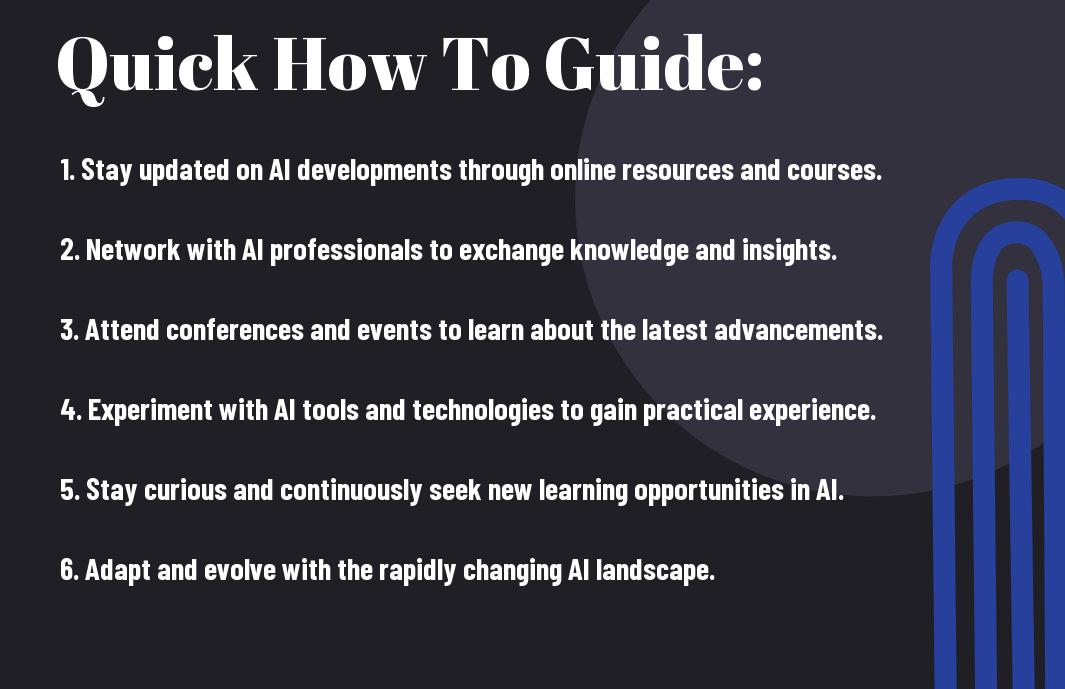
A: Individuals can prepare themselves for the future of AI by acquiring relevant skills such as data analysis, machine learning, and programming, staying updated on the latest AI developments through online courses and seminars, and networking with professionals in the AI industry.
Q: What are the risks of falling behind in the future of AI?
A: Falling behind in the future of AI can lead to missed opportunities for growth and innovation, loss of competitive advantage, decreased efficiency, and vulnerability to disruptions in the market. It is imperative for organizations and individuals to stay proactive and informed to avoid these risks.
Comments