

Unravel the secrets of AI technology’s evolution and its impact on tomorrow’s world in this insightful exploration.

Table of Contents
Welcome to our journey through the intricate world of Artificial Intelligence, or AI. In this series of blog posts, we will delve into the past, present, and future of this rapidly evolving technology. Join us as we explore the historical context of AI, its current applications, the benefits it offers, the challenges it presents, the ethical concerns it raises, its future direction, and the intriguing question of whether a scenario like Skynet from the Terminator movies is a possibility.
Introduction to AI
Artificial Intelligence is a branch of computer science that focuses on creating intelligent machines that can mimic human behavior and cognitive functions. AI systems are designed to learn from data, adapt to new information, and perform tasks that typically require human intelligence, such as problem-solving, decision-making, and natural language processing.
At the core of AI technology are algorithms, which are sets of instructions that enable machines to process data, recognize patterns, and make decisions. Machine learning, a subset of AI, allows systems to improve their performance over time through experience and data-driven feedback.
Historical Context of AI
The origins of AI can be traced back to the 1950s when researchers first began exploring the concept of machines that could exhibit intelligent behavior. Over the decades, significant milestones have been achieved in the development of AI technology, from the creation of expert systems in the 1970s to the emergence of neural networks and deep learning in the 21st century.
Advances in computing power, data availability, and algorithmic innovation have propelled the rapid growth of AI, leading to its widespread adoption across various industries and applications.
Current Applications of AI
AI technology is being utilized in a wide range of fields, from healthcare and finance to transportation and entertainment. In healthcare, AI-powered systems are revolutionizing diagnostics, treatment planning, and personalized medicine. In finance, AI algorithms are used for risk assessment, fraud detection, and automated trading.

Image courtesy of www.linkedin.com via Google Images
Other notable applications of AI include virtual assistants like Siri and Alexa, autonomous vehicles, predictive analytics, and facial recognition technology. The impact of AI on everyday life is profound, as it shapes how we work, communicate, shop, and interact with the world around us.
Benefits of AI
The benefits of AI technology are vast and far-reaching. AI systems have the potential to enhance productivity, increase efficiency, and improve the quality of services and products. In healthcare, AI can help accelerate the discovery of new treatments and improve patient outcomes. In manufacturing, AI-powered robots can perform repetitive tasks with precision and speed.
Furthermore, AI has the ability to analyze large volumes of data quickly and accurately, leading to valuable insights and informed decision-making. In essence, AI has the power to transform industries, drive innovation, and unlock new possibilities for economic growth and societal progress.
Challenges of AI
Despite its numerous benefits, AI technology also poses challenges and limitations. One major concern is the potential for bias in AI algorithms, which can perpetuate discrimination and inequality. Additionally, the widespread adoption of AI has raised fears of job displacement and skills obsolescence, as automation renders certain tasks and roles obsolete.
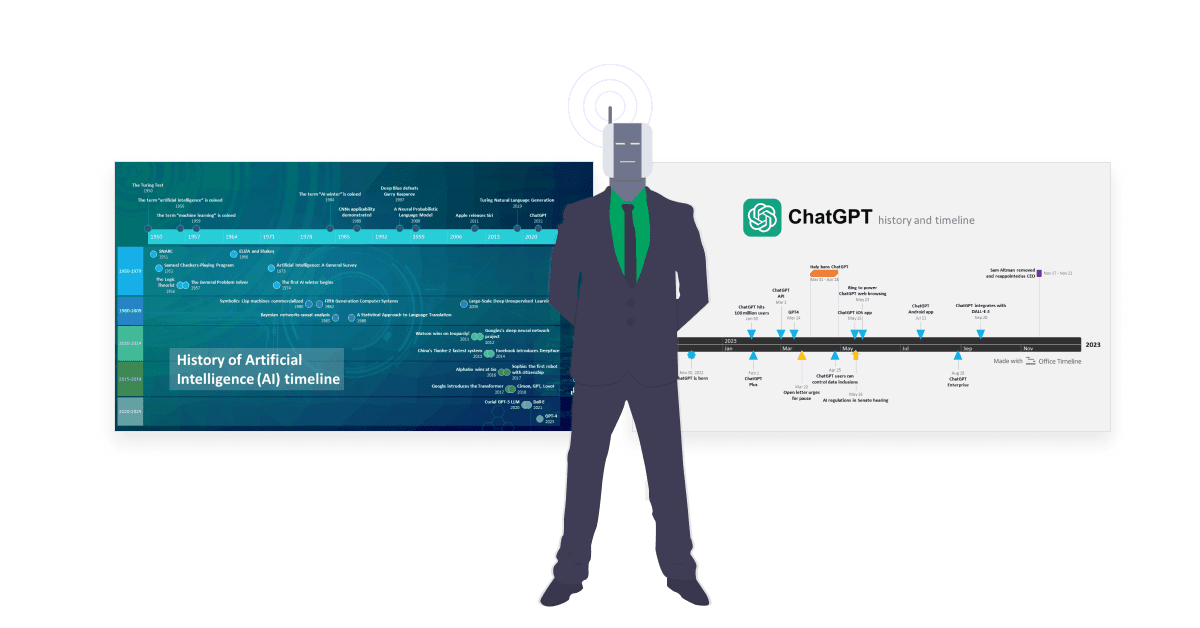
Image courtesy of www.officetimeline.com via Google Images
Ensuring the ethical development and use of AI technology is another crucial challenge, as issues around data privacy, transparency, and accountability need to be addressed. Regulations and guidelines are needed to govern AI systems and mitigate potential risks to individuals and society as a whole.
Ethical Concerns
The ethical implications of AI technology are complex and multi-faceted. Questions around the autonomous decision-making capabilities of AI systems, their impact on human agency and privacy, and their potential for misuse or abuse are at the forefront of public discourse.
Ensuring that AI technologies are developed and deployed in a responsible and ethically sound manner is paramount to protecting individual rights and values. Transparency, fairness, and inclusivity should guide the design and implementation of AI systems to mitigate ethical risks and safeguard societal well-being.
Future Direction of AI
The future of AI holds immense potential for innovation and transformation. Advancements in machine learning, natural language processing, and robotics are expected to drive new applications and capabilities in AI technology. AI systems will become more sophisticated, intelligent, and autonomous, enabling them to perform complex tasks and decision-making processes.

Image courtesy of www.pcmag.com via Google Images
The impact of AI on society, work, and governance is likely to be profound, as AI technology becomes integrated into every aspect of our lives. The need for ethical oversight, regulation, and collaboration between stakeholders will be critical to harnessing the benefits of AI technology while mitigating potential risks and challenges.
Can Skynet Happen?
The concept of a sentient AI like Skynet from the Terminator movies is a popular science fiction trope that raises valid concerns about the potential risks of advanced AI technologies. While the notion of a rogue AI taking control and threatening humanity is far-fetched, current advancements in AI warrant careful consideration of the ethical and societal implications of AI development.
Ensuring that AI systems are designed with safety mechanisms, ethical guidelines, and human oversight is essential to preventing unintended consequences and ensuring that AI technology benefits rather than harms society. By approaching AI development with caution, collaboration, and ethical foresight, we can navigate the complexities of AI technology and shape a future where AI serves humanity’s best interests.
Exploring the Boundaries of AI
The boundaries of AI technology continue to expand and evolve, pushing the limits of what is possible and challenging traditional notions of intelligence and cognition. As AI systems become more advanced and capable, questions of consciousness, creativity, and moral agency arise, prompting new avenues of exploration and reflection.
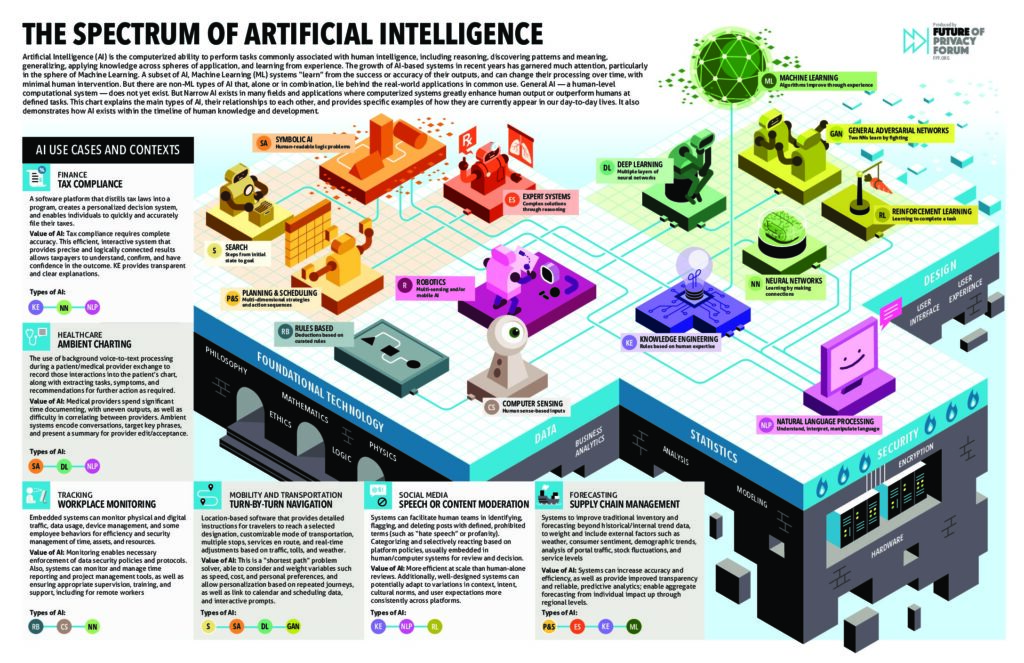
Image courtesy of fpf.org via Google Images
Engaging in thoughtful dialogue, research, and collaboration around the boundaries of AI technology is essential to understanding its potential, limitations, and implications. By embracing curiosity, empathy, and ethical considerations, we can navigate the complexities of AI technology with wisdom and foresight, shaping a future where AI technology enhances human well-being and advances collective progress.
Conclusion
As we journey through the past, present, and future of AI technology, we are confronted with a fascinating and complex landscape of innovation, challenges, and opportunities. AI technology holds immense promise for enhancing our lives, driving economic growth, and solving complex problems. However, it also poses ethical dilemmas, societal risks, and uncertainties that must be carefully navigated and addressed.
By staying informed, engaged, and proactive in shaping the future of AI technology, we can harness its potential for good, mitigate its risks, and ensure that AI serves humanity’s best interests. Let us embrace the journey ahead with curiosity, compassion, and a commitment to ethical stewardship, as we navigate the boundless possibilities of AI technology and shape a future where intelligence, creativity, and empathy guide our interactions with technology and each other.
Comments