

Discover the captivating journey of artificial intelligence, from Turing’s groundbreaking work to Tesla’s cutting-edge innovations in the modern age.

Table of Contents
Artificial Intelligence (AI) has emerged as one of the most transformative technologies of the modern era, revolutionizing the way we live, work, and interact with the world around us. From its humble beginnings in the mid-20th century to the sophisticated algorithms powering today’s cutting-edge applications, AI has come a long way. Let’s delve into the historical context of AI to better understand its roots and evolution.
Introduction to AI
At its core, artificial intelligence refers to the simulation of human intelligence processes by machines, encompassing tasks such as learning, reasoning, and problem-solving. The concept of AI dates back to the 1950s when computer scientists began exploring the idea of creating machines that could mimic human cognitive abilities.
Historical Context of AI
Alan Turing, a pioneering figure in computer science, proposed the idea of a machine that could exhibit intelligent behavior in his landmark paper “Computing Machinery and Intelligence” in 1950. This laid the foundation for the development of AI as a field of study.
Over the decades, significant milestones have shaped the evolution of AI, from the creation of expert systems in the 1970s to the emergence of neural networks and deep learning in the 21st century. Breakthroughs such as IBM’s Deep Blue defeating chess grandmaster Garry Kasparov in 1997 marked key advancements in AI capabilities.
Current Applications of AI
Today, AI is ubiquitous, permeating various sectors and industries to enhance efficiency, productivity, and decision-making processes. In healthcare, AI-powered diagnostics tools are revolutionizing patient care by enabling early detection of diseases and personalized treatment plans.

Image courtesy of digitalwellbeing.org via Google Images
In finance, AI algorithms analyze vast amounts of data to detect fraudulent activities and optimize investment strategies. In the transportation sector, autonomous vehicles rely on AI technology to navigate roads and improve road safety.
Benefits of AI
The benefits of AI are manifold, offering solutions to complex problems and driving innovation across diverse fields. By automating repetitive tasks and streamlining operations, AI enables organizations to operate more efficiently and achieve greater cost savings.
Moreover, AI can uncover valuable insights from massive datasets, facilitating data-driven decision-making and enhancing business intelligence. In the realm of customer service, AI-powered chatbots deliver seamless and personalized interactions, improving user experiences.
Challenges in AI
Despite its transformative potential, AI is not without challenges. One key issue is the inherent bias present in AI algorithms, which can perpetuate discriminatory practices and reinforce existing inequalities. Additionally, the displacement of jobs due to automation raises concerns about the future of work.
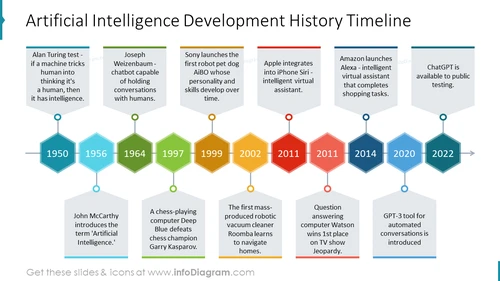
Image courtesy of www.infodiagram.com via Google Images
Ensuring the ethical development and deployment of AI technologies is paramount to addressing these challenges. Transparency, accountability, and inclusivity must be prioritized to mitigate the risks associated with AI solutions.
Ethical Concerns in AI
Ethical considerations in AI encompass a range of complex issues, including privacy violations, data security breaches, and concerns over autonomous decision-making. As AI systems become more autonomous and self-learning, questions regarding accountability and oversight arise.
Regulatory frameworks and ethical guidelines play a crucial role in shaping the responsible use of AI technologies. Decision-makers must navigate the ethical dilemmas posed by AI to safeguard individual rights and promote societal well-being.
Future Direction of AI
Looking ahead, the future of AI holds immense possibilities for innovation and progress. Advancements in machine learning, natural language processing, and robotics are poised to redefine the way we interact with intelligent systems.

Image courtesy of www.reddit.com via Google Images
Personalized AI assistants, integrated smart homes, and autonomous vehicles are just a glimpse of what the future holds. As AI continues to evolve, collaboration between researchers, policymakers, and industry leaders will be essential to shape a future that harnesses AI’s potential for the greater good.
Can Skynet Happen?
One common concern surrounding AI is the potential for a “skynet” scenario, where autonomous AI systems surpass human control and pose a threat to humanity. While science fiction has often depicted this doomsday narrative, the likelihood of such a scenario occurring in reality is highly improbable.
AI development is guided by ethical principles and regulatory frameworks to prevent catastrophic outcomes. Human oversight, ethical guidelines, and responsible AI governance are integral safeguards against the emergence of a rogue AI entity like Skynet.
Conclusion
As we reflect on the historical context, current applications, benefits, challenges, and ethical concerns surrounding artificial intelligence, it becomes evident that AI is a powerful tool that holds both promises and perils. By navigating the complexities of AI with a keen eye on ethics and responsible innovation, we can harness its transformative potential for the betterment of society.

Image courtesy of huguesrey.wordpress.com via Google Images
Call to Action
Join the conversation on artificial intelligence by sharing your thoughts and insights on the role of AI in shaping the future. Subscribe to our blog for more updates and in-depth analysis on AI-related topics. Together, let’s explore the endless possibilities of artificial intelligence and its impact on our world.
Generated by Texta.ai Blog Automation
Comments