

Discover how AI is changing the world and learn about the ethical implications that come with this groundbreaking technology.

Table of Contents
Artificial intelligence, or AI, has become a prominent force in our world today, revolutionizing the way we work, communicate, and live. In this blog post series, we will delve into the vast landscape of AI, exploring its historical roots, current applications, benefits, challenges, and ethical concerns. Through this exploration, we aim to provide readers with a comprehensive understanding of AI and its potential impact on society.
Introduction to AI
At its core, artificial intelligence refers to the simulation of human intelligence processes by machines, particularly computer systems. AI technologies enable machines to learn from experience, adjust to new inputs, and perform tasks that typically require human intelligence, such as visual perception, speech recognition, decision-making, and language translation. As AI continues to advance, its capabilities are expanding, leading to new possibilities in various fields.
Historical Context of AI
The concept of artificial intelligence has been around for decades, with early discussions dating back to the 1950s. Key figures in AI development, such as Alan Turing and John McCarthy, laid the foundation for the field, sparking advancements in machine learning, neural networks, and other key AI technologies. Over the years, AI has evolved from theoretical concepts to practical applications, driving innovation across industries.
Current Applications of AI
Today, AI is being utilized in a wide range of applications, from virtual assistants like Siri and Alexa to autonomous vehicles, medical diagnostics, financial forecasting, and more. In healthcare, AI is revolutionizing patient care by analyzing medical data, providing personalized treatment recommendations, and facilitating early disease detection. In the business world, AI is streamlining processes, improving efficiency, and driving data-driven decision-making.
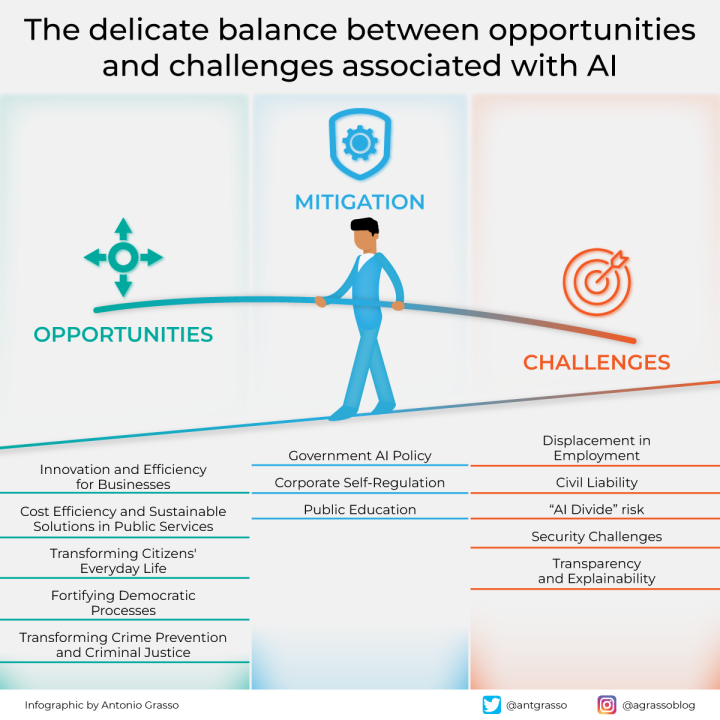
Image courtesy of www.linkedin.com via Google Images
Benefits of AI
The benefits of AI are vast and impactful. AI technology has the potential to enhance productivity, create new business opportunities, and improve overall quality of life. By automating routine tasks, AI can free up human resources to focus on more strategic and creative endeavors. Additionally, AI can analyze massive amounts of data at speeds beyond human capacity, leading to more accurate insights and predictions.
Challenges and Ethical Concerns of AI
While AI offers tremendous benefits, it also presents challenges and ethical concerns. One major challenge is the potential for AI algorithms to perpetuate bias and discrimination, as they are trained on historical data that may reflect societal inequalities. Furthermore, the increasing reliance on AI technology raises questions about job displacement and the future of work. Ethical concerns also arise around issues of privacy, security, and the responsible use of AI technologies.

Image courtesy of redresscompliance.com via Google Images
Future Direction of AI
The future of AI is boundless, with continued advancements expected in the fields of machine learning, natural language processing, robotics, and more. As AI technologies become more sophisticated and pervasive, we can expect to see further integration into various aspects of our lives, from smart homes and cities to personalized healthcare and education. The potential for AI to transform industries and drive innovation is immense, shaping the way we interact with technology in the years to come.
Can Skynet Happen?
In popular culture, the notion of a rogue AI system, like Skynet from the Terminator movies, taking control and posing a threat to humanity is a recurring theme. While the concept makes for thrilling entertainment, the likelihood of a real-life Skynet scenario is highly improbable. AI systems are developed with safeguards in place to ensure they operate within predefined parameters and human oversight. Additionally, the ethical guidelines and regulations governing AI technologies serve as checks and balances to prevent such catastrophic events from occurring.

Image courtesy of www.linkedin.com via Google Images
Potential Risks of AI
Despite the safeguards in place, AI technology does pose potential risks that need to be addressed. Unintentional consequences, such as algorithmic biases and errors, can lead to harmful outcomes if not properly managed. Misuse of AI technology for malicious purposes, such as deepfake videos and cyberattacks, also presents risks to society. As AI continues to advance, it is crucial to remain vigilant and proactive in identifying and mitigating potential risks.
AI Ethics and Regulation
Ensuring ethical AI development and implementing regulatory oversight are essential components of responsibly harnessing the power of AI technology. Ethical considerations, such as transparency, accountability, and fairness, should be at the forefront of AI design and implementation. Policymakers and industry stakeholders play a critical role in establishing guidelines and regulations that promote the ethical use of AI for the benefit of society. By fostering a culture of ethical AI development, we can navigate the complex terrain of AI with integrity and responsibility.

Image courtesy of www.dealcode.ai via Google Images
Conclusion
As we journey through the world of artificial intelligence, it is crucial to recognize the multifaceted nature of AI technology and its implications for society. By understanding the historical context, current applications, benefits, challenges, and ethical concerns of AI, we can equip ourselves with the knowledge needed to make informed decisions and shape the future of AI in a positive direction. As AI continues to evolve, it is essential to remain vigilant, ethical, and proactive in navigating the ethical terrain of AI for the betterment of humanity.
Generated by Texta.ai Blog Automation
Comments