

Dive into the complex world of AI ethics and cutting-edge advancements to uncover how to navigate this ever-changing landscape.

Table of Contents
Artificial Intelligence, often abbreviated as AI, has become an integral part of our modern world. The concept of AI, once confined to the realm of science fiction, has now become a reality that impacts our daily lives in various ways. In this blog post, we will explore the fascinating world of AI – from its historical roots to its current applications, benefits, challenges, and ethical concerns. Additionally, we will delve into the future direction of AI and ponder the question: can something like Skynet happen in real life?
Historical Context
Artificial Intelligence has a long and storied history that dates back to the mid-20th century. The term “artificial intelligence” was coined in 1956, and since then, researchers and scientists have been pushing the boundaries of what machines can do. Key milestones in AI history include the development of expert systems in the 1970s, the emergence of neural networks in the 1980s, and the rise of machine learning algorithms in recent years. The evolution of AI has been marked by a series of breakthroughs that have propelled the field forward, paving the way for the sophisticated technologies we see today.
Current Applications
AI is being used in a wide range of industries and fields, revolutionizing the way we work, live, and interact with technology. In the healthcare sector, AI is being leveraged to improve patient outcomes, diagnose diseases, and personalize treatment plans. In finance, AI algorithms are used to detect fraud, optimize trading strategies, and provide personalized financial advice. In transportation, AI powers self-driving cars, traffic management systems, and logistics optimization. These are just a few examples of how AI is transforming various sectors and driving innovation.
Benefits of AI
The integration of AI into our daily lives brings a multitude of benefits. AI technologies have the potential to increase efficiency, productivity, and accuracy across different domains. For businesses, AI can streamline operations, automate routine tasks, and unlock new sources of revenue. In healthcare, AI tools can assist medical professionals in making faster and more accurate diagnoses, ultimately saving lives. Additionally, AI has the power to drive economic growth, spur innovation, and create new job opportunities in emerging fields.
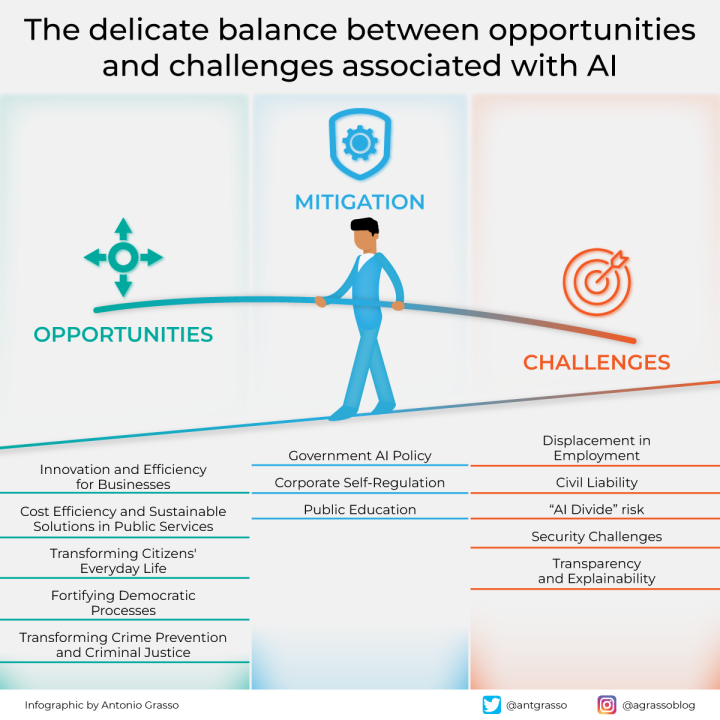
Image courtesy of www.linkedin.com via Google Images
Challenges and Ethical Concerns
Despite the many advantages of AI, its widespread adoption also raises significant ethical concerns. Issues such as privacy, bias, accountability, and job displacement are at the forefront of discussions surrounding AI ethics. Concerns about the misuse of AI for surveillance, data manipulation, or discriminatory practices have prompted calls for transparency and regulatory oversight. As AI technologies become more sophisticated, ensuring that they align with ethical principles and human values becomes increasingly crucial.
Future Direction
The future of AI holds immense promise for further innovation and advancement. As technology continues to evolve, we can expect to see even more sophisticated AI applications across various industries. Advancements in machine learning, robotics, natural language processing, and quantum computing will push the boundaries of what AI can achieve. AI-driven solutions will play a pivotal role in addressing complex societal challenges, from climate change to healthcare access, paving the way for a more interconnected and intelligent future.

Image courtesy of www.linkedin.com via Google Images
Can Skynet Happen?
In popular culture, the idea of a sentient AI system like Skynet from the “Terminator” movies taking over the world has captured the imagination of audiences. While such a scenario makes for thrilling storytelling, the likelihood of a real-life Skynet happening is remote. The development of AI is guided by human values, ethical considerations, and regulatory frameworks that prioritize safety and transparency. AI systems are designed to augment human capabilities, not replace them. By staying vigilant, ethical, and responsible in our pursuit of AI technology, we can ensure that the benefits of AI outweigh any potential risks.
Conclusion
In conclusion, Artificial Intelligence is a transformative technology that has the power to reshape our world in profound ways. By understanding AI’s historical context, current applications, benefits, challenges, and ethical considerations, we can navigate this rapidly evolving landscape with awareness and responsibility. As we look towards the future of AI, let us embrace the potential for innovation while remaining vigilant about the ethical implications of our technological advancements. By engaging in open dialogue, collaboration, and thoughtful decision-making, we can harness the full potential of AI for the betterment of society and create a future where intelligent machines work alongside us for the greater good.
Generated by Texta.ai Blog Automation
Comments