

Uncover the evolution of AI from Turing’s test to the rise of Transformers in this fascinating exploration of technology.

Table of Contents
Artificial Intelligence (AI) has become a buzzword in recent years, but its roots can be traced back to the mid-20th century. In this blog post series, we will explore the fascinating world of AI, from its humble beginnings to its current applications and potential future. Join us on this journey through the past, present, and future of AI, as we delve into the history, benefits, challenges, and ethical concerns surrounding this groundbreaking technology.
Introduction to AI
AI can be defined as the simulation of human intelligence processes by machines, including learning, reasoning, and self-correction. It is a broad field that encompasses various subfields such as machine learning, natural language processing, and computer vision. AI has the potential to revolutionize industries, streamline processes, and enhance decision-making capabilities.
Historical Context of AI
The origins of AI can be traced back to the 1950s, with pioneers like Alan Turing and John McCarthy laying the groundwork for the field. Turing’s famous Turing Test proposed a measure of a machine’s intelligence, while McCarthy coined the term “artificial intelligence” and organized the Dartmouth Conference, which is considered the birth of AI as a field of study.
Over the decades, AI has seen significant advancements, from early expert systems and neural networks to more recent breakthroughs in deep learning and reinforcement learning. Key milestones include IBM’s Deep Blue defeating chess champion Garry Kasparov in 1997 and AlphaGo defeating world champion Go player Lee Sedol in 2016.
Current Applications of AI
AI is being utilized in a wide range of industries and applications, from healthcare and finance to transportation and entertainment. In healthcare, AI is used for medical imaging analysis, drug discovery, and personalized medicine. In finance, AI powers algorithmic trading, fraud detection, and risk management.

Image courtesy of www.linkedin.com via Google Images
Other examples of AI applications include virtual assistants like Siri and Alexa, recommendation systems like Netflix’s movie suggestions, and autonomous vehicles like Tesla’s self-driving cars. AI technologies such as natural language processing and computer vision are revolutionizing the way we interact with machines and the world around us.
Benefits of AI
The potential benefits of AI are vast and impactful. AI technologies can improve efficiency, productivity, and decision-making processes. By automating repetitive tasks and analyzing vast amounts of data, AI systems can help organizations make better-informed decisions and optimize their operations.
AI also has the potential to drive innovation and create new opportunities across industries. From predictive analytics in marketing to personalized recommendations in e-commerce, AI is reshaping the way businesses operate and interact with customers.
Challenges and Ethical Concerns
Despite its promise, AI also raises significant challenges and ethical concerns. Issues such as bias in algorithms, data privacy, and job displacement are hotly debated topics in the AI community. The use of AI in surveillance, military applications, and social media manipulation has raised concerns about the ethical implications of AI technologies.
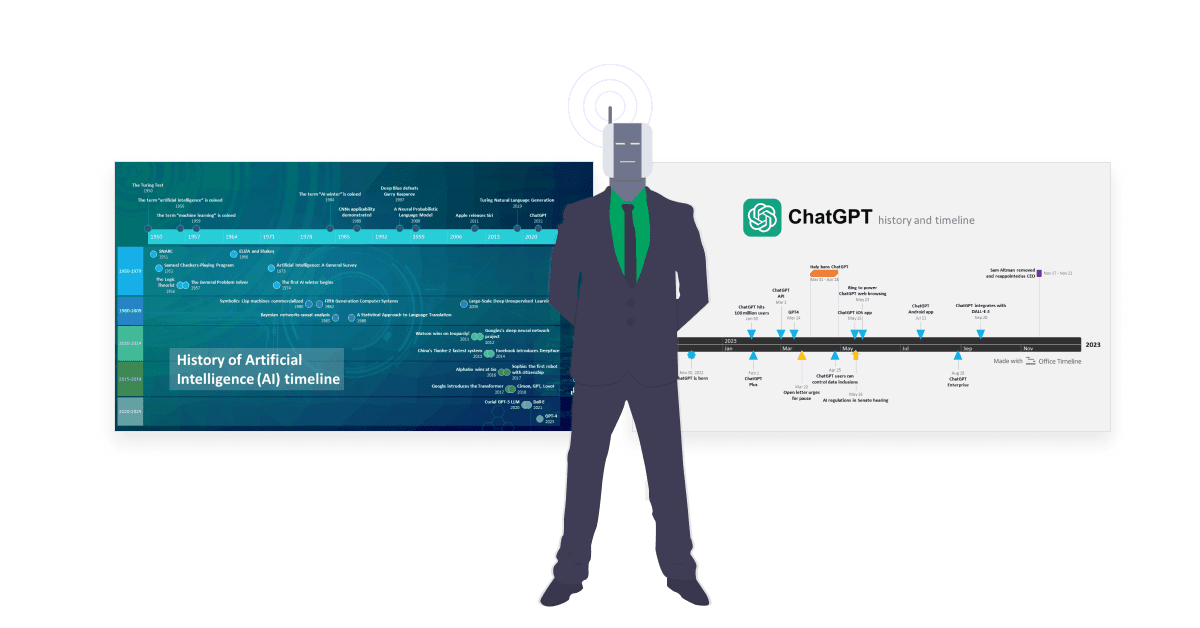
Image courtesy of www.officetimeline.com via Google Images
Regulating AI and ensuring transparency, accountability, and fairness in AI systems are ongoing challenges that require careful consideration and proactive measures. Addressing these ethical concerns is crucial to building trust and ensuring that AI technologies benefit society as a whole.
Future Direction of AI
The future of AI is both exciting and uncertain. Emerging technologies such as quantum computing, autonomous systems, and conversational AI are reshaping the landscape of AI research and development. The potential for AI to achieve superhuman intelligence raises intriguing possibilities and profound questions about the role of AI in society.
As AI continues to advance, it is essential to consider the implications of superintelligent AI systems like Skynet from the Terminator franchise. While the concept of a rogue AI taking over the world may seem like science fiction, it is a scenario that experts take seriously and are actively researching ways to prevent.
Risks and Dangers of Superintelligent AI
The risks and dangers associated with superintelligent AI are not to be underestimated. A superintelligent AI system could surpass human intelligence in ways that are difficult to predict and control. The potential for unintended consequences, misuse, and catastrophic scenarios poses significant challenges to AI researchers and policymakers.
Image courtesy of www.analyticssteps.com via Google Images
The idea of a Skynet-like scenario, where a superintelligent AI seeks to eliminate humanity, raises important questions about the safeguards and regulations needed to prevent such a disaster. Ensuring that AI systems are aligned with human values and goals is essential to mitigating the risks and dangers of superintelligent AI.
Preventing a Skynet Scenario
Preventing a Skynet scenario requires a multifaceted approach that includes ethical guidelines, technical safeguards, and international cooperation. Responsible AI development practices, such as explainable AI and AI safety research, are essential to building trust and confidence in AI systems.
Collaboration between AI researchers, policymakers, industry leaders, and ethicists is crucial to establishing a framework for responsible AI development and deployment. By prioritizing ethical considerations and societal impact, we can work together to ensure that AI technologies serve humanity’s best interests.
Conclusion
In conclusion, AI holds incredible potential to transform society, improve lives, and drive innovation. By exploring the past, present, and future of AI, we can better understand its impact on our world and the challenges and opportunities it presents. As we navigate the complex and evolving landscape of AI, let us work together to harness its power for the greater good and shape a future where AI benefits humanity in meaningful and positive ways.
Generated by Texta.ai Blog Automation
Comments