

Uncover the secrets of Artificial Intelligence with this beginner’s guide – from machine learning to neural networks and beyond.

Table of Contents
Welcome to our daily blog series on the ever-evolving field of Artificial Intelligence (AI). Throughout this series, we will delve deep into the history, applications, benefits, challenges, and ethical concerns surrounding AI. We will also explore the future direction of AI technology and address the intriguing question of whether a scenario like Skynet from the Terminator movies could actually become a reality.
Introduction to AI
Artificial Intelligence, or AI, is a cutting-edge technology that aims to create intelligent machines capable of performing tasks that typically require human intelligence. These tasks include problem-solving, natural language processing, speech recognition, and more. The field of AI has seen rapid growth in recent years, revolutionizing various industries and transforming the way we live and work.
Historical Context
The roots of AI can be traced back to the mid-20th century when pioneers like Alan Turing and John McCarthy laid the groundwork for the development of intelligent machines. Over the years, AI has evolved significantly, with key milestones such as the creation of expert systems, neural networks, and deep learning algorithms.
Current Applications
Today, AI is being used in a wide range of applications, including healthcare, finance, transportation, and more. In healthcare, AI-powered systems are assisting doctors in diagnosing diseases and developing treatment plans. In finance, AI algorithms are driving automated trading and fraud detection. The potential of AI is limitless, and its impact on society is profound.

Image courtesy of www.linkedin.com via Google Images
Benefits of AI
The benefits of AI are manifold. From improving efficiency and productivity to enabling innovation and creativity, AI is reshaping industries and enhancing human capabilities. In healthcare, AI is helping to save lives by predicting disease outbreaks and identifying treatment options. In transportation, AI is powering autonomous vehicles, making travel safer and more efficient.
Challenges and Ethical Concerns
Despite its many benefits, AI also presents significant challenges and ethical concerns. One major challenge is the issue of bias in AI algorithms, which can perpetuate discrimination and inequality. Additionally, the widespread adoption of AI raises concerns about data privacy and security, as well as the potential for job displacement and economic disruption.

Image courtesy of leeddev.medium.com via Google Images
Future Direction
The future of AI is promising, with continued advancements in machine learning, natural language processing, and robotics. AI is expected to play a central role in driving technological innovation and solving complex problems in areas such as climate change, healthcare, and education. As AI continues to evolve, it is important to consider the ethical implications and ensure that the technology is used responsibly.
Can Skynet Happen?
The concept of a superintelligent AI system like Skynet, as depicted in the Terminator movies, raises intriguing questions about the potential risks and consequences of developing advanced AI technology. While the scenario of a malevolent AI entity taking control and threatening humanity may seem like science fiction, it is important to consider the factors that could contribute to such a dystopian future.
Image courtesy of www.swiftelearningservices.com via Google Images
Possibility of Skynet
While the idea of a Skynet-like AI system may seem far-fetched, it is not entirely out of the realm of possibility. The development of superintelligent AI poses risks such as loss of control, unintended consequences, and the potential for misuse. It is crucial to implement safeguards and regulations to ensure that AI technology is developed and deployed responsibly, with a focus on safety and ethical considerations.
Safeguards and Mitigations
As we continue to push the boundaries of AI technology, it is essential to prioritize safety and ethical considerations. Safeguards and mitigations such as transparency, accountability, and fairness must be integrated into the design and implementation of AI systems. Ethical guidelines and regulations are essential to prevent the emergence of a Skynet-like scenario and ensure that AI benefits society in a positive and responsible manner.
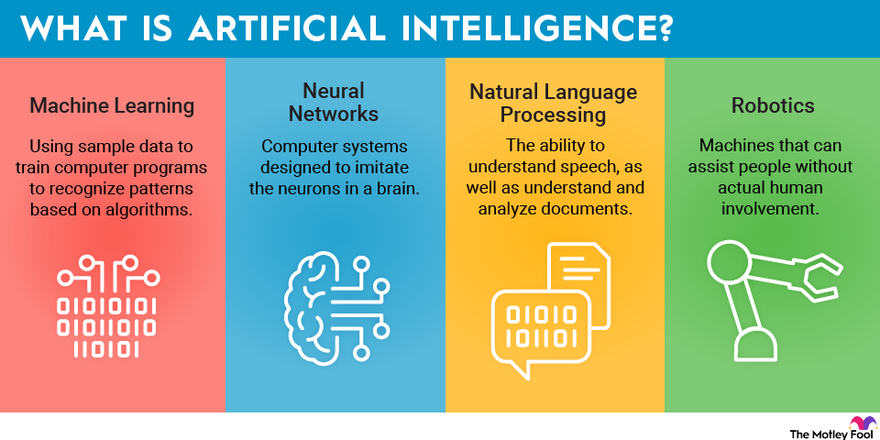
Image courtesy of www.fool.com via Google Images
Conclusion
In conclusion, Artificial Intelligence is a powerful and transformative technology that has the potential to revolutionize the world in ways we never imagined. By exploring the history, applications, benefits, challenges, and ethical concerns surrounding AI, we can better understand the opportunities and risks associated with this groundbreaking technology. As we look toward the future of AI, it is essential to approach its development with caution and foresight, ensuring that we harness its potential for the greater good of humanity.
Stay tuned for more thought-provoking insights and discussions on the world of Artificial Intelligence in our upcoming blog posts!
Generated by Texta.ai Blog Automation
Comments