

Uncover the evolution of artificial intelligence from ancient times to modern advancements in our insightful journey through AI history.

Table of Contents
Welcome to the first installment of our daily blog series dedicated to unraveling the mysteries of Artificial Intelligence (AI). In today’s post, we will embark on a journey through the history of AI, exploring the key milestones and breakthroughs that have shaped this revolutionary technology.
Origins of AI
The concept of Artificial Intelligence dates back to the 1950s when the term was first coined by computer scientist John McCarthy. The goal was to create machines capable of performing tasks that typically require human intelligence, such as reasoning, problem-solving, and learning.
Early AI pioneers, including Alan Turing and Marvin Minsky, laid the foundations for the field by developing the first AI programs and proposing the theoretical framework for intelligent machines.
The AI Winter
Despite initial enthusiasm surrounding AI, the field faced several setbacks in the 1970s and 1980s, known as the “AI winter.” Funding dried up, and interest waned as early AI technologies failed to meet expectations. As a result, progress in AI research stagnated for a period of time.
However, the tide began to turn in the 1990s with the resurgence of neural networks and the development of more powerful computational tools that reinvigorated interest in AI.
Modern Advances in AI
Today, AI has permeated various aspects of our lives, from the smartphones in our pockets to the services we use online. Machine learning, a subset of AI, has made tremendous strides in areas such as natural language processing, computer vision, and predictive analytics.

Image courtesy of digitalwellbeing.org via Google Images
Companies like Google, Amazon, and Facebook are leveraging AI algorithms to provide personalized recommendations, optimize processes, and even develop self-driving cars. The potential applications of AI seem limitless, promising to revolutionize industries and reshape the way we interact with technology.
The Future of AI
Looking ahead, the trajectory of AI appears poised for exponential growth. Advancements in deep learning, reinforcement learning, and quantum computing are paving the way for more intelligent and autonomous systems.
As AI continues to evolve, it raises important questions about ethics, privacy, and the impact on the workforce. Balancing the potential benefits of AI with the societal implications will be crucial in ensuring the responsible development and deployment of this transformative technology.
Can Skynet Happen?
The concept of a rogue AI system like Skynet, as depicted in the popular movie series “Terminator,” sparks fears of a dystopian future where machines dominate humanity. While such a scenario may seem far-fetched, it prompts us to consider the potential risks associated with advancing AI technology.
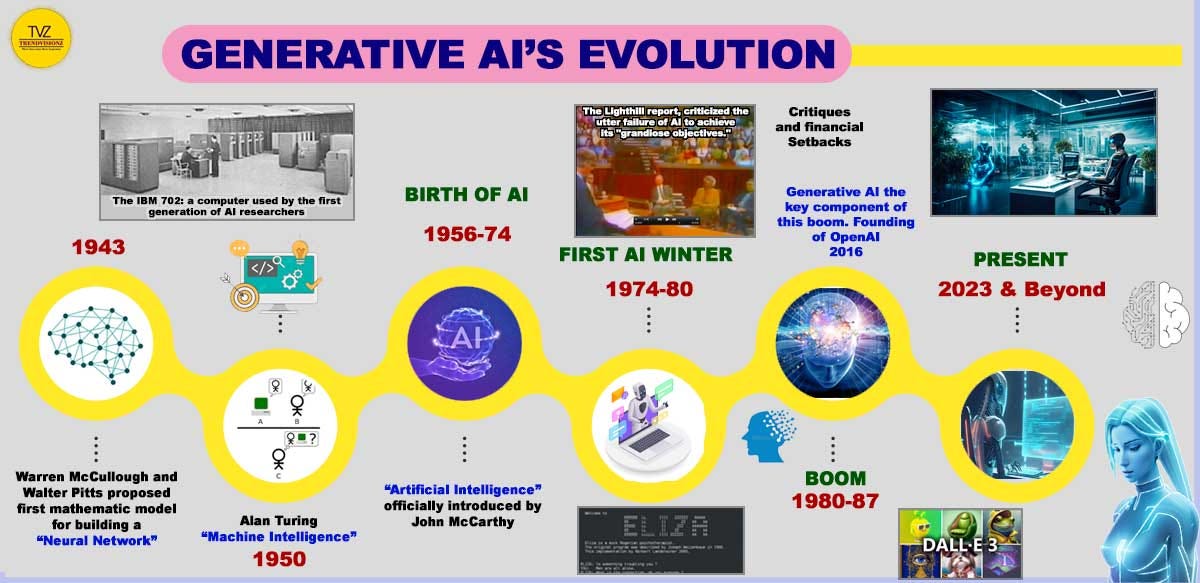
Image courtesy of medium.com via Google Images
To reach a point where a superintelligent AI like Skynet could emerge, several key components would need to align, including advanced machine learning capabilities, autonomous decision-making, and a lack of safeguards to prevent harmful actions. However, experts in the field are actively working to establish ethical guidelines and safety measures to mitigate these risks and ensure that AI remains beneficial to society.
Conclusion
In conclusion, the history of AI is a testament to human ingenuity and innovation. From humble beginnings to groundbreaking achievements, AI has come a long way in transforming the world we live in. As we continue to explore the possibilities of Artificial Intelligence, let us approach this technology with caution, curiosity, and a sense of responsibility to shape a future where AI enhances rather than supplants our humanity.
Generated by Texta.ai Blog Automation
Comments