

Uncover the evolution of AI from its origins to its potential future in this insightful journey through technological history.

Table of Contents
Artificial Intelligence, or AI, has become an integral part of our daily lives, from virtual assistants like Siri and Alexa to complex algorithms that power self-driving cars. But how did we get to this point? Let’s delve into the history of AI, exploring its origins, evolution, current applications, benefits, challenges, ethical concerns, and the potential future direction of this groundbreaking technology.
Historical Context
AI has a rich history that dates back to the 1950s when early pioneers like Alan Turing and John McCarthy laid the foundation for what would become known as artificial intelligence. These visionaries envisioned machines that could think and learn like humans, leading to the development of early AI models such as the Logic Theorist and the General Problem Solver.
Over the decades, AI research continued to advance, with key milestones like the creation of expert systems, neural networks, and deep learning algorithms. Today, AI has permeated almost every aspect of our lives, from healthcare and finance to entertainment and transportation.
Current Applications
AI is no longer just a concept confined to science fiction; it is a reality that is shaping the world around us. From personalized recommendation systems on e-commerce platforms to predictive analytics in healthcare, AI is revolutionizing the way we work, play, and interact with technology.
One of the most prominent applications of AI is in the field of autonomous vehicles, where machine learning algorithms enable cars to navigate complex road conditions and make split-second decisions to ensure passenger safety. Similarly, virtual assistants like Google Assistant and Amazon’s Alexa harness the power of AI to understand natural language and provide users with relevant information and services.
Benefits of AI
The benefits of AI are vast and impactful, with the potential to streamline processes, improve decision-making, and enhance overall productivity. In healthcare, AI-driven algorithms are being used to diagnose diseases, predict patient outcomes, and assist in surgical procedures, ultimately saving lives and improving patient care.
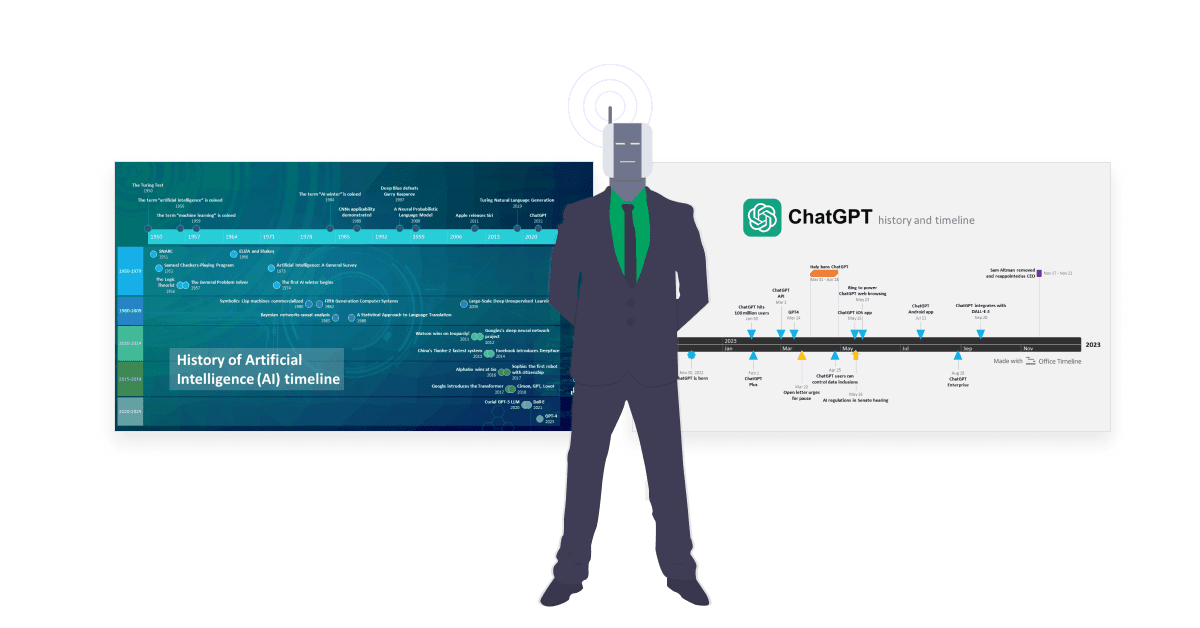
Image courtesy of www.officetimeline.com via Google Images
In the business world, AI is helping companies gain valuable insights from big data, optimize supply chains, and personalize customer experiences. The automation of repetitive tasks through AI tools is also freeing up human workers to focus on more creative and strategic endeavors, driving innovation and competitiveness.
Challenges and Ethical Concerns
While the benefits of AI are clear, there are also significant challenges and ethical considerations that must be addressed. One of the primary concerns is the potential for AI to replace human jobs, leading to unemployment and economic disparities. Additionally, the inherent biases in AI algorithms can perpetuate societal inequalities and discrimination if not carefully monitored and controlled.
Ethical dilemmas surrounding privacy, data security, and the accountability of AI systems also pose complex challenges for policymakers and industry leaders. Ensuring transparency, fairness, and inclusivity in AI development and deployment is crucial to building trust with users and safeguarding against unintended consequences.
Future Direction
As we look to the future, the possibilities for AI seem limitless. Emerging technologies like reinforcement learning, quantum computing, and autonomous robots are pushing the boundaries of what AI can achieve, opening up new avenues for exploration and innovation.

Image courtesy of digitail.com via Google Images
Industry experts predict that AI will continue to disrupt traditional business models, transform industries, and reshape the way we live and work. From personalized healthcare treatments to smart cities powered by AI-driven infrastructure, the potential applications of AI are vast and diverse.
Could Skynet Happen?
One of the most enduring fears associated with AI is the idea of a sentient, self-aware AI system like Skynet in the Terminator movies taking control and posing a threat to humanity. While this scenario makes for compelling science fiction, the reality is much more nuanced.
AI systems are designed and controlled by humans, with strict limitations and guidelines in place to prevent them from behaving autonomously or developing consciousness. While AI can pose risks if not properly managed and regulated, the idea of a rogue AI takeover similar to Skynet is highly unlikely based on our current understanding of the field.
Conclusion
Artificial Intelligence has come a long way since its inception, evolving from a theoretical concept to a practical tool that is transforming the way we live and work. By understanding the historical context, current applications, benefits, challenges, and ethical concerns of AI, we can better navigate the complex landscape of this revolutionary technology.
As we look towards the future, it is important to stay informed, engaged, and proactive in shaping the development and deployment of AI to ensure that it benefits humanity as a whole. By harnessing the power of AI responsibly and ethically, we can unlock its full potential and create a brighter, more inclusive future for all.
Generated by Texta.ai Blog Automation
Comments