

Discover the fascinating journey of AI from ancient Greek myths to cutting-edge technology in today’s world. Uncover the hidden gems!

Table of Contents
Artificial Intelligence, or AI, has become an integral part of our daily lives, impacting everything from the way we shop and communicate to how we work and travel. In this daily blog series, we will explore the fascinating world of AI, delving into its historical context, current applications, benefits, challenges, ethical concerns, future direction, and the intriguing question of whether a scenario like “Skynet” can actually happen.
Introduction to AI
AI refers to the simulation of human intelligence processes by machines, including learning, reasoning, and self-correction. The concept of AI dates back to ancient times, with stories of intelligent machines and robots existing in mythology. The term “artificial intelligence” itself was coined in 1956 at the Dartmouth Conference, marking the official beginning of AI as a field of study.
Historical Context
Throughout history, there have been several key milestones in AI development that have shaped the field into what it is today. From Alan Turing’s groundbreaking work on machine intelligence to the development of neural networks and deep learning algorithms, AI has undergone significant evolution over the years.
Current Applications
Today, AI is used in a wide range of applications, from virtual assistants like Siri and Alexa to self-driving cars and predictive analytics in businesses. AI is revolutionizing industries such as healthcare, finance, and marketing, enabling organizations to make data-driven decisions and improve efficiency.

Image courtesy of digitalwellbeing.org via Google Images
Benefits of AI
The benefits of AI are vast, including increased productivity, improved decision-making, and enhanced customer experiences. AI technologies can automate repetitive tasks, analyze vast amounts of data in real-time, and even detect patterns and trends that human analysts might miss.
Challenges and Ethical Concerns
Despite its many benefits, AI also presents challenges and ethical concerns. These include issues around privacy, job displacement, bias in algorithms, and the potential for AI systems to make autonomous decisions that may not align with human values.
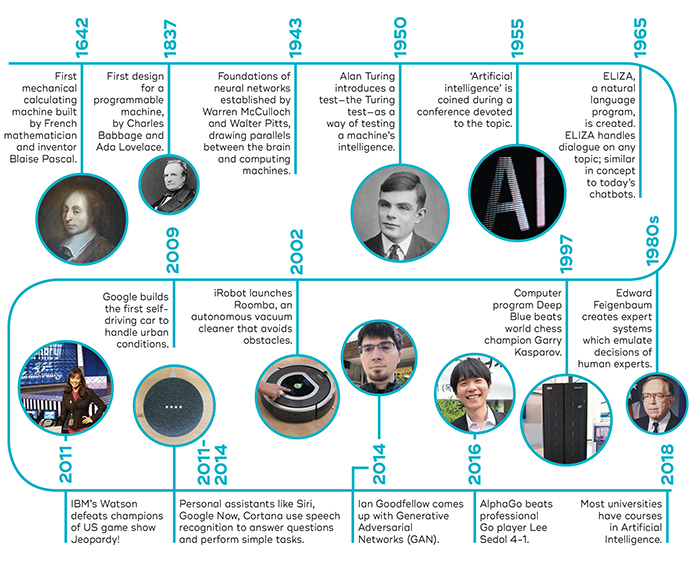
Image courtesy of qbi.uq.edu.au via Google Images
Future Direction of AI
The future of AI holds exciting possibilities, with advancements in areas like natural language processing, computer vision, and robotics driving innovation. Researchers are exploring ways to make AI systems more intelligent, adaptable, and capable of learning and reasoning like humans.
Can Skynet Happen?
The idea of a superintelligent AI like Skynet from the Terminator movies is a topic of debate among experts in the field. While the likelihood of a dystopian scenario where AI takes over the world may seem far-fetched, it is essential to consider the ethical implications of AI development and ensure that safeguards are in place to prevent such a scenario.
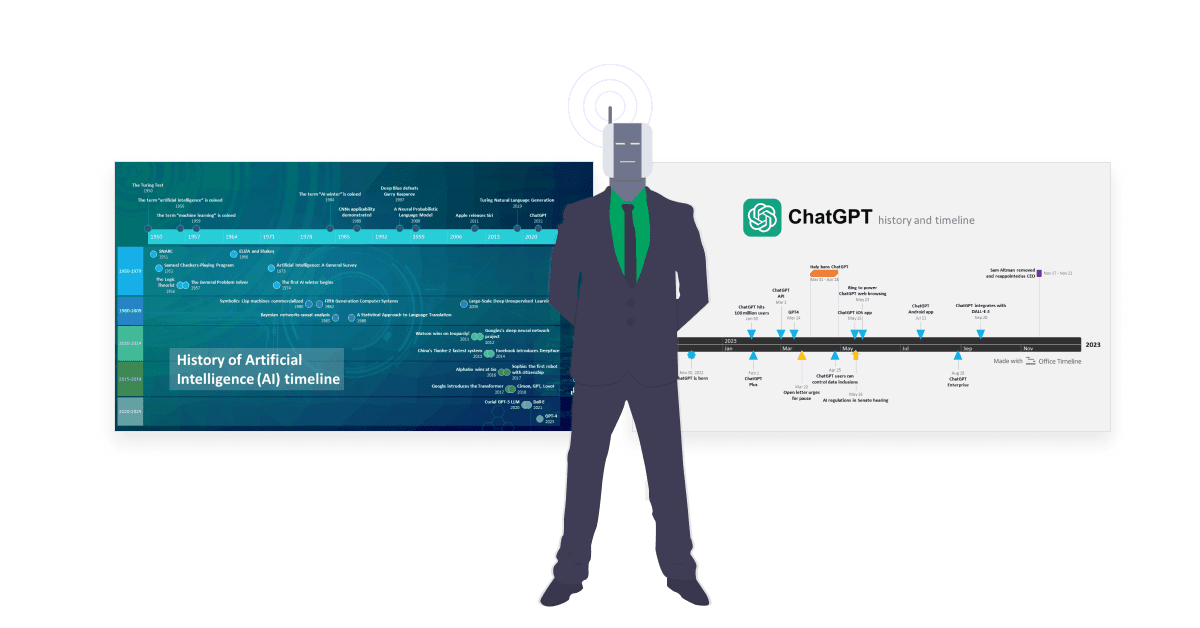
Image courtesy of www.officetimeline.com via Google Images
Impact of AI on Society
As AI continues to evolve and become more integrated into various aspects of society, its impact on jobs, economy, and social interactions is significant. While AI has the potential to create new opportunities and efficiencies, it also raises questions about the future of work and the ethical use of AI technologies.
Ethical Considerations in AI
Ensuring that AI is developed and used ethically is crucial to harnessing its full potential for good. Addressing biases in algorithms, promoting transparency in AI decision-making, and establishing guidelines for responsible AI development are essential steps in shaping a future where AI benefits society as a whole.

Image courtesy of digitail.com via Google Images
Conclusion
As we navigate the evolution of AI, it is essential to approach this powerful technology with a balanced perspective, recognizing both its immense capabilities and its potential risks. By exploring the historical milestones, current applications, and future directions of AI, we can gain a deeper understanding of how AI is shaping our world and how we can ensure that it serves humanity in a positive and responsible manner.
Generated by Texta.ai Blog Automation
Comments